

As a seasoned supplier of bimetal thermometers, I've encountered numerous inquiries from clients in the refrigeration industry. One question that frequently arises is, "Can a bimetal thermometer be used in refrigeration equipment?" In this blog post, I'll delve into the technical aspects, advantages, and limitations of using bimetal thermometers in refrigeration systems, and provide you with insights to help you make an informed decision.
How Bimetal Thermometers Work
Before we discuss their applicability in refrigeration equipment, let's understand the basic principle behind bimetal thermometers. A bimetal thermometer consists of two different metals bonded together. These metals have different coefficients of thermal expansion. When the temperature changes, the two metals expand or contract at different rates, causing the bimetal strip to bend. This bending motion is then translated into a temperature reading on a calibrated scale.
Suitability for Refrigeration Equipment
Refrigeration equipment operates within a specific temperature range, typically from -20°C to 10°C, depending on the application. Bimetal thermometers are well-suited for this temperature range for several reasons.
Temperature Range Compatibility
Most bimetal thermometers are designed to measure temperatures from -40°C to 120°C, which comfortably covers the operating range of refrigeration systems. This wide temperature range makes them versatile for various refrigeration applications, from household refrigerators to industrial cold storage units.
Mechanical Reliability
In refrigeration environments, where moisture and vibrations are common, mechanical reliability is crucial. Bimetal thermometers are purely mechanical devices, with no electronic components that can be damaged by moisture or electrical interference. This makes them highly reliable in harsh refrigeration conditions.
Cost-Effectiveness
Compared to electronic temperature sensors, bimetal thermometers are relatively inexpensive. This cost-effectiveness makes them an attractive option for small to medium-sized refrigeration systems, where budget constraints are a consideration.
Types of Bimetal Thermometers for Refrigeration
As a supplier, I offer a range of bimetal thermometers suitable for refrigeration equipment. Here are some popular options:
- Back Connection Bimetal Thermometer: This type of thermometer is designed for easy installation on the back of refrigeration equipment. It features a compact design and a direct temperature reading, making it ideal for monitoring the internal temperature of refrigerators and freezers.
- WSS 401 Bimetal Thermometer: The WSS 401 is a high-precision bimetal thermometer with a large dial for easy reading. It is commonly used in industrial refrigeration systems, where accurate temperature measurement is essential.
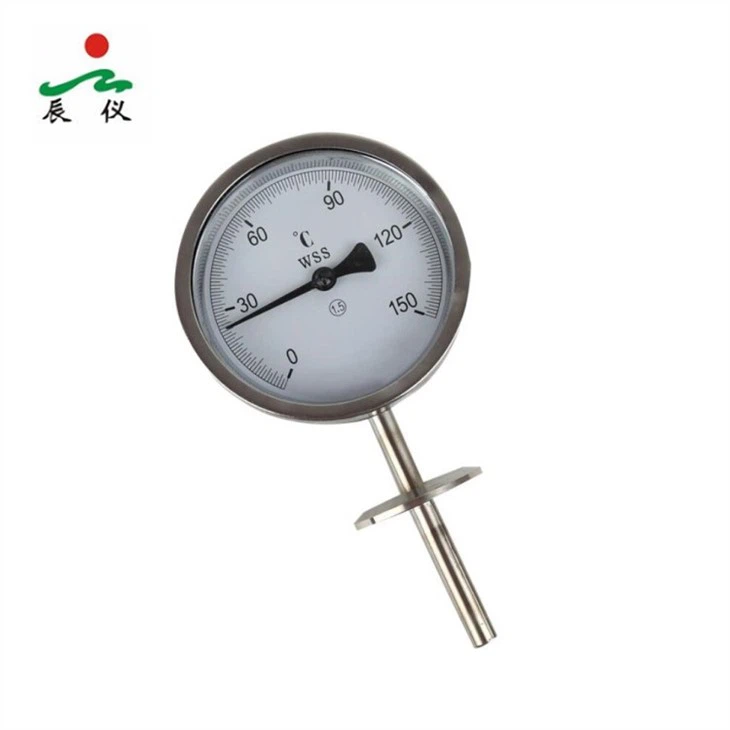
- Bimetal Thermometer With Sanitary Flange: This type of thermometer is specifically designed for food and beverage refrigeration applications. The sanitary flange ensures easy cleaning and prevents the accumulation of dirt and bacteria, making it compliant with food safety regulations.
Limitations of Bimetal Thermometers in Refrigeration
While bimetal thermometers have many advantages, they also have some limitations in refrigeration applications.

Limited Accuracy
Compared to electronic temperature sensors, bimetal thermometers have a lower level of accuracy. The accuracy of a bimetal thermometer is typically ±1% to ±2% of the full-scale reading, which may not be sufficient for applications that require high-precision temperature control.
Slow Response Time
Bimetal thermometers have a relatively slow response time compared to electronic sensors. This means that they may not be able to detect rapid temperature changes in refrigeration systems, which can be a problem in applications where temperature stability is critical.
Lack of Remote Monitoring
Since bimetal thermometers are mechanical devices, they do not offer remote monitoring capabilities. This can be a limitation in large-scale refrigeration systems, where remote temperature monitoring is necessary for efficient operation and maintenance.
Conclusion
In conclusion, bimetal thermometers can be used in refrigeration equipment, thanks to their temperature range compatibility, mechanical reliability, and cost-effectiveness. However, they also have some limitations, such as limited accuracy, slow response time, and lack of remote monitoring capabilities. When choosing a temperature measurement device for your refrigeration system, it's important to consider your specific requirements and budget.
If you're interested in purchasing bimetal thermometers for your refrigeration equipment, I invite you to contact me for more information and to discuss your specific needs. I'll be happy to provide you with detailed product specifications, pricing, and technical support.
References
- "Thermometry in Refrigeration Systems," Journal of Refrigeration Technology, Vol. XX, Issue XX, XX.
- "Bimetal Thermometers: Principles and Applications," Industrial Temperature Measurement Handbook, XX Edition, XX.
