Chongqing Haichen Instrument Co., Ltd.

Temperature Transmitter

Why Choose Us


Products widely used
Haichen products are safe and reliable, and are widely used in various fields such as steel, petroleum, chemical industry, light industry, building materials, environmental protection, food, power stations, aerospace, ships, etc.


Professional technical team
After years of independent research and development, Haichen now has strong production capacity, large production scale, advanced testing equipment, and a professional technical team.


QC
Strictly tested and inspected before shipment. Organize shipments with long-term freight forwarders, which are reliable and cheap.


Customer service
After shipment, we can notify customers of the tracking number so that customers can track the goods in time. If there are any problems with the product during use, you can contact us at any time by email or phone. We can try to resolve the issue within 24 hours.


What is Temperature Transmitter


A temperature transmitter is an electronic device used to send a temperature measurement over two wires to the processing unit. The transmitter is responsible for converting the small electrical signal from the temperature sensor into a more readable signal for the processing unit. In most cases, the signal is sent to some sort of programmatic logic controller (PLC) or receiver.If you are thinking about using thermocouples, resistance temperature detectors (RTDs), or thermal resistors and are wondering how to communicate their micro-signals to the industry standard 4-20mA, then you must use a transmitter.


Benefits of Temperature Transmitter


01
 

Ac power is not needed at the remote location to operate a twowire transmitter.

Since transmitters are powered by a low level 4-20 mA output current signal, no additional power has to be supplied at the remote location. In addition, the usual 24 Vdc signal necessary for operation is standard in plants that have large amounts of instrumentation.

 
02
 

Electrical noise and signal degradation are not a problem for two-wire transmitter users.

The transmitter's current output signal lends itself to a high immunity when it comes to ambient electrical noise. Any noise that does appear in the output current is usually eliminated by the common-mode rejection of the receiving device. In addition, the current output signal will not change (diminish) with distance as most voltage signals do.

 
03
 

Wire costs drop significantly when using transmitters.

Low voltage signals produced by thermocouples almost always require the use of shielded cable when they are sent any significant distance. Ambient electrical noise from arcing electrical relays, motors and ac power lines can raise havoc with these signals that are transmitted in an unshielded cable. In addition, expensive, heavy gage wire is often installed in applications that call for long cable runs (since it reduces errors from signal voltage drops caused by line resistance).

Small Type Temperature Transmitter


Types of Temperature Transmitter
 
 
2-Wire Temperature Transmitter

A Temperature Transmitter requires a power supply to operate. Most Temperature Transmitters are 2-wire types having only two wires. These two wires provide power for the transmitter and are also the signal lines!

 
4-Wire Temperature Transmitter

A 4-wire transmitter has two wires connected to a power supply and two signal wires connected to the PLC. The power supply can be AC or DC depending on the vendor and model.

 
Head Mount or Hockey Puck Style Temperature Transmitter

Hockey puck transmitters are one of the most common types of transmitters and are used for basic applications. Its name is derived from its form factor. The dimensions of this transmitter are small and they offer limited hardware. These low-cost transmitters are also well suited for OEM applications and are suitable to be placed inside the heads of temperature probes. Also, there are two mounting holes on each side of the transmitter.

 
Field Mounted Temperature Transmitter

This special type of temperature transmitter is mounted in its own exterior housing. This feature enables it to be used “in the field” where conditions may need extra protection, such as in high-performance industrial operations. By placing Field mounted transmitters relatively close to the sensor the strength of the signal will increase.This transmitter is designed to protect sensitive electronic components against various conditions such as humidity, environmental conditions, corrosion and..


Application of Temperature Transmitter


Motors
There are many different aspects of motors and most of these require temperature measurement to ensure the motor itself does not overheat.


Surface plates
Ring terminal temperature transmitter are often used on surface plates as they can be mounted onto a flat surface and measure temperature effectively.


Home appliances
Kettles, toasters, washing machines, dishwashers and coffee machines will all contain temperature transmitter.


Computers
Within computers there are temperature transmitters to ensure the system does not overheat


Industrial equipment
Temperature transmitter used within these applications will need to be robust as the environment can be very demanding.


Warming Electrical Radiators
NTC thermistors are used to control the heat on electric radiators.


Exhaust Gas Monitoring on Motorsport Vehicles
Motorsport Temperature Transmitter need to be highly reliable and durable to ensure performance is not compromised in this harsh environment.


Food Production; 3D printed chocolates
Temperature Transmitter are used to monitor the temperature of the melted chocolate for 3D printing.


Alcohol breathalyser
Temperature Transmitter are used within alcohol breathalysers to measure the temperature of the subject's breath.


Components of Temperature Transmitter


Small Type Temperature Transmitter

Signal input part

The signal input part is the first step of the electric temperature transmitter, which mainly completes the collection of the measured temperature signal. According to the type and size of the measured temperature signal, select different sensor interfaces and connect the signal to the electric temperature transmitter.

4-20mA Temperature Transmitter

Signal processing part

The signal processing part is the core of the electric temperature transmitter, which mainly completes the amplification, filtering, linearization and compensation of the measured temperature signal. In this process, the measured temperature signal is converted into a standard output signal. Generally, two-wire, three-wire, and four-wire systems are commonly used for standardization. The main purpose of the signal processing part is to obtain a certain sensitivity and resolution, further reduce measurement errors and improve accuracy.

Integrated Transmitter

Output control section

The output control part is the output link of the electric temperature transmitter. It mainly completes the conversion and control of the standard output signal to make it meet the control requirements of the application end. According to the needs of different users, the output control part can choose analog signal output or digital signal output. At the same time, the electric temperature transmitter can also perform programmable control and detection, and adjust the amplitude and scale of the output signal to meet various control needs.


How to Choose Temperature Transmitter
 

Type of Sensors
The smart temperature transmitters often feature either RTD or thermocouple sensors. The actual activity of temperature measurement is performed by the sensor itself, therefore, the type of temperature sensor is a prime consideration while choosing a transmitter. The factors like temperature fluctuations, moisture, corrosion, contact lead degradation, etc can impact the sensor performance, and therefore, one must go for high-quality sensors.


Mounting Location
The mounting location is a crucial consideration while buying a temperature transmitter. If the distance between the transmitter and control panel is less and if there is no noise interruption, the installation can cost less. One should also consider if the transmitter has to be installed overhead, outdoors, or at tactical in-field locations. If the transmitter is to be installed in hazardous location then you must check if the transmitter can support remote installation and monitoring.


Configuration Protocol
Although smart transmitters may have similar designs, they use different configuration protocols. Highway addressable remote transducer (HART) protocol and PC configuration protocols like Profibus, Foundation Fieldbus, etc are commonly preferred in the industrial transmitters. The purpose of configuration protocols is to offer remote accessibility, authentication feature, and operator control. Therefore, one must use the configuration protocol that is compatible with the existing system.


Measurement Accuracy
Accuracy is an essential selection criterion for temperature transmitters as an error or delay in temperature measurement can lead to expensive and hazardous damage. Therefore, one must not go for low accuracy transmitters. Considering the industrial demand, the accuracy range one must look for is ±0.0025˚ F to 1˚ F. The factors like cold junction compensation, line voltage effect, EMI/RFI interruption, etc impact the accuracy, therefore, one must choose a transmitter immune to such problems.


EMI/RFI Immunity and Signal Isolation
Electromagnetic interference and radio frequency interference can cause signal degradation, non-repeatability, lack of accuracy and efficiency, etc. Therefore, one must go for a transmitter with strong immunity against EMI/RFI.


Diagnostic and Troubleshooting Capabilities
The smart transmitters feature several electronic part integrations, therefore, it is difficult for the operator to figure out the problem while diagnosis or troubleshooting. However, there are several smart transformers in the market that feature automatic error detection, diagnostic, and troubleshooting. Due to the automatic diagnostic abilities, the sensors are continuously monitored and circuits are tested periodically by the transmitter itself. This helps in instant error detection and resolution.


Why Use Temperature Transmitters Instead of Direct Wiring?
 
Protect Signals from Plant Noise

Common in nearly every industrial environment, RFI (radio frequency interference) and EMI (electromagnetic interference) can negatively affect process signals. Before you eliminate RFI and EMI as a possible culprit of erratic signals, consider just some of the common sources: Mobile and stationary radio, television, and hand-held walkie-talkies; radio-controlled overhead cranes; radar; induction heating systems; static discharge; high speed power switching elements; high ac current conductors; large solenoids and relays; transformers; ac and dc motors; welders; and even fluorescent lighting.

Cut Wiring Costs

Direct wiring sensors to a control system requires the use of sensor extension wires. Not only are extension wires fragile, they also cost three times more than the common shielded copper wire used for a temperature transmitter's 4-20mA signal.Using the less expensive wires, transmitters can pay for themselves in wire and conduit costs alone.The longer the wire run, the greater the potential savings.

Stop Ground Loops

Make sure to choose an isolated transmitter (even today, not all are!).Transmitter's input/output/power signal isolation protects against signal inaccuracies caused by ground loops. This is important even when using ungrounded thermocouples because their insulation will eventually break down.

Reduce Hardware and Stocking Costs

With direct wiring, it is necessary to match the sensor type to input-specific DCS and PLC input cards. Sensor input-specific cards usually cost a lot more per point than a 4-20mA input card. And since numerous sensor types are routinely used in a plant, a large number of different cards must be ordered and kept on hand as spares.This is not only expensive, but can result in a lot of confusion when installing, maintaining, and replacing equipment.


Temperature Transmitter Preventive Maintenance Procedure


Take appropriate work permits and take necessary approvals.
Bypass the interlock if the temperature transmitter is having any interlocks (Always take a bypass approval from operations and fill the Interlock Bypass Form).

If a temperature transmitter is used for process control using a control valve, then ask the operation engineer to put the control valve in manual mode.

Verify the temperature transmitter tag number. You should always ask the value shown by the temperature transmitter on

DCS/SCADA/PLC and confirm the value in the field. This is a double confirmation for identifying the proper tag.

Note down the present value shown by the temperature transmitter before the PM job.

Open the back cover of the temperature transmitter and you will find the cable connection terminals.

Note down all the cable connections. So that after job completion, all cable connections are properly restored back.


Our Factory
 

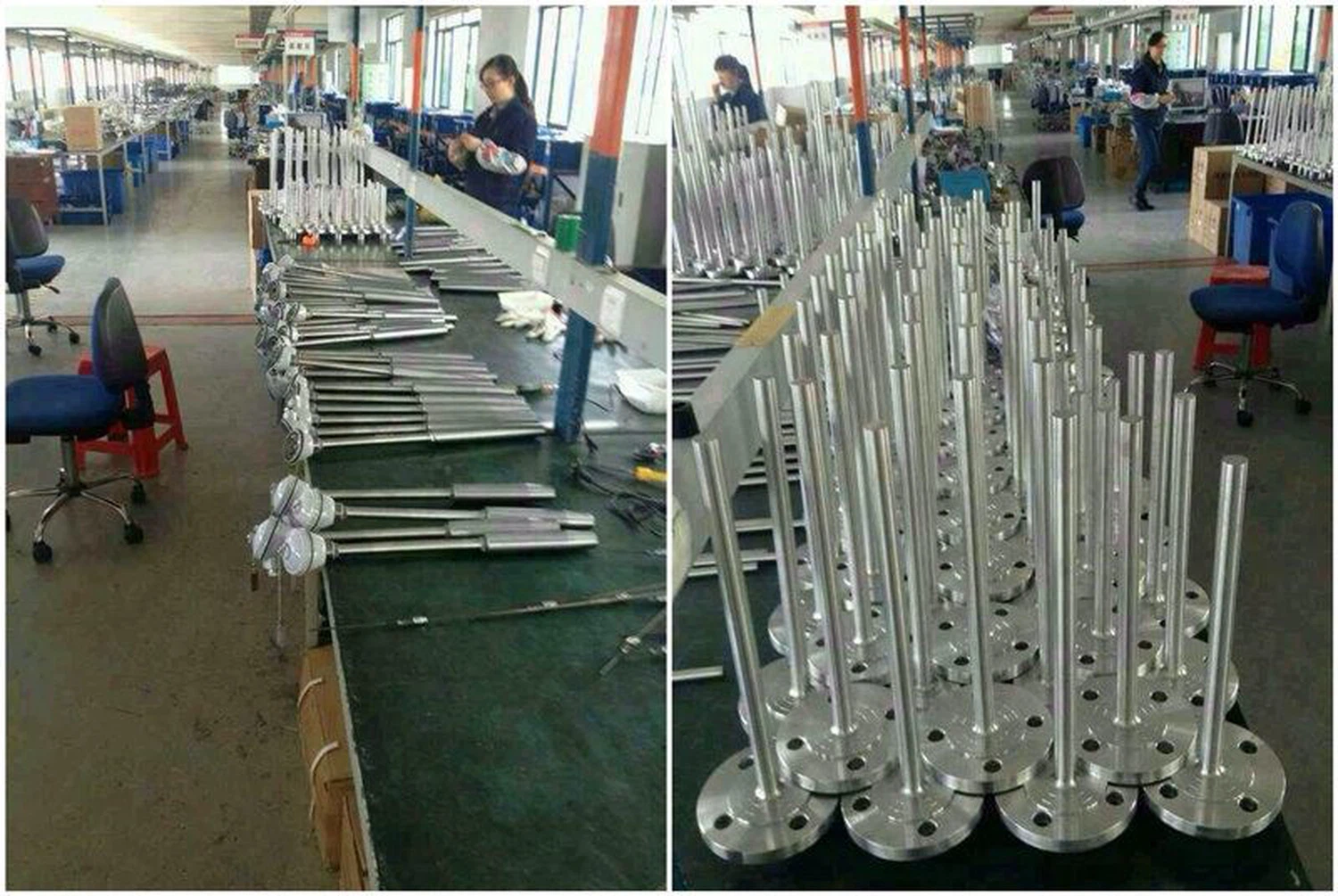
Chongqing Haichen Instrument Co., Ltd. was established in June 2000.After years of independent research and development, Haichen now possesses strong production capacity, larger production scale, advanced testing equipment, professional technical team.Haichen mainly specializes in manufacturing temperature sensors (thermocouple, thermal resistance, bimetallic thermometer, etc.), (signal) isolators, safety barriers, vibration meter and other instruments and meters; also undertakes selection and design, installation and commissioning work for automatic complete sets of instruments and meters.


productcate-1-1


productcate-1-1


Certificate
 
 
productcate-1-1
productcate-1-1
productcate-1-1
productcate-1-1
productcate-1-1


FAQ


Q: Where are temperature transmitters used?

A: Temperature transmitters are used in various industries. Especially in the process industry (chemical and pharmaceutical industry, food processing) they are installed to ensure product quality. In power plants, they are used to improve energy efficiency. In the oil and gas industry, they are used to monitor temperatures in refineries and during production. They are also of high importance when it comes to controlling temperatures in heating, ventilation and air-conditioning systems, in water treatment plants, during automotive production and in aerospace technology.

Q: What is the difference between digital and analogue temperature transmitters?

A: Analogue transmitters do not have processors. This means that the instruments are not configurable, but can only be adjusted for a fixed measuring range, for example. Moreover, they only offer limited diagnostic functions. Digital transmitters have a high accuracy, are versatile and configurable. They offer advanced diagnostic functions such as, for example, sensor break monitoring in accordance with NAMUR NE89, making them perfect for complex industrial applications.

Q: Which configuration options are there for temperature transmitters?

A: For temperature transmitters, there are many configuration possibilities for the different requirements. HART® tools enable the full range of device settings and therefore offer customers maximum flexibility. WIKA software allows user-friendly configurations of WIKA instruments, fixed-range transmitters with predefined measuring range ensure simplicity and bus systems provide complex networks and integration into automated control systems.

Q: How do temperature transmitters for head mounting and rail mounting differ from each other?

A: Temperature transmitters for head mounting and rail mounting are different in both their mounting method and their design. The functionality and performance, however, are the same for both types. Transmitters in head-mounted version are designed for installation in connection heads. There are two variants: either mounted directly onto the measuring insert or remotely inside the cover of the connection head. Temperature transmitters in rail-mounted version, also called DIN-rail mounting, are designed to be mounted onto DIN rails. They are suitable for use in control cabinets and can be mounted closely together, saving a lot of space. Whether a head-mounted or rail-mounted version is selected depends on the customer's application.

Q: What does temperature transmitter actually do?

A: A temperature transmitter is an electrical instrument that interfaces with the temperature sensor to isolate, amplify, filter noise, and convert the signal from the sensor to send it to the control device. Its primary function is to measure and alert temperature changes.

Q: Is an RTD a temperature transmitter?

A: The temperature transmitter is the device, which connects to the temperature sensor to transmit a signal for monitoring and controlling purposes. The temperature sensor is generally an RTD, Thermistor or Thermocouple sensor (as mentioned above), which will interface with a DCS, PLC, data logger or hardware display.

Q: What is the difference between a thermometer and a temperature transmitter?

A: Ans: A temperature sensor is an instrument used to measure the degree of hotness or coolness of an object whereas, a temperature transmitter is a device that is interfaced with a temperature sensor to transmit the signals to a remote location for monitoring and control purposes.

Q: What are the different types of temperature transmitters?

A: Analog output temperature transmitters. temperature transmitter 4 20ma - the most commonly used, as most industrial devices are designed to communicate in this temperature range. 0-10V temperature transmitter. digital temperature transmitters.

Q: What is the difference between a pressure transmitter and a temperature transmitter?

A: The main performance parameters of the pressure transmitter include range, accuracy, output signal, etc., while the main performance parameters of the temperature transmitter include measurement range, accuracy, response time, output signal, etc. The two performance parameters are different.

Q: What is the difference between a thermocouple and a temperature transmitter?

A: RTD is very sensitive and can register small changes in temperature. Thermocouples have poor sensitivity, which means that a small change in temperature is not recognised by it. RTD has a good response time. The reaction time of a thermocouple is faster than that of an RTD.

Q: Which is better, an RTD or a thermocouple?

A: Here are the key takeaways from this article for you: Accuracy: RTDs are more accurate than thermocouples in temperature measurement. RTDs have a temperature accuracy of ±0.5°C, while thermocouples have an accuracy of ±2°C.RTDs are devices made of pure metal wire (usually platinum or copper) which always increase in resistance with increasing temperature. The major difference between thermistors and RTDs is linearity: thermistors are highly sensitive and nonlinear, whereas RTDs are relatively insensitive but very linear.

Q: What's the difference between an RTD and a thermocouple?

A: Hermocouples and RTDs (Resistive Temperature Devices) are both devices commonly used for temperature measurement. The main difference between them is their respective sensing elements: a thermocouple uses two dissimilar metals, while a RTD uses a resistive wire element.

Q: Where are temperature transmitters used?

A: A temperature transmitter is used in industrial processes to accurately monitor and control temperatures. Temperature sensors generate electrical signals that are converted into a standardised output signal by the transmitter, usually into a 4-20 mA or 0-10 V signal.

Q: Is a temperature sensor better than a thermometer?

A: Temperature probes offer improved accuracy, reliability and versatility over traditional thermometers. The benefits of temperature probes include: Accuracy: Temperature probes often offer higher accuracy than traditional thermometers, as they measure the temperature directly.

Q: What is a ABB temperature transmitter?

A: ABB TTF200 Temperature Transmitter is a universal input smart temperature transmitter. It is designed for setting, in order to meet the specific application requirement of measuring low-level signals from thermocouples (THC), resistance thermometer (RTD), resistance (ohm), or EMF (mV) sources.

Q: What is an RTD temperature sensor?

A: Understanding RTDs. An RTD (Resistance Temperature Detector) is a sensor whose resistance changes as its temperature changes. The resistance increases as the temperature of the sensor increases. The resistance vs temperature relationship is well known and is repeatable over time.Differential pressure measurement is largely used in domestic and industrial applications. It is often the basis of other measurements such as flow, level, density, viscosity and even temperature.

Q: What is a head temperature transmitter?

A: Head-mount temperature transmitters.The compact head mounted temperature transmitter type from ABB is designed for standard type B sensor heads. The advantage increased measuring accuracy resulting from conversion of the sensor signal into a stable output signal close to the sensor.

Q: Do thermistors drift over time?

A: Typically, all thermistors are stable at room temperature and below. As exposure temperature increases so does drift. Temperature cycling, while causing other mechanical stresses during temperature changes, primarily affects stability during the high temperature cycles.

Q: Why use a thermocouple over a thermometer?

A: Thermocouples have two major advantages over traditional thermometers: they can be used over much wider ranges of temperatures and are usually smaller. They do, however, have disadvantages as well. They require a precision voltmeter and the materials used to make them are often expensive.

Q: Why is RTD preferred over thermistor?

A: The RTD is generally the best sensor for measuring a very broad range (100°C or higher) due to its relatively low change in resistance over temperature. However, that broad range also makes the RTD less sensitive than a thermistor in most systems.Some of the most common uses of thermistors are in digital thermometers, in cars to measure oil and coolant temperatures, and in household appliances such as ovens and refrigerators, but they are also found in almost any application that requires heating or cooling protection circuits for safe operation.

As one of the most professional temperature transmitter suppliers in China for over 20 years, we're featured by good service and competitive price. Please rest assured to buy high quality temperature transmitter for sale here from our factory. For customized service, contact us now.

low temperature thermocouple, tc thermocouple, corrugated wire tube cable protection
goTop

(0/10)

clearall