Chongqing Haichen Instrument Co., Ltd.

Thermocouple Sensor

Why Choose Us


Products widely used
Haichen products are safe and reliable, and are widely used in various fields such as steel, petroleum, chemical industry, light industry, building materials, environmental protection, food, power stations, aerospace, ships, etc.


Professional technical team
After years of independent research and development, Haichen now has strong production capacity, large production scale, advanced testing equipment, and a professional technical team.


QC
Strictly tested and inspected before shipment. Organize shipments with long-term freight forwarders, which are reliable and cheap.


Customer service
After shipment, we can notify customers of the tracking number so that customers can track the goods in time. If there are any problems with the product during use, you can contact us at any time by email or phone. We can try to resolve the issue within 24 hours.


What is Thermocouple Sensor


A thermocouple sensor is a device, typically, a thermocouple or resistance temperature detector, that provides temperature measurement in a readable form through an electrical signal.a thermometer is the most basic form of a temperature meter that is used to measure the degree of hotness and coolness.Temperature meters are used in the geotechnical field to monitor concrete, structures, soil, water, bridges, etc. for structural changes in due to seasonal variations.

First 123 Last 1/3
 
Benefits of Thermocouple Sensor
 
 
Temperature Range

The temperature scale of a Type K thermocouple temperature probe can be very wide depending on its design and materials. Some probes can measure temperatures as high as 2,200°F and as low as -58°F to 572°F.In contrast, most thermistor and thermometer sensors have a limited range. Although some thermistors now have an upper limit of 572°F, their accuracy diminishes considerably above 300°F. Furthermore, a thermistor is damaged more quickly and irreparably at temperatures exceeding its stated limit.

 
Probe Design

As a thermocouple sensor is made by joining two different metals, it has more mechanical design options than other sensors. For tiny sensor assemblies, extremely fine gauge wire can be utilized.Surface thermocouples are frequently made of flat wire. Heavy gauge wire can be used for extremely high-temperature probes or highly rugged assemblies. Thermocouple beads can also be used as fast-responding gas or air sensors. In comparison, other sensors are usually more constrained in terms of design and specifications.

 
Speed

In many applications, a quick response is essential. The mass or size of a temperature sensor has a direct impact on its speed. The larger the probe assembly or the sensor, the more the lag in the reading.Due to technological advances, thermistors can be quite small. Yet, in comparison, a thermocouple can be made even smaller than the smallest thermistors. After all, a thermocouple sensor is composed of two wires, whereas a thermistor includes a coating and some carbon.The sensing bead of the thermocouple can also fit inside a very thin tube, like a hypodermic needle. Even in a tube of 1/16″ diameter, a thermocouple bead can be directed further up into the tip of the probe than a thermistor. Due to this, a thermocouple sensor can equilibrate your goal temperature more quickly than a thermistor.

 
Cost

Compared to a standard industrial temperature probe, thermocouple sensors tend to be cost-effective. However, thermocouple sensors may be a little more expensive than some thermistors. This can be attributed to the higher cost of sturdier industrial-grade thermocouple probe materials.However, some low-cost thermocouple options are also available. Thermocouple manufacturers may use low-grade wire to reduce costs, resulting in faster wire degradation and lower accuracy.


Types of Thermocouple Sensor
 

K-Type

A K-type thermocouple is a general-purpose, inexpensive thermocouple with great temperature precision used in a diverse range of industries, sectors, and applications. Their wide usage is thanks to a combination of being affordable to manufacture and producing accurate readings.These thermocouples have an optimal temperature range of -200 and 1260 Celsius. Type K uses (Chromel / Alumel) wire as dissimilar metals as the conductors using Chromel as the positive wire and Alumel wire as the negative.

N-Type

N-type thermocouples are more costly to create than k-types. But, they provide better stability in radiation environments such as nuclear power applications. As such, the additional costs to manufacture are worthwhile in specific industries.These thermocouples have an optimal temperature range of -270 to 1300 Celsius. The wires are created from a combination of nickel -chromium -silico, (Nicrosil) and the other is nickel -silicon-magnesium (Nisil). Nicrosil is the positive and Nisil is used for the negative leg.

S-Type and R-Type

S-type and R-type thermocouple sensors are grouped together because they're basically the same thing. The only difference is that R-types are essentially a more expensive version of the S-type. Both these thermocouple sensors are often used in pharmaceuticals and Bio-Tech industries.Both these thermocouples have an optimal temperature range of 0 to 1450 Celsius. Both have one wire made of platinum-rhodium and one wire made of platinum. Platinum is the positive and rhodium is used for the negative leg.

J-Type

J-type thermocouples are the lowest cost to make. Unfortunately, the trade-off is that their lifespan is shortened if regularly exposed to excessive heat outside their optimal temperature range.These thermocouples have an optimal temperature range of -40 to 750 Celsius. One of their wires is consists of iron, while the other is made from Constantan a copper-nickel alloy. Iron is the positive and Constantan is used for the negative leg.

T-Type

T-types operate well in extreme cold. This is why they're often used in cryogenics and other situations where extremely low temperatures are typicalThese thermocouples operate in an ideal temperature range of -200 to 350 Celsius. Their wires are crafted from a copper-constantan combination. The wires are created from a combination of copper-constantan. Copper is the positive and constantan is used for the negative leg.

E-Type

E-type thermocouple sensors offer higher accuracy and strength when compared to K-type and J-types. But they only do so at moderate temperatures, making them poor choices for extreme heat or cold applications.These thermocouples operate in an ideal temperature range of -200 to 900 Celsius. One wire is created from a combination of nickel-chromium (chromel) and the other wire is made of constantan. Chromel is the positive and constantan is used for the negative leg.


Application of Thermocouple Sensor
 

Industrial applications
Thermocouple sensor are utilized to monitor various environments and machinery, power plants, and manufacturing. Temperature sensors are used to measure water temperatures in reservoirs and boreholes. They can also be used to interpret temperature-related stress and changes in volume in dams. Temperature sensors are also utilized in the study of the temperature effect on other installed instruments.


Scientific and laboratory applications
Thermocouple sensor are utilized in science and biotech monitoring.


Medical applications
Thermocouple sensor are utilized in the monitoring of patients, in medical devices, in thermodilution, in humidifiers, gas analysis, cardiac catheters, ventilator flow tubes, and dialysis fluid temperature.


Uses in motorsports
Thermocouple sensor are used for measuring inlet air temperature, exhaust gas, engine temperature, and oil temperature.


Domestic appliances
Thermocouple sensor are used in kitchen appliances (ovens, kettles, etc.) and also in white goods.


Hvac applications
Thermocouple sensor are utilized in air conditioning devices and heating ventilation devices, either domesticated or commercial.


Sensors in transit
Thermocouple sensor are used in refrigerated vans and trucks.

Components of Thermocouple Sensor


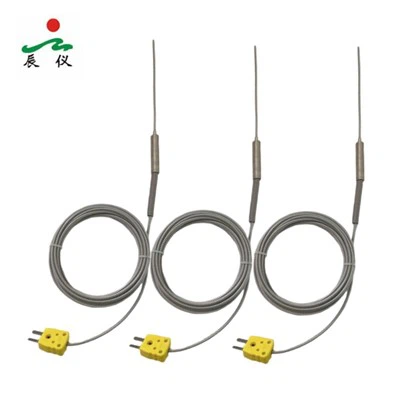
K J Type Thermocouple Sensor

Ungrounded-Junction

In this type of junction, the conductors are totally separated from the protecting cover. The applications of this junction mainly include high-pressure application works. The main benefit of using this function is to decrease the stray magnetic field effect.

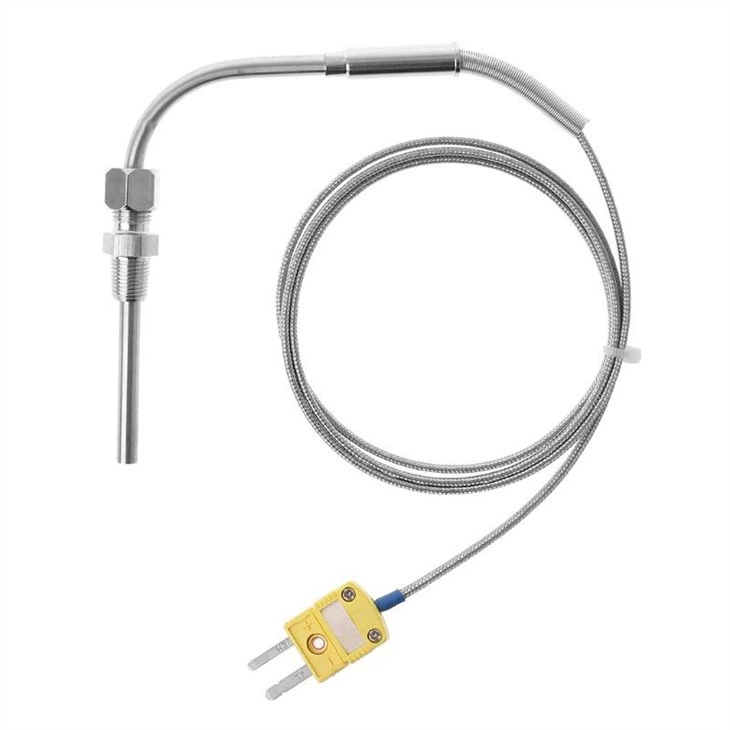
K Type Exhaust Gas Temp Probe

Grounded-Junction

In this type of junction, the metal wires, as well as the protection cover, are connected together. This function is used to measure the temperature in the acidic atmosphere, and it supplies resistance to the noise.

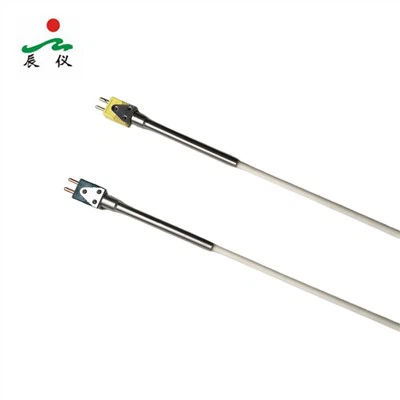
Mineral Insulated K Type Thermocouple

Exposed-Junction

The exposed junction is applicable in the areas where a quick response is required. This type of junction is used to measure the gas temperature. The metal used to make the temperature sensor basically depends on the calculating range of temperature.


How to Choose Thermocouple Sensor
 
Environmental Conditions

A critical factor in the placement and choice of a temperature sensor is the conditions where it will be used. Humidity, vibrations, and other environmental factors radically affect the stability and accuracy of a temperature sensor. In addition, electrical noise affects its readings especially if the temperature changes are minute and small. Attention to the noise level where a temperature sensor is used ensures accurate measurements.

Temperature Range

Different types of temperature sensors are capable of measuring different ranges and might be more accurate within a certain range. It is important to make sure that the range of the temperature sensor is checked, and also the range of your application that is expected before purchasing. The temperature range of the temperature sensor is provided on the datasheet.

Accuracy and Stability

An application may require a certain degree of accuracy; be aware that the variance of thermocouples in long term stability is higher than that of thermistors and RTDs.

Size and Package

The type of temperature sensor selected is determined by the space available within the application. If there is limited space, a smaller device is required. How the temperature sensor will be connected to the application and how the temperature is going to be measured is determined by package style; therefore, package style is an important consideration.

Manufacturing a Thermocouple Sensor: A Step-by-Step Guide
K Type Exhaust Gas Temp Probe
Tungsten Rhenium Thermocouple
Mineral Insulated K Type Thermocouple
K J Type Thermocouple Sensor

Step 1
Select Thermocouple Type: There are various types of thermocouples available, each with different materials and temperature ranges. Choose the thermocouple type that suits your application requirements. Common types include Type K (chromel-alumel), Type J (iron-constantan), and Type T (copper-constantan).

Step 2
Choose Wire Materials: Thermocouples consist of two wires made of different metals. Select the appropriate wire materials based on the selected thermocouple type. Ensure that the chosen materials can withstand the desired temperature range and provide accurate measurements.

Step 3
Prepare the Wires: Clean the wires using a suitable solvent to remove any contaminants or oxide layers. Next, cut the wires to the desired length, ensuring they are of equal lengths for accurate temperature measurements.

Step 4
Weld the Wires: To create the thermocouple junction, the wires need to be welded together. There are different welding methods available, such as resistance welding, laser welding, or even soldering. The welding method used depends on the thermocouple wire materials and their compatibility.

Step 5
Insulate the Junction: After welding the wires, you need to insulate the junction to ensure accurate temperature readings. Various insulation methods can be used, such as ceramic beads, ceramic powder, or glass sealing. The insulation material should be compatible with the temperature range and environmental conditions of your application.

Step 6
Form the Thermocouple Probe: To protect the wires and provide mechanical stability, you can encase the thermocouple junction in a probe. The probe material should be selected based on the specific application requirements. Common materials include stainless steel, Inconel, or ceramic.

Step 7
Calibrate the Thermocouple: Once the manufacturing process is complete, it is essential to calibrate the thermocouple to ensure accurate temperature measurements. This involves comparing the readings of the thermocouple with a reference temperature source. Calibration can be done using specialized equipment or by comparing the readings with a known temperature reference.

Step 8
Testing and Quality Assurance: Before finalizing the thermocouple for use, conduct rigorous testing to ensure its performance and reliability. Test the thermocouple across various temperature ranges and compare the readings with a calibrated reference thermometer. Additionally, perform quality checks to ensure proper insulation, mechanical strength, and durability.

Step 9
Ongoing Quality Control: Implement a quality control system to monitor the manufacturing process continuously. Regularly inspect the materials, welding techniques, insulation integrity, and calibration processes to identify any potential issues or deviations. This helps maintain consistent quality and ensures that the thermocouples meet the required standards.

Step 10
Compliance with Standards: Ensure that the manufactured thermocouples comply with relevant industry standards and regulations. These standards may include temperature accuracy, insulation resistance, response time, or specific requirements for certain applications or environments. Stay updated with the latest standards and make necessary adjustments to your manufacturing process accordingly.


Tips for Extending the Life of Thermocouple Sensor
01.

Avoid Tip Deformation

The actual sensing part of a temperature sensor is very close to the tip of the probe, so keeping the tip protected is extremely important. This is especially important when it comes to Resistance Temperature Detectors (RTDs). RTDs consist of a very small platinum resistor that is very fragile. Any hammering or mechanical force on the tip of an RTD can ruin the sensor. Thermocouple junctions can also be broken or become unreliable if they are deformed or disturbed.

02.

Avoid Contamination of Leads

While temperature sensors are not as prone to contamination as our other heating products, such as mica band heaters and cartridge heaters, it can still happen. Often what we see is plastic that has been melted and somehow made its way onto the temperature sensor leads. Depending on the type of lead wire insulation, and the type of plastic, the plastic can create a “short” between the leads. This is really a secondary junction. This causes problems in thermocouples and RTDs. It is very important to not allow the leads to be contaminated.

03.

installation instruction service

Published literature states that a J-type thermocouple is accurate up to 1382°F. However, keep in mind that this is the maximum temperature rating for the thermocouple junction. The insulation surrounding the thermocouple wire will not be rated to this high of a temperature. Often times what we see is that the fiberglass insulation around the thermocouple wire has got hot and burned through. This leads to a bare thermocouple wire that makes contact with the metal of a machine. This creates a secondary junction which then gives a bogus temperature reading and causes the machine to have problems.

04.

Take Care with Lead Routing

A high percentage of the temperature sensors that we see fail have done so because the leads have been damaged in some way. Machines have sliding or moving parts, and can easily pinch or nick leads if care is not taken when routing the leads.A stainless steel hose will help with deflecting mechanical force, but can still be crushed.A stainless steel over braid can help with mechanical wear, or rubbing, but again it is best to avoid this scenario, if possible.


Our Factory
 

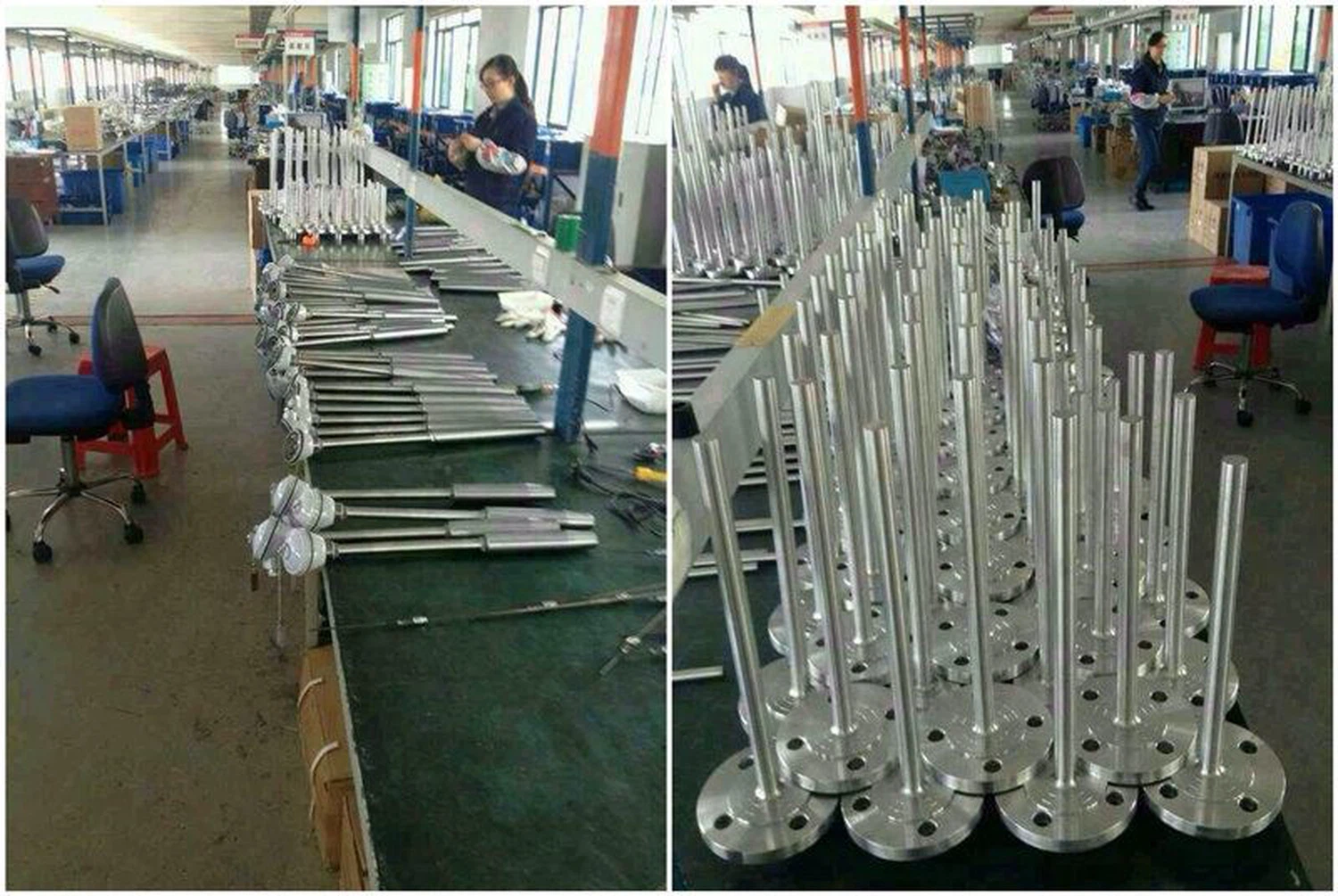
Chongqing Haichen Instrument Co., Ltd. was established in June 2000.After years of independent research and development, Haichen now possesses strong production capacity, larger production scale, advanced testing equipment, professional technical team.Haichen mainly specializes in manufacturing temperature sensors (thermocouple, thermal resistance, bimetallic thermometer, etc.), (signal) isolators, safety barriers, vibration meter and other instruments and meters; also undertakes selection and design, installation and commissioning work for automatic complete sets of instruments and meters.

productcate-1-1


productcate-1-1


Certificate
 
 
productcate-1-1
productcate-1-1
productcate-1-1
productcate-1-1
productcate-1-1


FAQ


Q: What happens if a thermocouple fails?

A: Usually, because thermocouples are fairly simple devices, they either work or do not work. Probe failure is quite an unexpected event. Instruments usually indicate thermocouple failure, if no signal is detected. Instruments software needs to be programmed to respond safely to thermocouple failure, by switching off or on the heaters or coolers as appropriate.

Q: What problems you can have with thermocouples?

A: You always need to think of cold junction compensation. This is because the cold junction is usually inside an instrument, an allowance must be made because all thermocouples lookup tables are based on cold junctions on 0 degrees centigrade, which is rarely the case in practice. Most instruments will deal with this for you but you can create an ice bath for use in the most demanding calibrations.
Thermocouple drift occurs because the materials get used at the upper end of their practical range which causes material deterioration and that affects the output. Thermocouple replacement is the only solution to that problem.For high temperatures, rare metals are used which can become very expensive.

Q: What are the advantages of using thermocouples?

A: Thermocouples are very simple, rugged temperature sensors which are easy and simple to manufacture and usually are not expensive. Moreover, they are useful over a wide array of temperature ranges and can be inserted in tough locations such as nuclear reactors, body cavities and more. In addition, thermocouples can be made with fine wires to measure the temperature of very small objects like insects.

Q: How do you set up a thermocouple?

A: When you set up a thermocouple for the first time, you need to be sure that the type of thermocouple being used matches the instrument thermocouple type. You also need to use compensating cables or thermocouple extension cables between the sensor connection point and the instrument.
The position of the hot junction needs to be carefully thought about to avoid radiant energy from the heaters. The hot junction also needs to be sufficiently immersed in the process to avoid conduction errors along with the sensor itself

Q: What are the materials used for thermocouples?

A: The most useful materials for thermocouples have high-temperature stability such as nickel and platinum, however, there are other materials such as copper, iridium, constantan, chromel, alumel, iron and rhodium which are commonly used in different types of thermocouples.

Q: How many wires does a thermocouple have?

A: A thermocouple is always comprised of two wires (conductors) made from dissimilar metals. These two wires are joined to form a temperature measurement junction. Each of them made of a specific metal or metal alloy.For example, the positive (+) conductor of a type K thermocouple is made of a chromium/nickel alloy called chromel and the negative (-) conductor is made of an aluminum/nickel alloy called alumel. The wire which is used to make a thermocouple junction is called thermocouple wire.

Q: What is a thermocouple?

A: A thermocouple is a temperature sensor (electrical device) used to measure temperature. It comprises two types of metal which are joined together at one end forming a junction. When the junction is cooled or heated it produces a so-called “temperature-dependent voltage” which is used to measure temperature.Said in another way, a thermocouple is a very simple, robust and inexpensive sensor for temperature measurement which is used in a variety of processes for measuring temperature.
They can be also produced in a large number of styles. For instance, thermocouple probes with connectors, bare wire thermocouples, thermocouple probes and more.

Q: What is a thermocouple used for?

A:If you are wondering what is the use of a thermocouple, well, they are pretty versatile and are used in a vast array of applications to measure temperature due to their cost-effectiveness, robustness and capabilities. They are used in applications such as home appliances, food processing, plane engines, furnace monitoring, automotive sensors and many more.

Q: What devices use thermocouples?

A: Thermocouples can be used for a wide variety of applications in the food and beverage industry including Clean-In-Place sensors, Penetration Probes, Oven Control, Food Chain Monitoring, Hotplate Control and Monitoring and Steam Kettle temperature control.A thermocouple is a sensor that measures temperature. It consists of two different types of metals, joined together at one end. When the junction of the two metals is heated or cooled, a voltage is created that can be correlated back to the temperature.The thermocouple working principle is based on the Seeback Effect. This effect states that when a closed circuit is formed by jointing two dissimilar metals at two junctions, and junctions are maintained at different temperatures then an electromotive force (e.m.f.) is induced in this closed circuit.

Q: What is the purpose of the thermocouple?

A: A thermocouple is simply a sensor that is used for measuring temperature. This design of sensor consists of two dissimilar metal wires which are joined together at one end, connected to an instrument that is capable of accepting a thermocouple input and measure the reading.

Q: How do you use a thermocouple sensor?

A: The grounded tip of the thermocouple will be in contact with the sheath wall, with that in place, it provides a fast response time and it is the most susceptible to electrical ground loops. As for the ungrounded junction, the thermocouple is separated from the sheath wall by a layer of insulation.

Q: How do I know if my thermocouple is bad?

A: The best way to verify that you need a new thermocouple is to see if your pilot light is lit. If the pilot light can't hold ignition, that means either a problem with the gas supply or, more likely, the need for thermocouple replacement.

Q: What are the symptoms of a bad thermocouple?

A: Common signs of a faulty thermocouple include inconsistent temperature readings, a pilot light that won't stay lit in a gas appliance, or a device that won't heat up. Remember, safety comes first!

Q: Do you need a thermocouple?

A: Thermocouples are needed when high temperatures need to be measured or temperatures in hazardous environments, such as environments with high vibration or with toxic gasses. They are less common when high precision measurement is required for temperature ranges varying from 0 to 300°C.

Q: What signal does a thermocouple produce?

A: Millivolt range
Thermocouples produce outputs in the millivolt range. These signals can easily be affected by electro-magnetic interference from radios, high voltage devices and electric motors among others. In these cases, the thermocouple must be protected from the interference.

Q: What stops a thermocouple from working?

A: Changes in temperature can cause regular expansion and contraction in metal, which will cause thermocouples to weaken over time. After enough time, metal fatigue can cause a thermocouple to break.The term "thermoelectric effect" encompasses three separately identified effects: the Seebeck effect, Peltier effect, and Thomson effect.

Q: Should the pilot light be touching the thermocouple?

A: The pilot flame should touch the thermocouple at a specific level. If the flame is blue and weak, and barely reaches the thermocouple, it needs to be stronger. If it extends well above the thermocouple, it's too strong.The thermocouple is a safety device designed to shut off the gas valve if the pilot light goes out. Although, if your thermocouple is old, worn, damaged, wrongly positioned, or malfunctioning, it could have wrongly shut off the gas valve and prevented your pilot light from staying lit.

Q: What is the life expectancy of a thermocouple?

A: In effect, new thermocouples were installed into contaminated tubes, causing the degradation of the sensors and generating greater than a 100°F shift in accuracy. In this scenario, thermocouple life, which should have been close to one year, was shortened to within a week.Thermocouple. If your furnace is an older model with a pilot light, it relies on a thermocouple to shut off its gas valve if the flame goes out. The average cost to repair or replace a thermocouple is $100–$250.

Q: Can you clean a thermocouple?

A: Yes, you can clean a thermocouple, but the task must be done with a light touch. Remove the thermocouple from the process assembly, using a steel wool or emery cloth, lightly clean the tip removing any build up. Cleaning a thermocouple is not a fix for an issue, such as inaccurate readings.

As one of the most professional thermocouple sensor suppliers in China for over 20 years, we're featured by good service and competitive price. Please rest assured to buy high quality thermocouple sensor for sale here from our factory. For customized service, contact us now.

helix bimetallic thermometer, silicon carbide thermocouple protection tube, exhaust gas thermocouple
goTop

(0/10)

clearall