

Hey there! As a supplier of the M5 Thermocouple, I often get asked if this nifty little device can be used for food temperature measurement. Well, let's dig into it and find out.
First off, let's talk a bit about what the M5 Thermocouple is. The M5 Thermocouple is a type of wire - type thermocouple. Thermocouples work based on the Seebeck effect, which means when two different metals are joined at two points and there's a temperature difference between those points, a voltage is generated. This voltage can then be measured and converted into a temperature reading.
Now, when it comes to food temperature measurement, there are a few key factors we need to consider. Accuracy is super important. In the food industry, getting the temperature right is crucial for food safety. Undercooked food can harbor harmful bacteria like Salmonella or E. coli, while overcooking can ruin the taste and texture of the food.
The M5 Thermocouple is known for its relatively high accuracy. It can provide precise temperature readings within a certain range. This accuracy makes it a potential candidate for food temperature measurement. For example, when cooking meat, you need to know exactly when it reaches the safe internal temperature. A beef steak should be cooked to at least 145°F (63°C) for medium - rare, and the M5 Thermocouple can help you hit that mark.
Another factor is the temperature range. Different types of food require different cooking or storage temperatures. The M5 Thermocouple has a decent temperature range that can cover most common food - related temperature needs. Whether you're dealing with the low temperatures of a refrigerator (around 32 - 40°F or 0 - 4°C) or the high temperatures of an oven (up to several hundred degrees Fahrenheit), the M5 Thermocouple can handle it.
But it's not all sunshine and rainbows. One of the challenges with using the M5 Thermocouple for food temperature measurement is its durability in a food - related environment. Food can be messy, with juices, oils, and other substances that might corrode the thermocouple over time. If the thermocouple gets damaged, its accuracy can be affected. However, if proper care is taken, such as cleaning it regularly and using it with appropriate protective sheaths, this issue can be mitigated.
Let's also compare the M5 Thermocouple with some other thermocouples commonly used in the industry. The K Type Multipoint Thermocouple is another option. The K - type multipoint thermocouple can measure temperatures at multiple points simultaneously. This can be really useful in large - scale food production, where you might need to monitor the temperature at different locations in a big oven or a storage tank.
On the other hand, the K Type Thermocouple Probe is more of a handheld option. It's great for quick and easy temperature checks. But the M5 Thermocouple has its own advantages. It can be integrated into more complex systems, which is useful for continuous temperature monitoring in a food processing plant.
When it comes to the material of the M5 Thermocouple, it's usually made of metals that are relatively resistant to high temperatures. But as I mentioned earlier, the food environment can be tough on it. Some food products are acidic, and these acids can react with the metals in the thermocouple. To address this, there are special coatings available that can protect the thermocouple from corrosion.
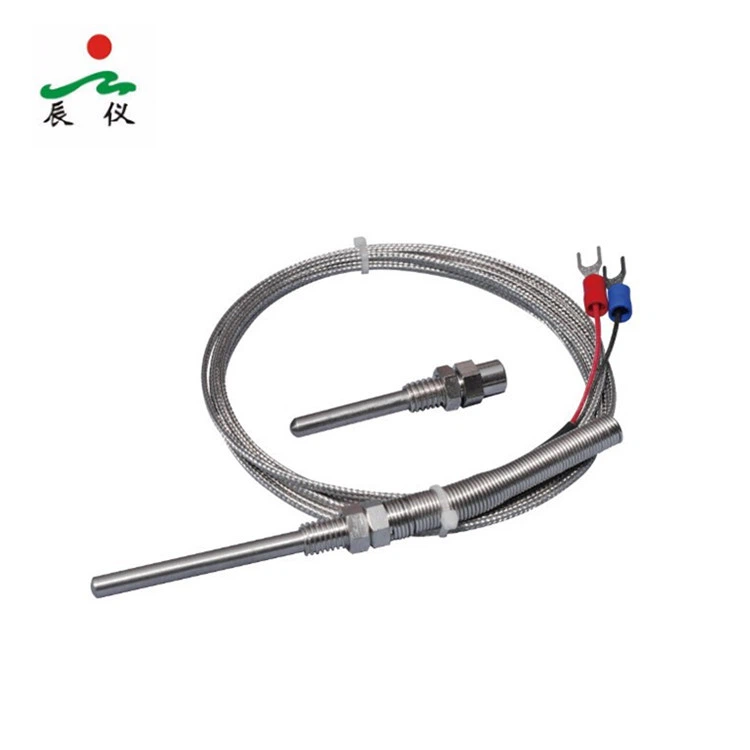

Now, let's talk about installation. Installing the M5 Thermocouple for food temperature measurement needs to be done carefully. It should be placed in the right location to get an accurate reading. For example, when measuring the temperature of a whole chicken, the thermocouple should be inserted into the thickest part of the thigh, away from the bone. If it's installed incorrectly, the reading might be off, and that can lead to food safety issues.
In terms of cost - effectiveness, the M5 Thermocouple is a pretty good option. It offers a good balance between price and performance. Compared to some high - end, specialized food temperature sensors, the M5 Thermocouple is more affordable, which makes it accessible for small - to - medium - sized food businesses.
In conclusion, the M5 Thermocouple can definitely be used for food temperature measurement. It has the accuracy, temperature range, and cost - effectiveness that make it a viable choice. However, proper care and installation are essential to ensure its long - term performance and accuracy.
If you're in the food industry and are looking for a reliable temperature measurement solution, the M5 Thermocouple could be just what you need. We're here to help you with any questions you might have about using it for your specific food - related applications. Whether you're a restaurant owner, a food processor, or a home cook looking for a more accurate way to cook your meals, feel free to reach out to us to discuss your needs and start a procurement conversation.
References
- "Thermocouple Handbook" - General Electric Company
- "Food Safety and Temperature Control" - United States Department of Agriculture
