

As a supplier of WRe526 Thermocouples, I often encounter inquiries from customers regarding the suitability of our products in various environments. One question that comes up frequently is, "Can the WRe526 Thermocouple be used in a humid environment?" In this blog post, I'll delve into this topic, exploring the characteristics of the WRe526 Thermocouple, the challenges posed by humid conditions, and whether it can effectively function in such an environment.
Understanding the WRe526 Thermocouple
Before discussing its use in a humid environment, it's essential to understand what the WRe526 Thermocouple is. A thermocouple is a temperature sensor that consists of two different metals joined together at one end. When there is a temperature difference between the junction (the joined end) and the other end (the reference end), a voltage is generated. This voltage can be measured and correlated to the temperature.
The WRe526 Thermocouple is a type of high - temperature thermocouple. It is composed of tungsten - rhenium alloys, which are known for their ability to withstand extremely high temperatures. These thermocouples are commonly used in industries such as metallurgy, glass manufacturing, and aerospace, where high - temperature measurements are required. They can measure temperatures up to around 2300°C, making them suitable for some of the most demanding high - temperature applications.
The Impact of Humidity on Thermocouples
Humidity can have several adverse effects on thermocouples. Firstly, moisture in the air can cause corrosion of the thermocouple wires. Corrosion can change the composition of the metals in the thermocouple, which in turn affects the Seebeck coefficient (the relationship between the temperature difference and the generated voltage). As the Seebeck coefficient changes, the accuracy of the temperature measurement is compromised.
Secondly, humidity can lead to the formation of an electrical short circuit. Water is a conductor of electricity, and if it accumulates on the thermocouple wires or in the insulation, it can create a path for electrical current to flow outside of the intended circuit. This can result in inaccurate voltage readings and potentially damage the thermocouple or the associated measurement equipment.
Another issue is the degradation of the insulation material. Many thermocouples are insulated to prevent electrical interference and short - circuits. In a humid environment, the insulation material can absorb moisture, which reduces its insulating properties. This can lead to signal interference and inaccurate temperature measurements.
Can the WRe526 Thermocouple Be Used in a Humid Environment?
The answer to whether the WRe526 Thermocouple can be used in a humid environment is not straightforward. It depends on several factors.
Protective Sheaths
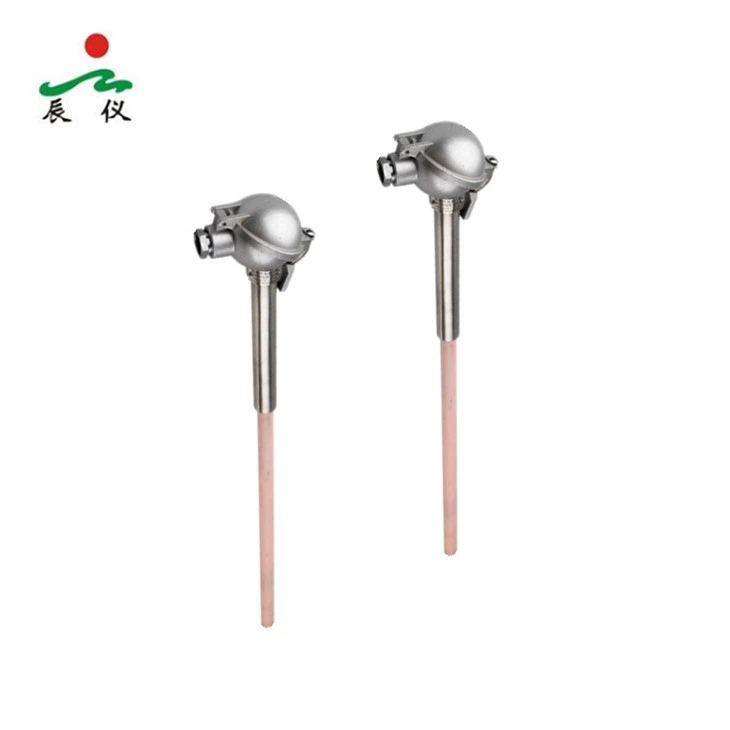
One way to use the WRe526 Thermocouple in a humid environment is by using a protective sheath. A well - designed sheath can provide a barrier between the thermocouple wires and the humid air. For example, ceramic sheaths are often used with high - temperature thermocouples. Ceramics are generally resistant to corrosion and can withstand high temperatures. They also have good insulating properties, which can prevent electrical short - circuits caused by moisture.
However, it's important to note that the sheath must be properly sealed. Any gaps or cracks in the sheath can allow moisture to enter and come into contact with the thermocouple wires. Regular inspection of the sheath is necessary to ensure its integrity.

Coating and Encapsulation
Another option is to apply a protective coating to the thermocouple wires or encapsulate them. Specialized coatings can provide a waterproof and corrosion - resistant layer. Encapsulation involves embedding the thermocouple in a protective material, such as a resin. This can effectively isolate the thermocouple from the humid environment.
Monitoring and Maintenance
Regardless of the protective measures taken, continuous monitoring and maintenance are crucial when using the WRe526 Thermocouple in a humid environment. Regular calibration of the thermocouple is necessary to ensure accurate temperature measurements. Visual inspections should be carried out to check for signs of corrosion, damage to the sheath, or degradation of the insulation.
Comparison with Other Thermocouples in Humid Environments
To put the WRe526 Thermocouple's performance in a humid environment into perspective, let's compare it with some other types of thermocouples.
Small and Laboratory Thermocouples
Small and laboratory thermocouples are often used in less harsh environments. They are generally more sensitive and may not be as well - suited for humid conditions as the WRe526 Thermocouple. Their smaller size and more delicate construction make them more vulnerable to corrosion and moisture - related damage.
C Type Thermocouple
The C Type Thermocouple, like the WRe526, is also a high - temperature thermocouple made of tungsten - rhenium alloys. It has similar high - temperature capabilities. In a humid environment, both the C Type and WRe526 Thermocouples face similar challenges, and similar protective measures need to be taken.
Type S R B Thermocouple
Type S, R, and B thermocouples are made of platinum - rhodium alloys. They are known for their high accuracy and stability at high temperatures. However, platinum - rhodium alloys can also be affected by humidity. Compared to the WRe526 Thermocouple's tungsten - rhenium alloys, they may be more prone to certain types of corrosion in a humid environment, especially in the presence of impurities in the air.
Conclusion
In conclusion, the WRe526 Thermocouple can potentially be used in a humid environment, but it requires careful consideration and appropriate protective measures. With the use of protective sheaths, coatings, or encapsulation, and with proper monitoring and maintenance, it is possible to ensure accurate temperature measurements even in the presence of moisture.
If you are considering using the WRe526 Thermocouple in a humid environment for your high - temperature measurement needs, I encourage you to reach out to us. Our team of experts can provide you with detailed information and guidance on the best solutions for your specific application. Whether you need advice on protective measures or want to discuss the technical specifications of our thermocouples, we are here to assist you. Contact us to start a discussion about your procurement requirements and how our WRe526 Thermocouples can meet your needs.
References
- "Thermocouples: Theory and Practice" by John G. Webster
- "High - Temperature Measurement" by R. A. Nelson
- Industry standards and guidelines related to thermocouple usage in different environments.
