

When it comes to temperature measurement in various industrial and commercial applications, two commonly used devices are bimetal thermometers and thermistors. As a supplier of bimetal thermometers, I am well - versed in the features, advantages, and limitations of both these temperature - sensing instruments. In this blog post, I will conduct a comprehensive comparison between bimetal thermometers and thermistors to help you make an informed decision when choosing the right temperature measurement tool for your needs.
Working Principles
Bimetal Thermometers
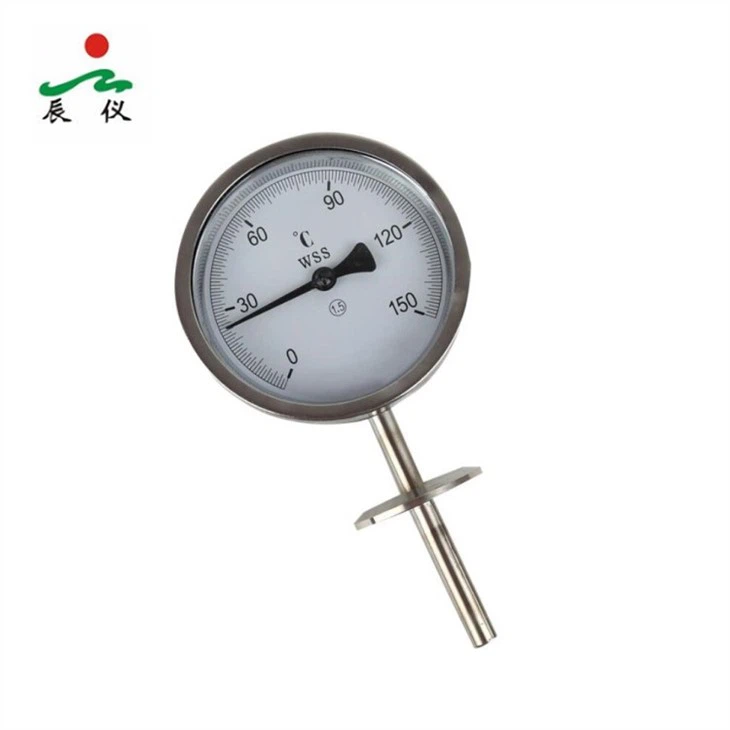
Bimetal thermometers operate on the principle of differential expansion. They consist of two different metals bonded together to form a bimetallic strip. When the temperature changes, each metal expands or contracts at a different rate due to its unique coefficient of thermal expansion. This causes the bimetallic strip to bend. The amount of bending is proportional to the temperature change, and this mechanical movement is translated into a temperature reading on a calibrated scale. For example, our WSS 401 Bimetal Thermometer uses this reliable principle to provide accurate temperature measurements in a wide range of industrial settings.
Thermistors
Thermistors are semiconductor devices whose electrical resistance changes significantly with temperature. There are two main types: negative temperature coefficient (NTC) thermistors, where the resistance decreases as the temperature increases, and positive temperature coefficient (PTC) thermistors, where the resistance increases with temperature. The relationship between resistance and temperature is non - linear, and it is typically described by a complex mathematical formula. By measuring the resistance of the thermistor, the temperature can be determined.
Accuracy
Bimetal Thermometers
Bimetal thermometers generally offer moderate accuracy. Their accuracy can range from ±1% to ±4% of the full - scale reading, depending on the quality of the instrument and the manufacturing process. They are suitable for applications where a general temperature indication is sufficient, such as in HVAC systems, food storage, and some industrial processes where precise temperature control is not critical. However, factors like mechanical wear and tear over time can slightly affect their accuracy.

Thermistors
Thermistors can provide high accuracy, especially in a relatively narrow temperature range. High - quality thermistors can achieve accuracies of ±0.1°C or even better. This makes them ideal for applications that require precise temperature measurement, such as medical devices, laboratory equipment, and some high - tech industrial processes. However, their accuracy can be affected by factors like self - heating, which occurs when current passes through the thermistor and generates heat, and environmental factors such as humidity.
Temperature Range
Bimetal Thermometers
Bimetal thermometers can cover a wide temperature range. They can typically measure temperatures from - 80°C to 600°C, depending on the design and the materials used. This wide range makes them suitable for a variety of industrial applications, including those in harsh environments. For instance, our Radial Bimetallic Thermometer is designed to withstand and accurately measure temperatures within a broad spectrum, making it a versatile choice for different industries.
Thermistors
Thermistors usually have a more limited temperature range compared to bimetal thermometers. Most NTC thermistors can operate in the range of - 50°C to 150°C, while some specialized PTC thermistors can handle higher temperatures, up to around 200°C. This limited range restricts their use in applications where extremely high or low temperatures need to be measured.
Response Time
Bimetal Thermometers
The response time of bimetal thermometers is relatively slow. Since they rely on the mechanical movement of the bimetallic strip, it takes some time for the strip to bend in response to a temperature change. The response time can range from a few seconds to several minutes, depending on the size and design of the thermometer. This slow response time may not be suitable for applications where rapid temperature changes need to be monitored.
Thermistors
Thermistors have a much faster response time compared to bimetal thermometers. They can detect temperature changes almost instantaneously because the change in electrical resistance occurs very quickly with a change in temperature. This makes them well - suited for applications where real - time temperature monitoring is required, such as in electronic devices and some chemical processes.
Durability and Reliability
Bimetal Thermometers
Bimetal thermometers are known for their durability and reliability. They are mechanical devices with no electronic components, which means they are less susceptible to electrical interference and damage. They can withstand harsh environments, including high vibration, shock, and dust. For example, our Bimetal Thermometer With Sanitary Flange is designed for use in hygienic applications, where it can resist corrosion and maintain its performance over a long period.
Thermistors
Thermistors are more sensitive to environmental factors and physical stress. They can be damaged by over - current, excessive heat, or mechanical shock. Additionally, their performance can degrade over time due to aging and environmental exposure. However, with proper protection and handling, they can still provide reliable temperature measurements in suitable applications.
Cost
Bimetal Thermometers
Bimetal thermometers are generally more cost - effective, especially for large - scale applications. They have a simple design and do not require complex electronics or calibration equipment. This makes them an attractive option for industries looking for an affordable temperature measurement solution without sacrificing too much on accuracy.
Thermistors
Thermistors can be more expensive, especially high - accuracy models. The manufacturing process of thermistors is more complex, and they often require additional signal - conditioning electronics to convert the resistance change into a temperature reading. However, in applications where high precision is essential, the cost may be justified.
Ease of Use
Bimetal Thermometers
Bimetal thermometers are very easy to use. They provide a direct visual reading of the temperature, which can be easily understood by operators. They do not require any power source, making them suitable for use in remote locations or areas where electrical power is not available.
Thermistors
Thermistors require additional electronics to measure the resistance and convert it into a temperature reading. This means they are more complex to install and use compared to bimetal thermometers. They also need to be calibrated regularly to maintain accuracy.
Applications
Bimetal Thermometers
Bimetal thermometers are widely used in many industries. In the food industry, they are used to monitor the temperature of refrigerators, freezers, and ovens. In the HVAC industry, they are used for temperature control in heating and cooling systems. They are also commonly used in industrial machinery, such as engines and pumps, to monitor the operating temperature.
Thermistors
Thermistors are commonly used in applications where high accuracy and fast response time are required. In the medical field, they are used in thermometers, incubators, and other medical devices. In the electronics industry, they are used for temperature compensation in electronic circuits and for monitoring the temperature of computer processors.
In conclusion, both bimetal thermometers and thermistors have their own unique advantages and disadvantages. The choice between them depends on the specific requirements of your application, such as accuracy, temperature range, response time, durability, cost, and ease of use. As a supplier of bimetal thermometers, I can offer a wide range of high - quality products that are suitable for various industrial and commercial applications. If you are interested in learning more about our bimetal thermometers or need help in choosing the right temperature measurement solution for your needs, please feel free to contact us for procurement and further discussions.
References
- "Temperature Measurement Handbook", CRC Press
- "Industrial Instrumentation and Control Handbook", McGraw - Hill
- Manufacturer's datasheets for bimetal thermometers and thermistors
