

Hey there! As a supplier of C Type Thermocouples, I've had a ton of folks ask me about the accuracy class of these nifty temperature - measuring devices. So, let's dive right in and break it down!
First off, what's a thermocouple anyway? It's a device that's used to measure temperature. It works based on the Seebeck effect, which is basically a phenomenon where a voltage is generated when two different metals are joined at a junction and there's a temperature difference between the junction and the other ends of the metals.
Now, let's talk about C Type Thermocouples specifically. They're known for being used in high - temperature applications, and they're pretty popular in industries where you need to measure really hot stuff, like in furnaces or certain manufacturing processes.
The accuracy class of a thermocouple tells you how close the temperature reading from the thermocouple is likely to be to the actual temperature. It's all about reliability and precision, which are super important when you're dealing with high - stakes applications where getting the temperature right can make or break a process.
There isn't an international standard that specifically lays out the accuracy classes for C Type Thermocouples like there is for some other types, such as Type S R B Thermocouple. For thermocouples with established standards, accuracy classes are usually defined in terms of a certain percentage of the temperature reading or an absolute temperature value.
In general, the accuracy of a C Type Thermocouple can be affected by several factors. One big factor is the quality of the materials used. If the metals that make up the thermocouple aren't of high - quality, you're going to get less accurate readings. The manufacturing process also plays a huge role. A well - made thermocouple will have better accuracy than one that's been poorly manufactured.
Another thing that can mess with the accuracy is the environment in which the thermocouple is used. High - temperature environments can cause the metals in the thermocouple to degrade over time, which in turn can lead to less accurate readings. Things like chemical exposure, vibration, and electrical interference can all have a negative impact on the accuracy of a C Type Thermocouple.
When it comes to our C Type Thermocouples at our supply business, we take a lot of steps to ensure high accuracy. We use only top - notch materials, and our manufacturing process is super strict. We test each thermocouple thoroughly before it leaves our facility to make sure it's giving accurate temperature readings.
Now, let's compare C Type Thermocouples to some other popular types. For example, S Type Thermocouple With Plug is also used in high - temperature applications, but it has different accuracy characteristics. S Type thermocouples are often used in applications where a high degree of accuracy is required, and they have well - defined accuracy classes according to international standards.

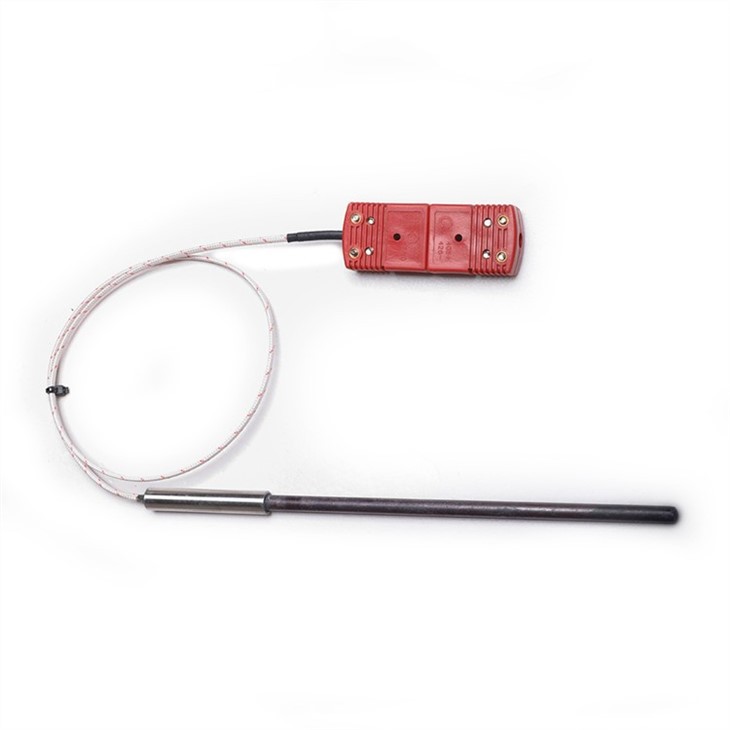
In contrast, since there's no standard accuracy class for C Type Thermocouples, we as suppliers have to be extra careful in specifying the accuracy of our products. We usually give our customers an estimated accuracy range based on our testing and experience. This range can vary depending on the temperature range in which the thermocouple is being used.
For lower temperature ranges, say up to around 1000°C, our C Type Thermocouples can typically achieve an accuracy of around ± 2°C or ± 0.5% of the reading, whichever is greater. As the temperature goes higher, into the 2000°C and above range, the accuracy might drop a bit, and we might be looking at an accuracy of around ± 3°C or ± 1% of the reading.
But it's not just about the raw numbers. We also strive to provide our customers with long - term accuracy. We understand that in industrial applications, you can't just keep replacing your thermocouples every few months. That's why we focus on making thermocouples that are durable and can maintain their accuracy over time.
Some customers might wonder why they should choose a C Type Thermocouple over other types. Well, C Type Thermocouples are great for extremely high - temperature applications. They can handle temperatures up to around 2320°C, which is really impressive. Other thermocouples might start to break down or become inaccurate at those high temperatures.
If you're in the market for a high - temperature thermocouple, and you need something that can give you reliable temperature readings in the most extreme conditions, then C Type Thermocouple is definitely worth considering.
I know all this accuracy talk can be a bit overwhelming, but we're here to help. If you have any questions about the accuracy class of our C Type Thermocouples, or if you're wondering which thermocouple is the best fit for your application, just reach out to us. We're more than happy to have a chat and help you figure out exactly what you need.
In conclusion, while C Type Thermocouples don't have a standardized accuracy class, our team is committed to providing you with high - quality, accurate, and reliable products. Whether you're in the metalworking industry, ceramics production, or any other field that requires high - temperature measurements, we've got the thermocouples you need.
So, if you're thinking about making a purchase, don't hesitate to start a conversation with us. We're looking forward to working with you and helping you get the most accurate temperature readings possible.
References:
- "Temperature Measurement Handbook"
- Various industry reports on high - temperature thermocouples
