

As a supplier of bimetal thermometers, I often get asked a bunch of questions from customers. One question that pops up quite a bit is, "Are bimetal thermometers affected by sunlight?" Well, let's dig into this topic and find out.
First off, let's understand how bimetal thermometers work. These thermometers rely on the principle of thermal expansion. They have two different metals bonded together. When the temperature changes, these metals expand or contract at different rates, causing the strip to bend. This bending is then translated into a temperature reading on the gauge. It's a pretty simple yet effective design that's been around for ages.
Now, let's talk about sunlight. Sunlight is a combination of different types of electromagnetic radiation, including visible light, infrared, and ultraviolet. The infrared part of sunlight is what we usually feel as heat. When a bimetal thermometer is exposed to sunlight, the infrared radiation can heat up the thermometer.
The heating effect of sunlight can potentially cause the bimetal strip in the thermometer to expand. If this happens, the strip will bend, and the thermometer will show a higher temperature reading than the actual ambient temperature. So, in short, yes, bimetal thermometers can be affected by sunlight.
But how significant is this effect? Well, it depends on a few factors. The intensity of the sunlight is a big one. If it's a bright, sunny day, the thermometer is more likely to be affected compared to a cloudy day. The duration of exposure also matters. If the thermometer is left in direct sunlight for a long time, the temperature reading can be off by a noticeable amount.
Another factor is the design of the thermometer. Some bimetal thermometers come with protective coatings or shields that can reduce the impact of sunlight. For example, a thermometer with a reflective coating can bounce off some of the infrared radiation, minimizing the heating effect.
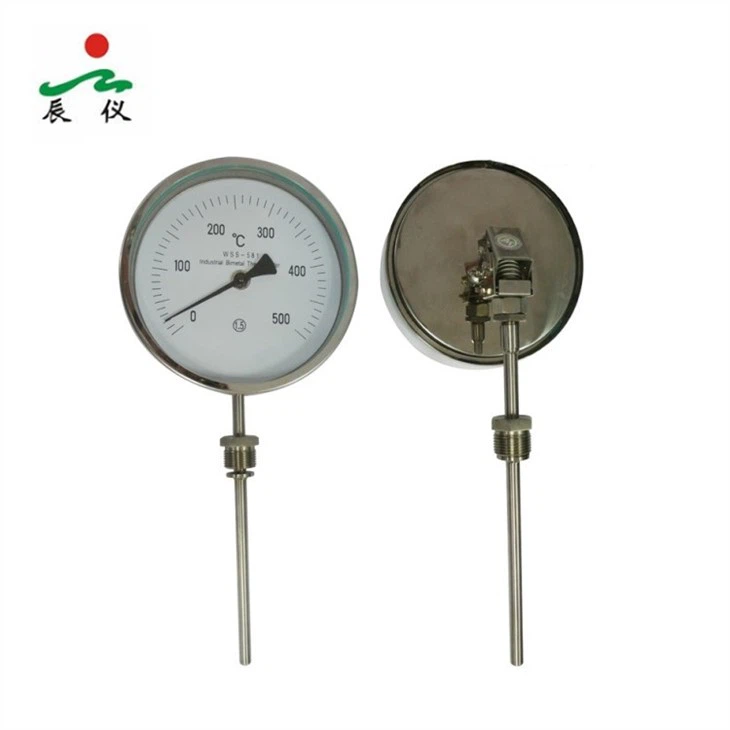
Let's take a look at some of the products we offer. Our Back Connection Bimetal Thermometer is designed with durability in mind. It has a sturdy construction that can withstand various environmental conditions. However, even with its robust design, it's still important to avoid prolonged exposure to direct sunlight to get accurate readings.
The WSS 401 Bimetal Thermometer is another popular choice among our customers. It's known for its high accuracy and reliability. But just like any other bimetal thermometer, sunlight can throw off its readings if not properly managed.
Our Bimetallic Type Temperature Gauge is a versatile option that can be used in different applications. Whether it's in an industrial setting or a residential environment, it's crucial to keep it away from direct sunlight to ensure precise temperature measurements.
So, what can you do to prevent sunlight from affecting your bimetal thermometer? The simplest solution is to place the thermometer in a shaded area. If you're using it outdoors, you can install it under an awning or a shelter. This way, it won't be directly exposed to sunlight, and you'll get more accurate temperature readings.
If you can't find a shaded spot, you can also use a sunshade or a cover specifically designed for thermometers. These accessories can block the sunlight and protect the thermometer from overheating.
In some cases, you might need to use the thermometer in direct sunlight. If this is the case, you can take some precautions. For example, you can take readings at regular intervals and compare them to a reference thermometer that's placed in a shaded area. This way, you can account for any errors caused by sunlight.
In conclusion, bimetal thermometers can be affected by sunlight. The infrared radiation in sunlight can heat up the thermometer and cause inaccurate temperature readings. However, by taking some simple precautions, such as placing the thermometer in a shaded area or using a sunshade, you can minimize the impact of sunlight and get reliable temperature measurements.
If you're in the market for a bimetal thermometer, we've got you covered. We offer a wide range of high-quality thermometers that are suitable for various applications. Whether you need a thermometer for industrial use or for your home, we have the right product for you.

If you have any questions or if you're interested in purchasing our products, feel free to reach out. We're here to help you find the best thermometer for your needs.
References
- "Thermometry: Fundamentals and Applications" by John R. Preston-Thomas
- "Industrial Temperature Measurement" by David W. Spitzer
