

Can a C type thermocouple be used in glass manufacturing?
As a supplier of C type thermocouples, I often encounter inquiries regarding the suitability of our products in various industrial applications, especially in glass manufacturing. In this blog post, I will delve into the technical aspects and practical considerations to answer the question: Can a C type thermocouple be used in glass manufacturing?
Understanding C Type Thermocouples
C type thermocouples, also known as Tungsten Rhenium Thermocouple, are a type of high - temperature thermocouple. They are composed of a tungsten - rhenium alloy, typically with a positive leg made of 95% tungsten and 5% rhenium (WRe5) and a negative leg made of 74% tungsten and 26% rhenium (WRe26). This unique combination of materials allows C type thermocouples to operate at extremely high temperatures, up to around 2320°C (4208°F).
One of the key advantages of C type thermocouples is their high sensitivity and accuracy at high temperatures. They provide a relatively large thermoelectric voltage output, which makes them suitable for precise temperature measurements in high - heat environments. Additionally, they have a fast response time, enabling real - time monitoring of temperature changes.
Temperature Requirements in Glass Manufacturing
Glass manufacturing is a complex process that involves several stages, each with its own specific temperature requirements. The melting stage, for example, requires extremely high temperatures to transform raw materials such as silica, soda ash, and limestone into a molten glass. The melting temperature for most types of glass ranges from 1400°C to 1600°C, but in some cases, it can go even higher, especially for specialty glasses.
During the forming and annealing stages, the temperature needs to be carefully controlled to ensure the proper shape and quality of the glass products. Annealing, in particular, involves slowly cooling the glass to relieve internal stresses. This process typically occurs at temperatures between 400°C and 700°C.
Suitability of C Type Thermocouples in Glass Manufacturing
High - Temperature Melting Stage
Given the high melting temperatures in glass manufacturing, C type thermocouples are well - suited for this stage. Their ability to withstand and accurately measure temperatures up to 2320°C makes them an ideal choice for monitoring the temperature of the glass melt. For instance, in a glass furnace where the raw materials are being melted, a C type thermocouple can be installed in the furnace to provide continuous and accurate temperature readings. This helps the operators to maintain the optimal melting temperature, which is crucial for the quality and consistency of the glass.
The fast response time of C type thermocouples is also beneficial during the melting process. Any sudden changes in the temperature, such as those caused by variations in the fuel supply or the addition of raw materials, can be quickly detected. This allows for timely adjustments to be made to the furnace operation, preventing over - or under - heating of the glass melt.
Forming and Annealing Stages
While the forming and annealing stages operate at lower temperatures compared to the melting stage, C type thermocouples can still be used, although other types of thermocouples may also be considered. For example, Type S R B Thermocouple are commonly used in these stages. They are made of platinum - rhodium alloys and can operate at temperatures up to around 1768°C (3214°F). They are known for their stability and long - term accuracy.
However, C type thermocouples can still offer advantages in certain situations. If there is a risk of temperature spikes during the forming or annealing processes, the high - temperature tolerance of C type thermocouples can provide an extra layer of protection. Moreover, their high sensitivity can be useful for detecting small temperature variations, which is important for ensuring the quality of the glass products.
Challenges and Considerations
Although C type thermocouples have many advantages for glass manufacturing, there are also some challenges and considerations that need to be taken into account.
One of the main challenges is the reactivity of the tungsten - rhenium alloy with oxygen. At high temperatures, the tungsten and rhenium in the thermocouple can react with oxygen in the air, leading to oxidation and degradation of the thermocouple. To overcome this issue, C type thermocouples are often used in an inert or reducing atmosphere. For example, they can be protected by a ceramic sheath filled with an inert gas such as argon.
Another consideration is the cost. C type thermocouples are generally more expensive than other types of thermocouples due to the high - cost materials and the complex manufacturing process. However, when considering the long - term benefits in terms of accuracy, reliability, and the ability to operate at high temperatures, the investment in C type thermocouples can be justified, especially for large - scale glass manufacturing operations.
Comparison with Other Thermocouples
In addition to C type thermocouples, there are other types of thermocouples that are commonly used in glass manufacturing, such as Type S R B Thermocouple and WRe526 Thermocouple.
Type S, R, and B thermocouples are made of platinum - rhodium alloys. They are known for their excellent stability and accuracy at high temperatures. However, their upper temperature limit is lower than that of C type thermocouples, typically around 1768°C. They are also more expensive than some other types of thermocouples and are more sensitive to contamination.
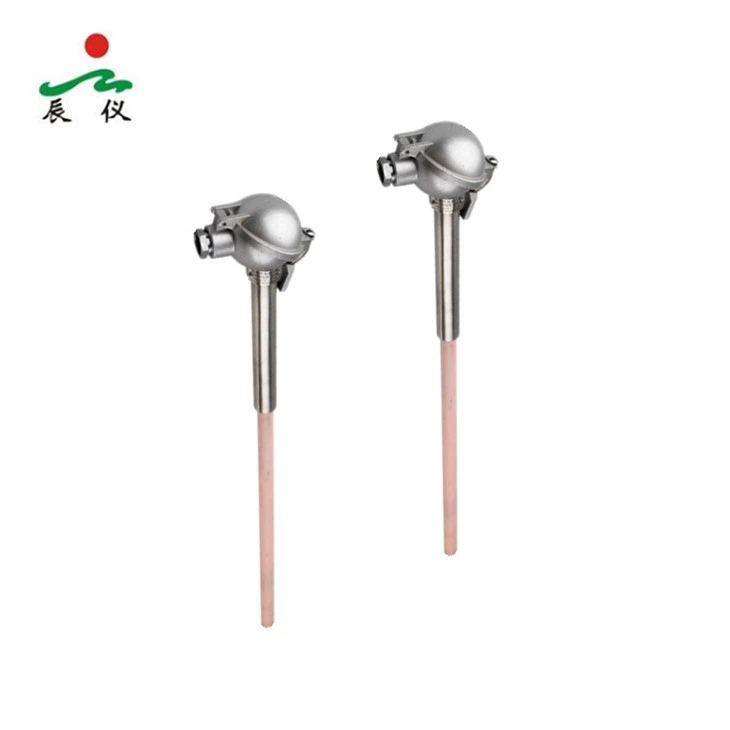

WRe526 thermocouples are similar to C type thermocouples in terms of their composition and high - temperature capabilities. However, C type thermocouples have a more standardized and widely recognized composition, which may be an advantage in terms of calibration and compatibility with measurement equipment.
Conclusion
In conclusion, C type thermocouples can be effectively used in glass manufacturing, especially during the high - temperature melting stage. Their ability to operate at extremely high temperatures, high sensitivity, and fast response time make them suitable for precise temperature measurements in this demanding environment. However, due to the reactivity of their materials with oxygen, proper protection measures need to be taken.
While other types of thermocouples such as Type S, R, and B thermocouples also have their own advantages and are commonly used in glass manufacturing, C type thermocouples offer unique benefits, especially for applications that require the highest temperature tolerance and accuracy.
If you are involved in glass manufacturing and are looking for a reliable high - temperature thermocouple solution, I encourage you to consider our C type thermocouples. Our products are designed and manufactured to the highest standards, ensuring accurate and long - lasting performance. Contact us today to discuss your specific requirements and start a procurement negotiation.
References
- "Thermocouple Handbook" by Omega Engineering
- "Glass Science and Technology" by David R. Uhlmann and Norman J. Kreidl
