

Can a Pt100 Thermosensor be Used in a Vacuum Environment?
As a seasoned supplier of Pt100 thermosensors, I often encounter questions from clients about the applicability of our products in various environments. One such frequently asked question is whether a Pt100 thermosensor can be used in a vacuum environment. In this blog post, I will delve into this topic, exploring the technical aspects, advantages, limitations, and considerations when using Pt100 thermosensors in a vacuum.
Understanding Pt100 Thermosensors
Before we discuss the use of Pt100 thermosensors in a vacuum, let's first understand what a Pt100 thermosensor is. A Pt100 thermosensor is a type of resistance temperature detector (RTD) that uses platinum as the sensing element. The "Pt" in Pt100 stands for platinum, and the "100" indicates that the resistance of the platinum element is 100 ohms at 0°C. The resistance of the platinum element changes linearly with temperature, allowing for accurate temperature measurement.

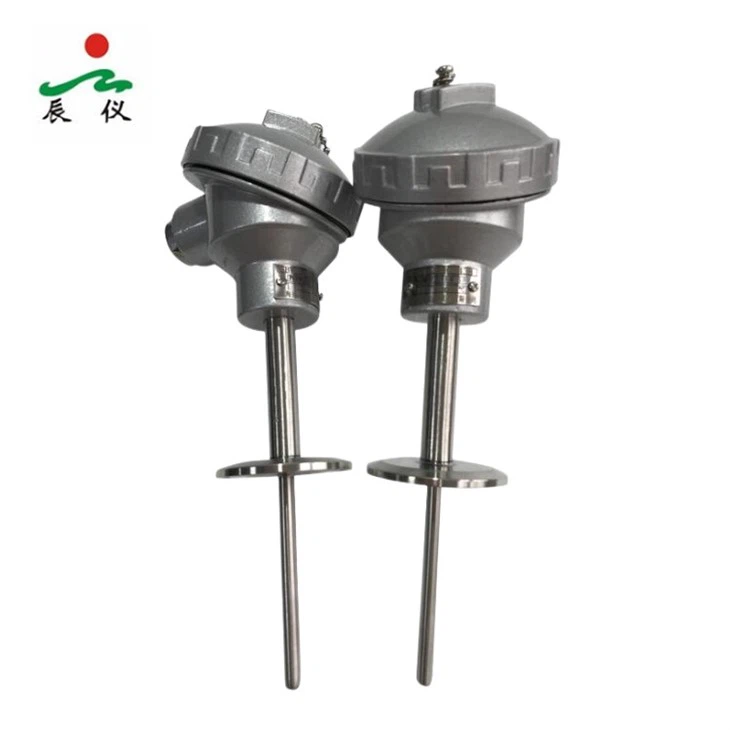
Pt100 thermosensors are widely used in various industries due to their high accuracy, stability, and repeatability. They are commonly used in applications such as industrial process control, HVAC systems, food and beverage processing, and scientific research.
Technical Aspects of Using Pt100 Thermosensors in a Vacuum
In a vacuum environment, there are several technical aspects to consider when using a Pt100 thermosensor.
Heat Transfer
In a normal atmosphere, heat transfer occurs through three main mechanisms: conduction, convection, and radiation. Conduction is the transfer of heat through direct contact between materials, convection is the transfer of heat through the movement of fluids (such as air or water), and radiation is the transfer of heat through electromagnetic waves.
In a vacuum, there is no air or other fluid to facilitate convection, and the absence of direct contact between the thermosensor and other materials may limit conduction. Therefore, radiation becomes the primary mode of heat transfer in a vacuum. Pt100 thermosensors are designed to measure temperature based on the change in resistance of the platinum element, which is affected by the temperature of the element itself. As long as the thermosensor can absorb or radiate heat effectively through radiation, it can still provide accurate temperature measurement in a vacuum.
Outgassing
Outgassing is the release of gases from a material when it is placed in a vacuum. In a Pt100 thermosensor, outgassing can occur from the materials used in the construction of the sensor, such as the insulation, encapsulation, and leads. Outgassing can cause several problems, including contamination of the vacuum environment, degradation of the sensor performance, and the formation of a thin film on the sensor surface, which can affect heat transfer and measurement accuracy.
To minimize outgassing, Pt100 thermosensors used in vacuum applications are typically made from materials with low outgassing rates. These materials are carefully selected and processed to ensure that they meet the requirements of vacuum environments. Additionally, the sensors may be subjected to a bake-out process before use to remove any residual gases.
Electrical Insulation
In a vacuum, the electrical insulation properties of the materials used in the Pt100 thermosensor are crucial. The absence of air or other dielectric medium in a vacuum can increase the risk of electrical breakdown, which can damage the sensor and affect its performance. Therefore, the insulation materials used in the sensor must have high dielectric strength and be able to withstand the high voltages and electric fields present in a vacuum.
Advantages of Using Pt100 Thermosensors in a Vacuum
There are several advantages to using Pt100 thermosensors in a vacuum environment.
High Accuracy
Pt100 thermosensors are known for their high accuracy, which makes them suitable for applications where precise temperature measurement is required. In a vacuum environment, where other temperature measurement methods may be limited, Pt100 thermosensors can provide reliable and accurate temperature data.
Stability
Pt100 thermosensors offer excellent long-term stability, which means that their performance remains consistent over time. This is particularly important in vacuum applications, where the sensor may be exposed to harsh conditions for extended periods.
Compatibility
Pt100 thermosensors are compatible with a wide range of temperature measurement instruments and control systems. This makes them easy to integrate into existing vacuum systems and allows for seamless communication between the sensor and other components.
Limitations and Considerations
While Pt100 thermosensors can be used in a vacuum environment, there are some limitations and considerations to keep in mind.
Response Time
In a vacuum, the absence of convection can slow down the heat transfer process, which may result in a longer response time for the Pt100 thermosensor. The response time is the time it takes for the sensor to reach 90% of the final temperature value after a step change in temperature. In applications where fast response times are required, the long response time of the sensor in a vacuum may be a limitation.
Temperature Range
The temperature range of a Pt100 thermosensor may be limited in a vacuum environment. The high temperatures and low pressures in a vacuum can affect the performance of the sensor and may cause the platinum element to degrade or fail. Therefore, it is important to select a Pt100 thermosensor that is suitable for the specific temperature range of the vacuum application.
Cost
Pt100 thermosensors designed for vacuum applications may be more expensive than those used in normal atmospheric conditions. This is due to the additional requirements for materials, manufacturing processes, and testing to ensure their performance in a vacuum.
Our Pt100 Thermosensor Products for Vacuum Applications
At our company, we offer a range of Pt100 thermosensors that are suitable for vacuum applications. Our WZP Pt100 Temperature Sensor is designed with high-quality materials and advanced manufacturing processes to ensure accurate temperature measurement in a vacuum. It features a robust construction and excellent electrical insulation properties, making it suitable for use in harsh vacuum environments.
In addition, our Sanitary RTD Probe is another option for vacuum applications, especially in industries such as food and beverage processing, where hygiene and cleanliness are important. The probe is made from stainless steel and is designed to be easy to clean and sterilize, ensuring reliable performance in a vacuum.
For applications where resistance to acidic environments is required, our Acid Proof Pt100 Temperature Sensor is an ideal choice. It is made from special materials that can withstand the corrosive effects of acids, making it suitable for use in vacuum systems where acidic substances may be present.
Conclusion
In conclusion, a Pt100 thermosensor can be used in a vacuum environment, but there are several technical aspects, advantages, limitations, and considerations to keep in mind. With the right design, materials, and manufacturing processes, Pt100 thermosensors can provide accurate and reliable temperature measurement in a vacuum. At our company, we are committed to providing high-quality Pt100 thermosensors that are suitable for a wide range of applications, including vacuum environments.
If you are considering using a Pt100 thermosensor in a vacuum application, we would be happy to discuss your specific requirements and provide you with the best solution. Please feel free to contact us to start a procurement negotiation and find the perfect thermosensor for your needs.
References
- "Temperature Measurement in Vacuum Environments", Handbook of Temperature Measurement, John Wiley & Sons, Inc.
- "Resistance Temperature Detectors (RTDs)", ASME PTC 19.3 - 2010, American Society of Mechanical Engineers.
- "Vacuum Technology and Applications", CRC Press.
