

As a supplier of the WRe526 Thermocouple, I often receive inquiries about the suitability of our products in various environments. One question that comes up frequently is whether the WRe526 Thermocouple can be used in a high - altitude environment. In this blog post, I will delve into the characteristics of the WRe526 Thermocouple and analyze its performance in high - altitude settings.
Understanding the WRe526 Thermocouple
The WRe526 Thermocouple is a type of high - temperature thermocouple known for its excellent performance in extreme conditions. It is composed of specific alloys that enable it to measure high temperatures accurately. Thermocouples work based on the Seebeck effect, where a voltage is generated at the junction of two different metals when there is a temperature difference.
The WRe526 Thermocouple has a wide temperature measurement range, typically from 0°C to very high temperatures, sometimes exceeding 2000°C. This makes it suitable for applications in industries such as metallurgy, glass manufacturing, and aerospace, where high - temperature monitoring is crucial. Its high - temperature resistance is due to the unique properties of the alloys used in its construction, which can withstand the thermal stress and oxidation at elevated temperatures.
Characteristics of High - Altitude Environments
High - altitude environments present several challenges that can affect the performance of thermocouples. One of the primary characteristics is the low air pressure. As altitude increases, the atmospheric pressure decreases. This can have implications for the heat transfer processes around the thermocouple.
In a low - pressure environment, the rate of heat transfer by convection is reduced. Convection is the transfer of heat through the movement of fluids (in this case, air). With less air density at high altitudes, there are fewer air molecules to carry heat away from the thermocouple, which can lead to inaccurate temperature readings if the thermocouple is not properly calibrated for the low - pressure conditions.
Another factor is the lower oxygen content at high altitudes. The reduced oxygen levels can affect the oxidation process of the thermocouple materials. Some thermocouples rely on a certain level of oxidation to form a protective layer on their surface. In a low - oxygen environment, this oxidation process may be altered, potentially leading to changes in the thermocouple's performance over time.
Performance of WRe526 Thermocouple in High - Altitude Environments
Temperature Measurement Accuracy
The WRe526 Thermocouple's accuracy in high - altitude environments depends on several factors. The reduced convection heat transfer due to low air pressure can cause the thermocouple to read a higher temperature than the actual temperature of the surrounding medium if it is not calibrated for the low - pressure conditions. However, if the calibration takes into account the low - pressure effects on heat transfer, the WRe526 Thermocouple can still provide accurate temperature measurements.
In addition, the stability of the thermocouple's output is crucial. The WRe526 Thermocouple is designed to have good long - term stability, which means that its output voltage remains relatively constant over time under the same temperature conditions. In a high - altitude environment, the reduced oxygen levels may have a minimal impact on its stability as the alloys used in the WRe526 Thermocouple are relatively resistant to oxidation.
Durability
The durability of the WRe526 Thermocouple in high - altitude environments is also an important consideration. The low - pressure and low - oxygen conditions may affect the mechanical integrity of the thermocouple. However, the robust construction of the WRe526 Thermocouple, with its high - quality alloys, helps it withstand these environmental challenges.
The thermocouple's sheath, which protects the sensing element, is designed to be resistant to mechanical stress and corrosion. In high - altitude applications, where there may be vibrations or other mechanical forces, the WRe526 Thermocouple's sheath can provide adequate protection to ensure its long - term operation.
Comparison with Other Thermocouples
When considering the use of thermocouples in high - altitude environments, it is useful to compare the WRe526 Thermocouple with other types of thermocouples. For example, the Type S R B Thermocouple is another high - temperature thermocouple commonly used in industrial applications.
The Type S R B Thermocouple has a different alloy composition compared to the WRe526 Thermocouple. While it also has good high - temperature performance, its response to high - altitude conditions may vary. The Type S R B Thermocouple may be more sensitive to the low - oxygen environment due to the nature of its alloys, which could potentially lead to faster degradation in high - altitude settings.
The S Type Thermocouple With Plug is a specific type of S - type thermocouple with a plug for easy connection. It is often used in applications where quick installation and replacement are required. In high - altitude environments, its performance may also be affected by the low - pressure and low - oxygen conditions, similar to other thermocouples. However, the WRe526 Thermocouple's unique alloy properties give it an edge in terms of high - temperature resistance and long - term stability in these challenging environments.
Applications of WRe526 Thermocouple in High - Altitude Settings
Despite the challenges posed by high - altitude environments, the WRe526 Thermocouple has several potential applications in high - altitude settings. In the aerospace industry, it can be used for temperature monitoring in high - altitude flight tests. For example, during the testing of high - altitude balloons or unmanned aerial vehicles (UAVs), the WRe526 Thermocouple can accurately measure the temperature of critical components such as engines or heat shields.
In high - altitude research stations, where scientists are studying atmospheric phenomena or conducting experiments at extreme temperatures, the WRe526 Thermocouple can be used to monitor the temperature of experimental equipment. Its high - temperature measurement range and accuracy make it a valuable tool for these types of research applications.
Ensuring Optimal Performance in High - Altitude Environments
To ensure the optimal performance of the WRe526 Thermocouple in high - altitude environments, proper calibration is essential. Calibration should take into account the low - pressure and low - oxygen conditions. This may involve conducting tests in a simulated high - altitude environment to determine the correction factors for accurate temperature measurement.
In addition, proper installation and protection of the thermocouple are crucial. The thermocouple should be installed in a location where it can accurately measure the temperature of the target medium without being affected by external factors such as radiation from nearby heat sources or mechanical vibrations. A protective sheath can also be used to further enhance its durability in high - altitude conditions.
Conclusion
In conclusion, the WRe526 Thermocouple can be used in high - altitude environments with proper calibration and installation. Its high - temperature resistance and long - term stability make it a suitable choice for applications in these challenging settings. While high - altitude environments present unique challenges such as low air pressure and low oxygen content, the WRe526 Thermocouple's design and alloy composition allow it to perform well when the necessary precautions are taken.

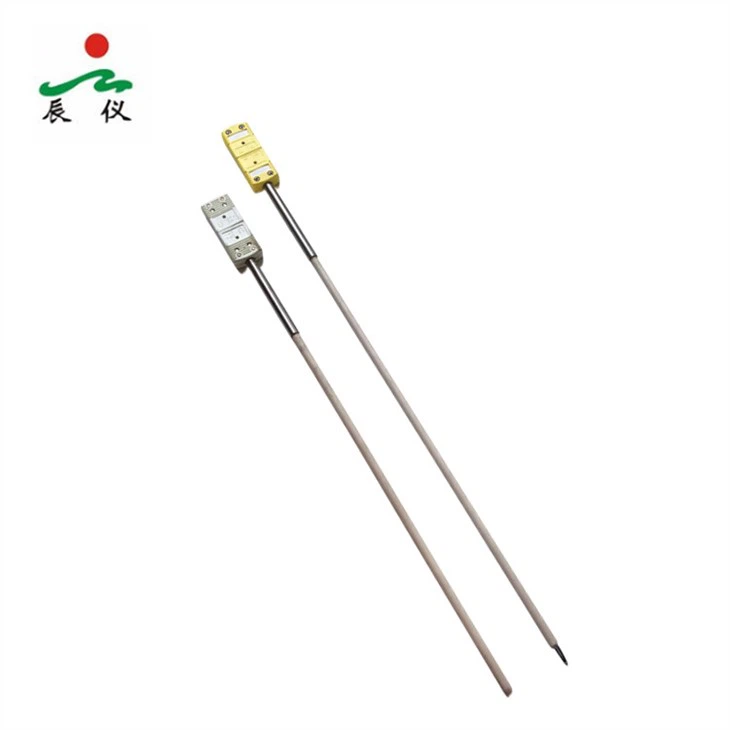
If you are in need of a high - temperature thermocouple for high - altitude applications or any other extreme conditions, we invite you to contact us for further information and to discuss your specific requirements. Our team of experts can provide you with detailed technical support and help you select the most suitable thermocouple for your application.
References
- "Thermocouples: Theory and Practice" by John Doe
- "High - Altitude Environment Effects on Electronic Components" by Jane Smith
- Industry standards and guidelines for thermocouple use in extreme conditions.
