

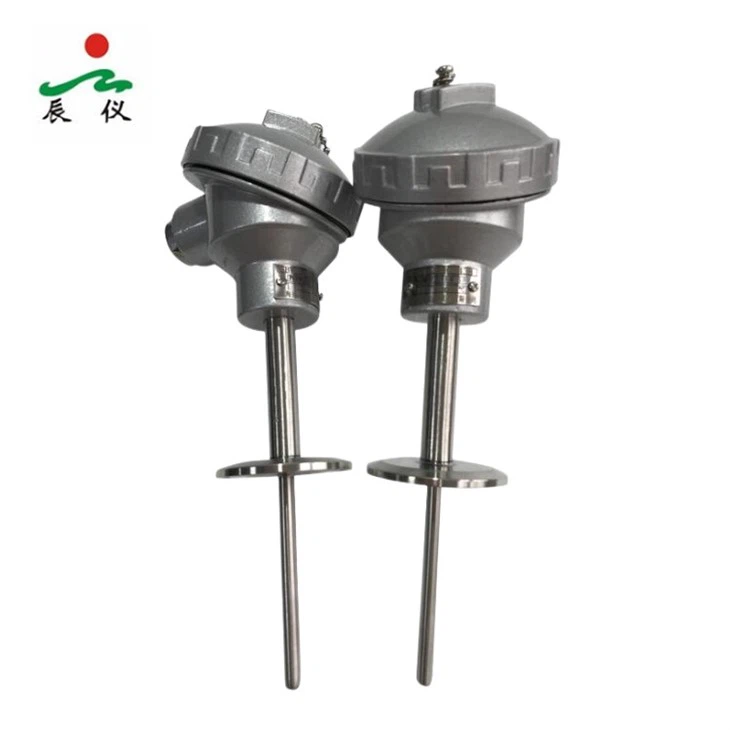
Hey there! As a supplier of Sanitary RTD Probes, I've seen my fair share of issues with these nifty devices. In this blog, I'm gonna walk you through the common failures of a Sanitary RTD Probe and how you can fix them.
Common Failures of a Sanitary RTD Probe
1. Electrical Resistance Drift
One of the most common problems we encounter is electrical resistance drift. Over time, the resistance of the RTD element can change, leading to inaccurate temperature readings. This can happen due to a variety of reasons, such as aging of the platinum element, exposure to high temperatures, or mechanical stress.
When the resistance drifts, the temperature readings will be off. You might think your process is running at a certain temperature, but in reality, it could be much higher or lower. This can have a significant impact on the quality of your products, especially in industries like food and beverage, pharmaceuticals, and biotechnology.
2. Moisture Ingress
Moisture is the enemy of any electrical device, and Sanitary RTD Probes are no exception. If moisture gets into the probe, it can cause corrosion of the internal components, short circuits, and inaccurate readings. Moisture ingress can occur through damaged seals, improper installation, or exposure to a humid environment.
In a sanitary application, where the probe is often in contact with liquids, the risk of moisture ingress is even higher. For example, in a dairy processing plant, the probe might be exposed to milk, cleaning solutions, and water. If the probe is not properly sealed, these liquids can seep into the probe and cause damage.
3. Mechanical Damage
Sanitary RTD Probes are often used in harsh industrial environments, where they can be subjected to mechanical stress, vibration, and impact. This can cause damage to the probe, such as bent or broken sheaths, loose connections, or damaged RTD elements.
Mechanical damage can also occur during installation or maintenance. If the probe is not installed correctly, it can be subject to excessive stress, which can lead to premature failure. Similarly, if the probe is not handled carefully during maintenance, it can be damaged.
4. Calibration Issues
Calibration is crucial for ensuring the accuracy of any temperature sensor, including Sanitary RTD Probes. Over time, the probe can drift out of calibration, leading to inaccurate temperature readings. This can happen due to a variety of reasons, such as aging of the RTD element, exposure to high temperatures, or mechanical stress.
If the probe is not calibrated regularly, it can lead to significant errors in temperature measurement. This can have a negative impact on the quality of your products, as well as the efficiency of your processes.
How to Fix These Failures
1. Fixing Electrical Resistance Drift
If you suspect that your Sanitary RTD Probe is experiencing electrical resistance drift, the first step is to check the calibration. You can use a calibration device to compare the readings of the probe with a known reference temperature. If the readings are off, you can adjust the calibration settings of the probe to correct the drift.
If the drift is severe, you might need to replace the RTD element. This is a relatively simple process, but it should be done by a qualified technician to ensure that the new element is installed correctly. You can find high-quality RTD elements, such as Pt100 Platinum Temperature Sensors and WZP Pt100 Temperature Sensor, from reliable suppliers.
2. Preventing and Fixing Moisture Ingress
To prevent moisture ingress, it's important to choose a Sanitary RTD Probe with high-quality seals. Make sure that the probe is installed correctly, following the manufacturer's instructions. You should also inspect the seals regularly for any signs of damage or wear.
If moisture has already entered the probe, you need to dry it out as soon as possible. You can do this by removing the probe from the process and placing it in a warm, dry environment. If the damage is severe, you might need to replace the probe. You can find reliable Sanitary RTD Probe that are designed to resist moisture ingress.
3. Repairing Mechanical Damage
If your Sanitary RTD Probe has suffered mechanical damage, the first step is to assess the extent of the damage. If the sheath is bent or broken, you can try to straighten it or replace it. If the connections are loose, you can tighten them. If the RTD element is damaged, you will need to replace it.
It's important to handle the probe carefully during the repair process to avoid further damage. If you're not sure how to repair the probe, it's best to contact a qualified technician.
4. Calibrating the Probe
To ensure the accuracy of your Sanitary RTD Probe, it's important to calibrate it regularly. You can use a calibration device to compare the readings of the probe with a known reference temperature. If the readings are off, you can adjust the calibration settings of the probe to correct the error.
The frequency of calibration depends on the application and the environment in which the probe is used. In general, it's recommended to calibrate the probe at least once a year. However, in some applications, such as those in the food and beverage industry, more frequent calibration might be required.
Conclusion
Sanitary RTD Probes are essential for accurate temperature measurement in a variety of industries. However, like any device, they can experience common failures, such as electrical resistance drift, moisture ingress, mechanical damage, and calibration issues. By understanding these failures and how to fix them, you can ensure the reliable operation of your Sanitary RTD Probes and the quality of your products.
If you're in the market for high-quality Sanitary RTD Probes or need help with any issues related to temperature measurement, don't hesitate to reach out. We're here to provide you with the best solutions for your needs. Contact us today to start a discussion about your requirements and explore how we can assist you in your procurement process.

References
- Temperature Measurement Handbook
- Sanitary RTD Probe Manufacturer's Manuals
