

Thermoelectric properties of thin film elements are of great significance in various fields, from industrial applications to cutting - edge research. As a supplier of thin film elements, I am excited to delve into this topic and share valuable insights with you.
1. Introduction to Thin Film Elements
Thin film elements are a type of sensor or component that is fabricated by depositing thin layers of materials onto a substrate. These elements offer several advantages such as high sensitivity, fast response times, and the ability to be integrated into small - scale devices. They are widely used in temperature sensing, pressure sensing, and other applications where precise and reliable measurements are required.
One of the most well - known thin film elements is the PT100 Ceramic Element. The PT100 is a platinum resistance thermometer that is based on the principle that the electrical resistance of platinum changes with temperature. The ceramic substrate provides excellent mechanical stability and thermal insulation, making it suitable for a wide range of industrial environments.
2. Thermoelectric Properties Basics
Thermoelectricity is the direct conversion of temperature differences to electric voltage and vice versa. There are three main thermoelectric effects: the Seebeck effect, the Peltier effect, and the Thomson effect.
The Seebeck effect is the generation of an electric potential difference (voltage) between two different conductors or semiconductors when there is a temperature difference between their junctions. This effect is the basis for thermocouples and thermopiles, which are commonly used for temperature measurement.
The Peltier effect is the reverse of the Seebeck effect. When an electric current is passed through a junction of two different conductors or semiconductors, heat is either absorbed or released at the junction. This effect is used in thermoelectric coolers and heaters.
The Thomson effect is related to the reversible heat generation or absorption in a single conductor when an electric current is passed through it and there is a temperature gradient along the conductor.
3. Thermoelectric Properties of Thin Film Elements
3.1 Seebeck Coefficient
The Seebeck coefficient (S) of a thin film element is a measure of its ability to convert a temperature difference into an electric voltage. For thin film materials, the Seebeck coefficient can be influenced by several factors, including the material composition, the thickness of the film, and the crystal structure.
In some thin film materials, such as bismuth - telluride - based thin films, a relatively high Seebeck coefficient can be achieved. These materials are widely used in thermoelectric generators because they can efficiently convert waste heat into electricity. As a Thin Film Element supplier, we pay close attention to the Seebeck coefficient of our products to ensure high - performance thermoelectric applications.
3.2 Electrical Conductivity
Electrical conductivity (σ) is another important thermoelectric property. A high electrical conductivity is desirable for thermoelectric materials because it allows for efficient electron transport, reducing the internal resistance of the thermoelectric device.
Thin film elements can be engineered to have different electrical conductivities by adjusting the doping concentration and the deposition conditions. For example, by doping a semiconductor thin film with appropriate impurities, the number of charge carriers (electrons or holes) can be increased, thereby increasing the electrical conductivity.
3.3 Thermal Conductivity
Thermal conductivity (κ) is the ability of a material to conduct heat. In thermoelectric applications, a low thermal conductivity is preferred because it helps to maintain a large temperature difference across the thermoelectric material, which in turn increases the efficiency of the thermoelectric conversion.
Thin film structures can have lower thermal conductivities compared to bulk materials due to phonon scattering at the interfaces between the film and the substrate and within the film itself. Nanostructured thin films, in particular, can exhibit significantly reduced thermal conductivities, making them promising candidates for high - efficiency thermoelectric devices.
4. Applications of Thin Film Elements Based on Thermoelectric Properties
4.1 Temperature Sensing
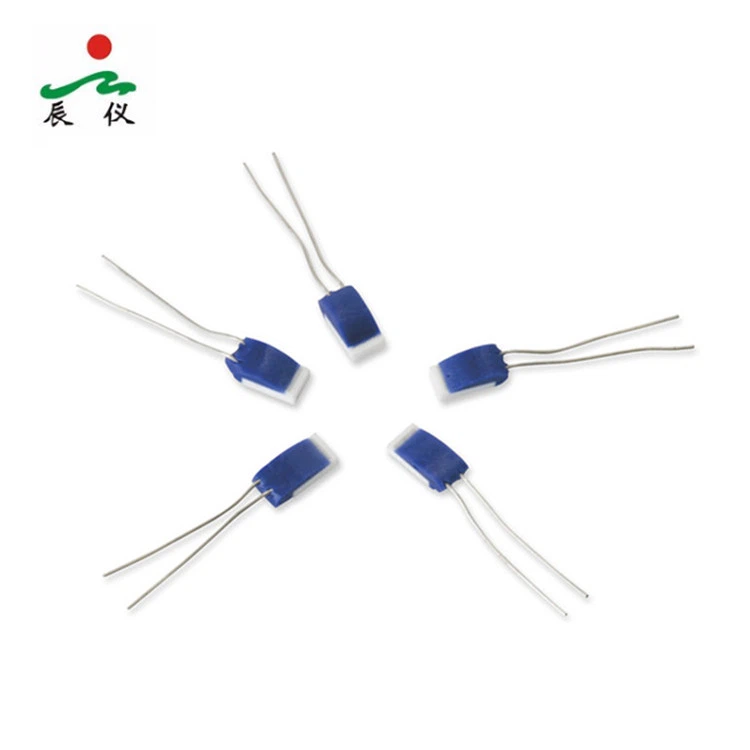
Thin film elements are widely used in temperature sensing applications. The 3D Printer RTD is a good example. In 3D printers, precise temperature control is crucial for the quality of the printed objects. Thin film RTDs can provide accurate and fast temperature measurements, allowing for better control of the printing process.
The thermoelectric properties of thin film elements enable them to detect small temperature changes with high sensitivity. This makes them suitable for use in a variety of industrial, medical, and consumer applications where temperature monitoring is essential.

4.2 Energy Harvesting
Thermoelectric generators based on thin film elements can harvest waste heat from industrial processes, automotive engines, and even the human body. By converting this waste heat into electricity, these generators can help to reduce energy consumption and environmental impact.
The ability of thin film elements to be integrated into small - scale and flexible devices makes them particularly attractive for energy harvesting applications. For example, thin film thermoelectric generators can be incorporated into wearable devices to power sensors and other electronic components using the body heat.
4.3 Cooling and Heating
The Peltier effect in thin film elements is used in thermoelectric coolers and heaters. These devices can provide precise temperature control in a compact form factor. In electronic devices, such as laptops and smartphones, thin film thermoelectric coolers can be used to dissipate heat from the processors, improving their performance and reliability.
5. Challenges and Future Directions
Despite the many advantages of thin film elements in thermoelectric applications, there are still some challenges to overcome. One of the main challenges is the relatively low efficiency of thermoelectric conversion. Improving the thermoelectric figure of merit (ZT), which is a measure of the efficiency of a thermoelectric material, is a key research area.
Future research directions include the development of new thin film materials with enhanced thermoelectric properties, the optimization of thin film fabrication processes, and the integration of thin film thermoelectric devices into larger systems.
6. Contact Us for Purchasing
If you are interested in our thin film elements for your thermoelectric applications, we invite you to contact us for a detailed discussion. Our team of experts can provide you with customized solutions based on your specific requirements. Whether you need high - performance temperature sensors or efficient thermoelectric generators, we have the products and expertise to meet your needs.
References
- Rowe, D. M. (Ed.). (2006). Thermoelectrics Handbook: Macro to Nano. CRC Press.
- Chen, G. (2005). Nanoscale thermoelectric materials: big opportunities from small structures. Journal of Applied Physics, 97(9), 091101.
- Goldsmid, H. J. (2010). Introduction to Thermoelectricity. Springer.
