

Hey there, fellow automotive enthusiasts and industry pros! I'm a supplier of bimetal thermometers, and I've been getting a lot of questions lately about whether these nifty devices can be used in automotive engines. So, I thought I'd sit down and write a blog post to clear things up.
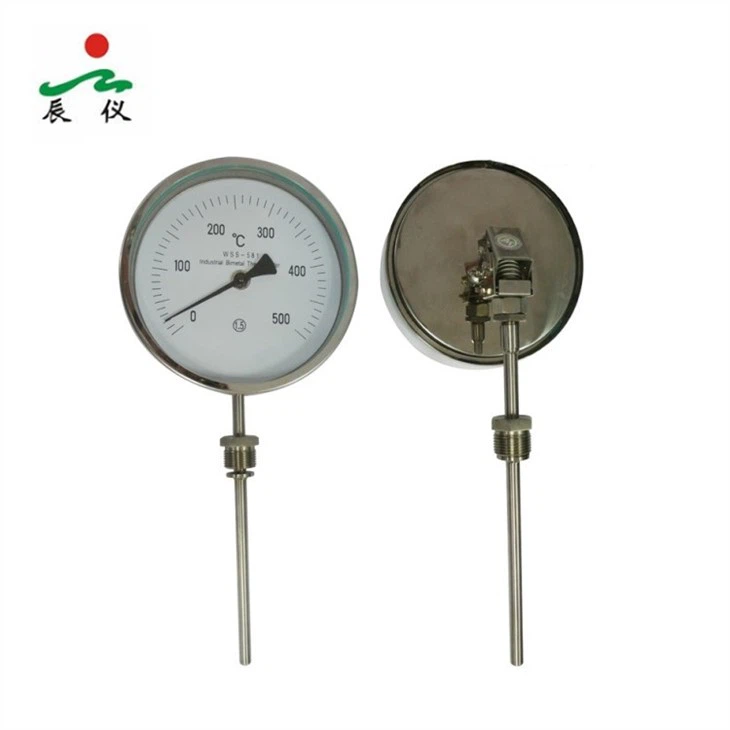
First off, let's talk about what a bimetal thermometer is. In a nutshell, it's a temperature-measuring device that uses two different metals with different coefficients of thermal expansion. These metals are bonded together to form a strip. When the temperature changes, the strip bends because one metal expands or contracts more than the other. This bending is then translated into a temperature reading on a scale.
Now, let's get to the big question: Can a bimetal thermometer be used in automotive engines? The short answer is yes, but there are some important factors to consider.

Advantages of Using Bimetal Thermometers in Automotive Engines
Cost-Effective
One of the biggest advantages of bimetal thermometers is that they're relatively inexpensive. If you're looking for a budget-friendly way to monitor the temperature in your automotive engine, a bimetal thermometer might be the way to go. You can get a decent quality Radial Bimetallic Thermometer at a reasonable price, which is great for small automotive shops or DIY enthusiasts.
Simple Design
Bimetal thermometers have a simple design, which means they're easy to install and maintain. You don't need to be a rocket scientist to figure out how to mount one in your engine. And if something goes wrong, it's usually pretty straightforward to troubleshoot and fix.
Mechanical Reliability
Since bimetal thermometers are mechanical devices, they don't rely on electricity to function. This makes them more reliable in harsh automotive environments where electrical components might be prone to failure. For example, in an engine compartment where there's a lot of vibration and heat, a bimetal thermometer can keep working without being affected by electrical interference.
Limitations of Using Bimetal Thermometers in Automotive Engines
Accuracy
While bimetal thermometers are generally accurate enough for many applications, they might not be as precise as some other types of temperature sensors. In automotive engines, where precise temperature control is crucial for optimal performance and engine longevity, this could be a drawback. For instance, if you're running a high-performance engine, you might need a more accurate temperature sensor to ensure that the engine is operating within the right temperature range.
Response Time
Bimetal thermometers have a relatively slow response time compared to electronic temperature sensors. This means that they might not be able to quickly detect sudden changes in temperature. In an automotive engine, where temperature can change rapidly during acceleration or deceleration, a slow response time could lead to inaccurate temperature readings.
Limited Temperature Range
Most bimetal thermometers have a limited temperature range. While they can handle the normal operating temperatures of an automotive engine, they might not be suitable for extreme conditions. For example, if you're using your vehicle in a very hot climate or if you're running a high-performance engine that generates a lot of heat, a bimetal thermometer might not be able to measure the temperature accurately.
Applications of Bimetal Thermometers in Automotive Engines
Despite their limitations, bimetal thermometers can still be useful in certain automotive engine applications.
General Temperature Monitoring
For general temperature monitoring in an automotive engine, a bimetal thermometer can be a good choice. You can use it to get a rough idea of the engine's temperature and make sure that it's not overheating. For example, you can install a Bimetallic Type Temperature Gauge on your dashboard to keep an eye on the engine temperature while you're driving.
Backup Temperature Sensor
Bimetal thermometers can also be used as a backup temperature sensor. In case your primary electronic temperature sensor fails, a bimetal thermometer can still provide you with a temperature reading. This can give you some peace of mind and allow you to take appropriate action before the engine suffers serious damage.
Non-Critical Applications
In some non-critical applications, such as monitoring the temperature of the engine coolant reservoir or the oil pan, a bimetal thermometer can be sufficient. These areas don't require extremely precise temperature measurements, so a bimetal thermometer can do the job just fine.
Choosing the Right Bimetal Thermometer for Your Automotive Engine
If you've decided that a bimetal thermometer is the right choice for your automotive engine, here are some things to consider when choosing one.
Temperature Range
Make sure that the thermometer has a temperature range that's suitable for your engine. Check the specifications of the thermometer to see what the minimum and maximum temperatures it can measure are.
Size and Mounting
Consider the size of the thermometer and how it will be mounted in your engine. You want to make sure that it fits in the available space and that it can be easily installed and accessed for maintenance. For example, a Back Connection Bimetal Thermometer might be a good choice if you need to mount the thermometer in a tight space.
Accuracy
While bimetal thermometers aren't as accurate as some other types of sensors, you still want to choose one that has a reasonable level of accuracy. Look for a thermometer with a low margin of error.
Conclusion
So, can a bimetal thermometer be used in automotive engines? The answer is yes, but it depends on your specific needs and requirements. If you're looking for a cost-effective, simple, and reliable way to monitor the temperature in your engine for general purposes, a bimetal thermometer can be a great option. However, if you need high precision and fast response times, you might want to consider other types of temperature sensors.
If you're interested in purchasing a bimetal thermometer for your automotive engine or have any questions about our products, feel free to reach out. We're here to help you find the right solution for your needs.
References
- "Automotive Engine Temperature Management" - A technical guide on engine temperature control.
- "Bimetal Thermometers: Principles and Applications" - A comprehensive resource on bimetal thermometer technology.
