

Hey there, fellow tech enthusiasts and industry pros! As a supplier of C Type Thermocouples, I often get asked, "What is the sensitivity of a C type thermocouple?" Well, buckle up because we're about to dive deep into this topic.
First off, let's quickly go over what a C type thermocouple is. A C type thermocouple, also known as a Tungsten Rhenium Thermocouple, is a high - temperature thermocouple. It's made up of tungsten - rhenium alloys, specifically a positive leg of 95% tungsten and 5% rhenium and a negative leg of 74% tungsten and 26% rhenium. This unique combination gives it some pretty amazing properties.
Now, onto the main question: sensitivity. Sensitivity in a thermocouple refers to the change in the output voltage for a given change in temperature. In simpler terms, it tells us how well the thermocouple can detect small temperature changes.
The sensitivity of a C type thermocouple is quite high compared to some other types, especially at high temperatures. At room temperature, the sensitivity is around 12 - 14 microvolts per degree Celsius. But as the temperature goes up, things get really interesting.
In the high - temperature range, say around 1000°C to 2300°C (which is where C type thermocouples really shine), the sensitivity can be in the range of 20 - 30 microvolts per degree Celsius. This is a significant advantage when you're dealing with applications that require precise temperature measurements in extremely hot environments.
Let's compare it with some other popular thermocouples. For example, the Platinum Rhodium Thermocouple. Platinum rhodium thermocouples are also used for high - temperature applications, but their sensitivity is generally lower than that of C type thermocouples at very high temperatures. A platinum rhodium thermocouple might have a sensitivity of around 10 - 15 microvolts per degree Celsius in the high - temperature range. This means that a C type thermocouple can pick up smaller temperature changes more easily, making it a better choice for applications where precision is key.
Another thermocouple you might be familiar with is the WRe526 Thermocouple. The WRe526 thermocouple has its own set of characteristics, but when it comes to sensitivity, the C type thermocouple often outperforms it in the very high - temperature range. The WRe526 might have a sensitivity that is comparable at lower temperatures, but as the temperature rises, the C type thermocouple's ability to detect small temperature variations becomes more pronounced.
So, why does this high sensitivity matter? Well, in many industrial applications, such as metal smelting, glass manufacturing, and aerospace testing, even a small temperature change can have a big impact on the quality of the end product. For instance, in metal smelting, if the temperature is not precisely controlled, the metal might not have the right properties, leading to defects in the final parts. A C type thermocouple's high sensitivity allows for better temperature control, which in turn improves the quality and consistency of the manufacturing process.
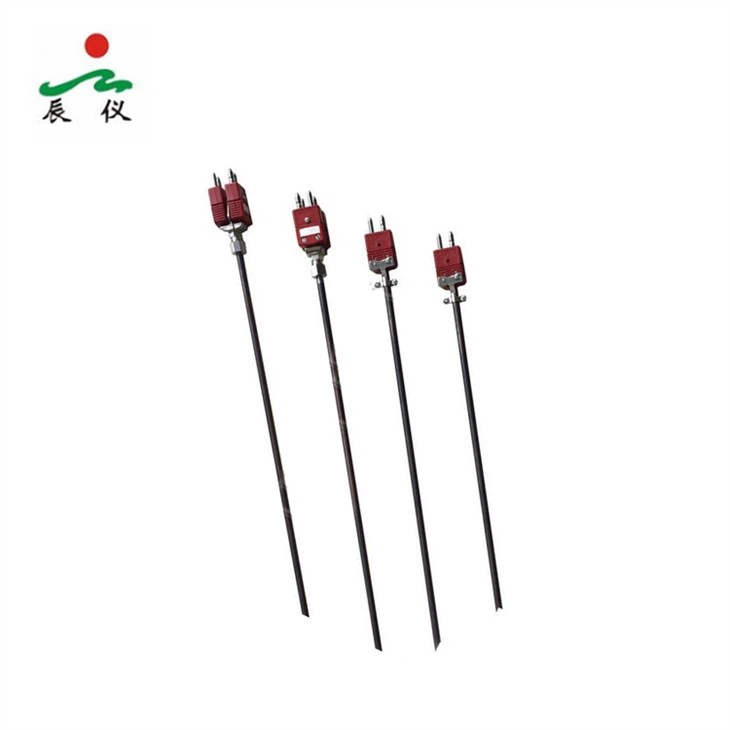

In aerospace testing, where components are exposed to extreme heat during flight, accurate temperature measurement is crucial. The high sensitivity of the C type thermocouple ensures that engineers can detect any small temperature fluctuations that could indicate potential problems with the materials or the design of the aircraft.
But it's not all sunshine and rainbows with C type thermocouples. They do have some limitations. One of the main issues is that they are quite brittle, which means they need to be handled with care during installation and use. Also, they are sensitive to oxidation at high temperatures in the presence of oxygen, so they often need to be used in inert or reducing atmospheres.
Despite these limitations, the benefits of the high sensitivity of C type thermocouples far outweigh the drawbacks in many high - temperature applications. If you're in an industry that requires precise temperature measurement in extremely hot environments, a C type thermocouple could be the perfect solution for you.
If you're interested in learning more about C type thermocouples or are thinking about making a purchase, don't hesitate to reach out. We're here to help you find the right thermocouple for your specific needs. Whether you have questions about installation, calibration, or just want to know more about how they work, we're just a message away.
In conclusion, the sensitivity of a C type thermocouple is one of its most important features. Its ability to detect small temperature changes, especially at high temperatures, makes it a valuable tool in many industries. So, if you're looking for a reliable and precise high - temperature thermocouple, give the C type thermocouple a try.
References
- "Thermocouple Handbook" - A comprehensive guide to thermocouples and their applications.
- Industry research papers on high - temperature thermocouples and their performance.
