

Can a cement thermocouple be used in a cement waste gas incinerator? This is a question that often arises among professionals in the cement and waste management industries. As a leading supplier of cement thermocouples, I am well - versed in the technical aspects and applications of these essential temperature - measuring devices. In this blog, I will delve into the feasibility of using cement thermocouples in cement waste gas incinerators, exploring the technical requirements, challenges, and benefits.
Technical Requirements of Cement Waste Gas Incinerators
Cement waste gas incinerators are complex systems designed to burn waste materials while ensuring environmental compliance and efficient operation. These incinerators operate under extreme conditions, with high temperatures, corrosive gases, and abrasive particulate matter. The temperature in a cement waste gas incinerator can range from several hundred degrees Celsius to over a thousand degrees Celsius, depending on the type of waste being burned and the incineration process.

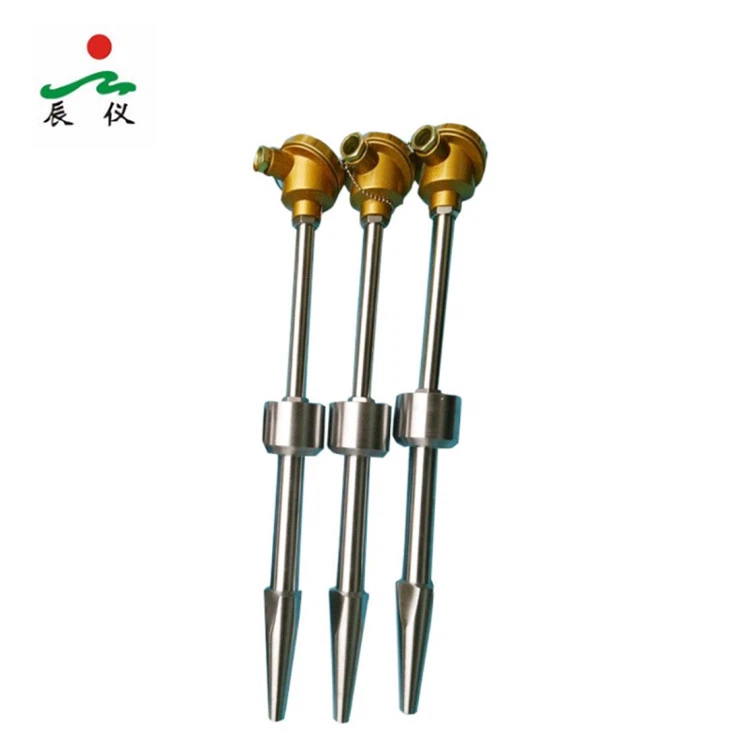
Accurate temperature measurement is crucial for the proper functioning of the incinerator. It helps in controlling the combustion process, ensuring complete waste incineration, and preventing over - heating or under - heating, which can lead to inefficient operation or environmental pollution. Therefore, the thermocouples used in these incinerators must be able to withstand the harsh environment and provide accurate and reliable temperature readings.
Characteristics of Cement Thermocouples
Cement thermocouples are specifically designed for use in the cement industry. They are built to withstand high temperatures, abrasive materials, and chemical corrosion commonly found in cement manufacturing processes. These thermocouples are typically made of high - quality materials such as stainless steel or ceramic, which can resist the harsh conditions in cement kilns and related equipment.
One of the key features of cement thermocouples is their durability. They are engineered to have a long service life, reducing the need for frequent replacements. This is important in the cement industry, where downtime for maintenance can be costly. Additionally, cement thermocouples are designed to provide accurate temperature measurements, which are essential for process control and quality assurance in cement production.
Feasibility of Using Cement Thermocouples in Cement Waste Gas Incinerators
When considering whether a cement thermocouple can be used in a cement waste gas incinerator, several factors need to be taken into account.
Temperature Range
Most cement thermocouples are designed to operate within a specific temperature range. While they can handle the high temperatures typically found in cement kilns, the temperature profile in a waste gas incinerator may be different. Some waste gas incinerators may reach extremely high temperatures during peak combustion, which could exceed the upper limit of the cement thermocouple's operating range. However, many modern cement thermocouples are capable of withstanding temperatures up to 1200°C or even higher, which may be sufficient for most cement waste gas incinerators.
Corrosion and Abrasion Resistance
The waste gas in a cement waste gas incinerator contains various corrosive gases such as sulfur dioxide, nitrogen oxides, and hydrochloric acid. These gases can corrode the thermocouple sheath and wires over time, affecting the accuracy of the temperature measurement. Cement thermocouples, with their corrosion - resistant materials, are well - suited to handle these corrosive environments.
In addition, the waste materials being incinerated may contain abrasive particles, which can wear down the thermocouple. Cement thermocouples are designed to resist abrasion, making them a viable option for use in incinerators where abrasive particulate matter is present.
Response Time
In a dynamic environment like a waste gas incinerator, the thermocouple needs to have a fast response time to accurately measure rapid temperature changes. Cement thermocouples are engineered to provide a relatively quick response time, ensuring that they can keep up with the changing temperature conditions in the incinerator.
Advantages of Using Cement Thermocouples in Cement Waste Gas Incinerators
Cost - effectiveness
Since cement thermocouples are already designed for the harsh conditions in the cement industry, they are often more cost - effective than other types of thermocouples that may need to be specially adapted for use in waste gas incinerators. Their long service life also reduces the overall cost of ownership, as there is less need for frequent replacements.
Compatibility
Cement thermocouples are compatible with existing control systems commonly used in the cement industry. This means that they can be easily integrated into the control systems of cement waste gas incinerators, reducing the need for complex modifications or additional equipment.
Reliability
As mentioned earlier, cement thermocouples are known for their reliability. Their ability to withstand high temperatures, corrosion, and abrasion ensures that they can provide accurate and consistent temperature measurements over an extended period. This reliability is crucial for the safe and efficient operation of cement waste gas incinerators.
Our Product Offerings
As a cement thermocouple supplier, we offer a wide range of products suitable for use in cement waste gas incinerators. Our Right Angle Thermocouple is designed for applications where space is limited or where a specific angle of measurement is required. It is made of high - quality materials that can withstand the harsh conditions in incinerators.
Our Dual K Type Thermocouple provides redundant temperature measurement, increasing the reliability of the temperature monitoring system. In case one thermocouple fails, the other can still provide accurate temperature readings, ensuring the continuous operation of the incinerator.
For larger - scale applications, such as power plant - related cement waste gas incinerators, our Power Plant Thermocouple is a great choice. It is designed to handle high - temperature and high - pressure conditions, making it suitable for the demanding environment of power plant incinerators.
Conclusion and Call to Action
In conclusion, cement thermocouples can be a viable option for use in cement waste gas incinerators. Their ability to withstand high temperatures, corrosion, and abrasion, along with their cost - effectiveness, compatibility, and reliability, make them well - suited for these challenging applications.
If you are in the market for thermocouples for your cement waste gas incinerator, we invite you to contact us for a detailed discussion. Our team of experts can help you select the most suitable thermocouple for your specific needs and provide you with professional advice on installation and maintenance. We are committed to providing high - quality products and excellent customer service to ensure the success of your incineration operations.
References
- "Thermocouples: Theory and Practice" by John O. W. Norris
- "Cement Industry Handbook" by G. V. Ramakrishnan
- Technical documents from leading thermocouple manufacturers
