

Hey there! As a supplier of Pt1000 4 - Wire RTDs, I often get asked if these sensors can be used in wet environments. It's a valid question, and in this blog, I'll break down the ins and outs of using Pt1000 4 - Wire RTDs in such conditions.
First off, let's quickly understand what a Pt1000 4 - Wire RTD is. RTD stands for Resistance Temperature Detector. A Pt1000 specifically uses platinum as its sensing element, and the "1000" indicates that at 0°C, its resistance is 1000 ohms. The 4 - wire configuration is a setup that helps in getting very accurate temperature measurements by compensating for the resistance of the lead wires.
Now, the big question: Can it be used in wet environments? Well, it's not a straightforward yes or no answer.
The Challenges of Wet Environments
Wet environments pose several challenges for any sensor, and Pt1000 4 - Wire RTDs are no exception. Water is a conductor of electricity, and when it comes into contact with the sensor, it can cause a short - circuit. This can lead to inaccurate readings or even damage the sensor over time.
Moisture can also corrode the metal parts of the RTD. Platinum is a relatively stable metal, but other components like the lead wires and the housing can be susceptible to corrosion. Once corrosion sets in, the electrical properties of the sensor can change, affecting its accuracy and reliability.
Another issue is the formation of condensation. In a wet environment, temperature fluctuations can cause water vapor to condense on the sensor. This can create a thin layer of water that interferes with the electrical signals and the heat transfer between the sensor and the surrounding medium.
How Pt1000 4 - Wire RTDs Can Be Adapted
Despite these challenges, there are ways to use Pt1000 4 - Wire RTDs in wet environments. One solution is to use a proper housing. A well - sealed housing can protect the sensor from direct contact with water. For example, some RTDs come with stainless - steel housings that are IP67 or IP68 rated. These ratings indicate a high level of protection against dust and water ingress. An IP67 - rated housing can withstand temporary immersion in water up to 1 meter for a short period, while an IP68 - rated housing can handle continuous immersion in water at a specified depth.
Another option is to use a coating on the sensor. Specialized coatings can provide an additional layer of protection against moisture and corrosion. Some coatings are designed to be hydrophobic, meaning they repel water. This helps in preventing water from sticking to the sensor surface.
Our Product Offerings
At our company, we offer a range of Pt1000 4 - Wire RTDs that are suitable for wet environments. We have sensors with different housing materials and protection ratings to meet various application needs.
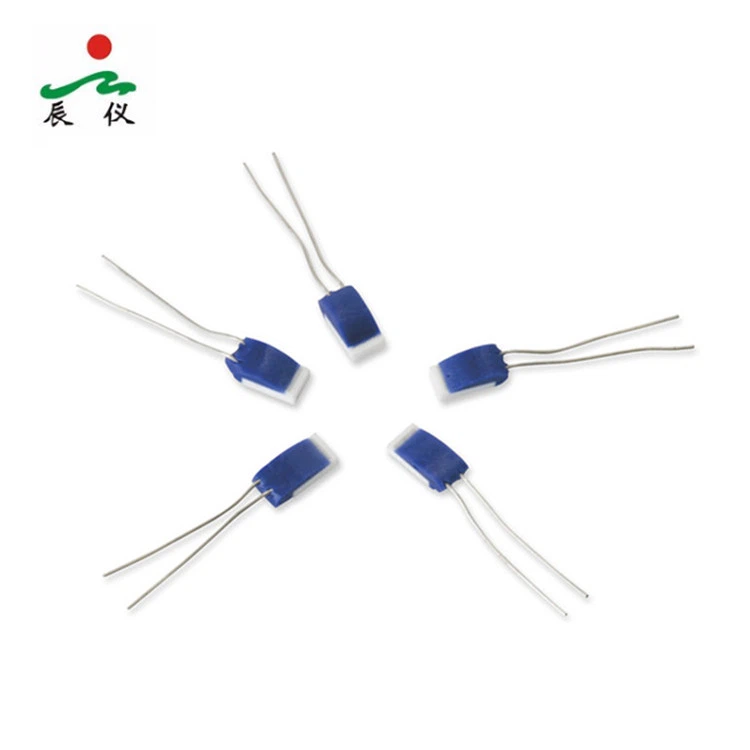
For instance, our Thin Film Element RTDs are designed with a thin - film platinum sensing element. This design not only provides high accuracy but also allows for a more compact and durable sensor. The thin - film element is less likely to be affected by moisture compared to traditional wire - wound elements.
We also have 3D Printer RTD options. These RTDs are optimized for applications where precise temperature control is required, even in potentially wet or humid conditions. They are built with high - quality materials and advanced manufacturing techniques to ensure long - term reliability.
Our Thermal Resistance Probe series is another great choice for wet environments. These probes are designed to provide accurate temperature measurements in a variety of industrial settings, including those with high moisture levels.
Real - World Applications
There are many real - world applications where Pt1000 4 - Wire RTDs are used in wet environments. In the food and beverage industry, RTDs are used to monitor the temperature of liquids during processing. These liquids can be wet and may contain various chemicals, so the sensors need to be able to withstand such conditions.
In the pharmaceutical industry, RTDs are used in autoclaves and other equipment where high - pressure steam is present. The sensors need to be able to operate accurately in this wet and high - temperature environment.
In the marine industry, RTDs are used to measure the temperature of seawater, which is highly corrosive. Our sensors with proper housing and coatings can handle these harsh conditions and provide reliable temperature data.
Conclusion
So, to answer the question, yes, a Pt1000 4 - Wire RTD can be used in wet environments, but it requires proper protection and adaptation. With the right housing, coatings, and design, these sensors can provide accurate and reliable temperature measurements even in the most challenging wet conditions.

If you're in need of Pt1000 4 - Wire RTDs for your wet - environment applications, we'd love to talk to you. Whether you're working on a small - scale project or a large - scale industrial application, our team of experts can help you find the right sensor for your needs. Contact us to start a discussion about your requirements and let's work together to get the best temperature - sensing solution for you.
References
- "Temperature Measurement Handbook" by Omega Engineering
- "Industrial Temperature Sensors: Principles, Characteristics, and Applications" by John Wiley & Sons
