

Can Head Type RTD be used in glass - making industries?
As a supplier of Head Type RTDs, I've often been asked whether our products can be effectively used in the glass - making industries. In this blog, I'll delve into the details to answer this question, exploring the properties of Head Type RTDs and the requirements of glass - making processes.
Understanding Head Type RTDs
Before we discuss their application in glass - making, let's first understand what Head Type RTDs are. Resistance Temperature Detectors (RTDs) are temperature sensors that operate on the principle that the electrical resistance of a metal changes with temperature. Head Type RTDs are a specific type of RTD where the sensing element is housed in a protective head.
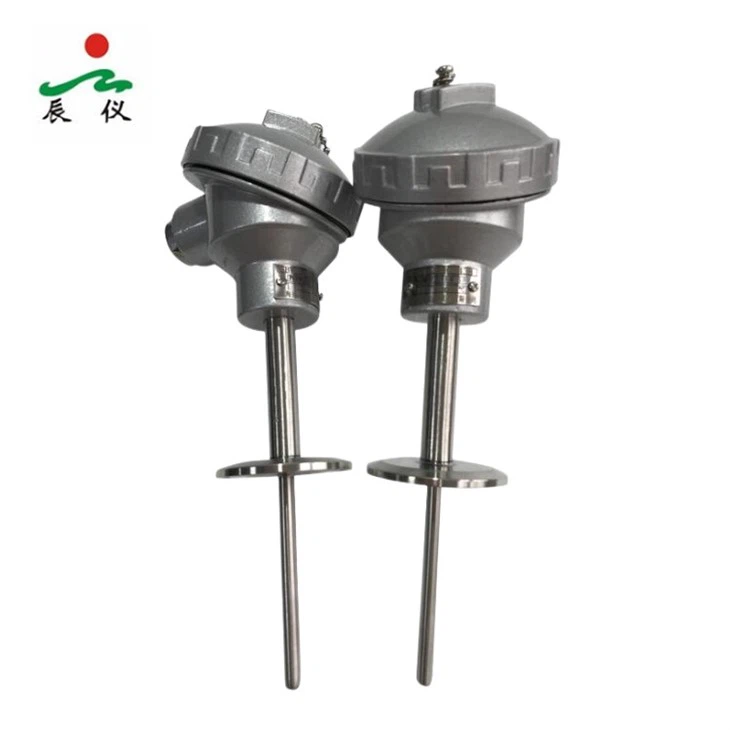

One of the most common types of Head Type RTDs is the Pt100 Platinum Temperature Sensors. The "Pt100" indicates that it is made of platinum and has a resistance of 100 ohms at 0°C. Platinum is an ideal material for RTDs because it has a highly linear relationship between resistance and temperature, excellent stability, and high repeatability.
Another type is the Pt100 Thermosensor. Similar to the Pt100 Platinum Temperature Sensors, it uses platinum as the sensing element. These sensors are designed to accurately measure temperature changes and convert them into electrical signals that can be easily read and processed by control systems.
The Sanitary RTD Probe is also a part of the Head Type RTD family. It is often used in applications where hygiene is a concern, with a design that allows for easy cleaning and sterilization.
Requirements of Glass - Making Industries
The glass - making process involves several stages, each with specific temperature requirements. The first step is melting, where raw materials such as silica sand, soda ash, and limestone are heated to extremely high temperatures, typically around 1500 - 1700°C, in a furnace. This high - temperature melting process is crucial for the raw materials to fuse together and form a homogeneous glass melt.
After melting, the glass melt is then shaped into various products through processes like blowing, pressing, or drawing. These shaping processes require precise temperature control to ensure the glass has the right viscosity for proper forming. For example, during the blowing process, the glass needs to be at a temperature where it is soft enough to be blown into the desired shape but not so hot that it loses its form.
Finally, the glass products need to be annealed. Annealing is a heat - treatment process that relieves internal stresses in the glass, improving its strength and durability. This process involves slowly cooling the glass from a high temperature to room temperature according to a specific cooling curve.
Suitability of Head Type RTDs in Glass - Making
Now, let's analyze whether Head Type RTDs can meet the requirements of the glass - making industries.
Temperature Range
One of the main challenges in glass - making is the extremely high temperatures involved. Standard Head Type RTDs, especially those with platinum sensing elements like Pt100, have a limited temperature range. Platinum has a maximum operating temperature of around 850°C. This means that in the melting stage of glass - making, where temperatures can reach 1500 - 1700°C, standard Head Type RTDs cannot be directly used.
However, for the shaping and annealing processes, where temperatures are generally lower, Head Type RTDs can be a suitable choice. During shaping, the glass temperature is usually in the range of 500 - 1000°C, and during annealing, the temperature gradually decreases from a few hundred degrees Celsius to room temperature. In these temperature ranges, Head Type RTDs can provide accurate temperature measurements.
Accuracy and Stability
Accuracy and stability are crucial in glass - making processes. Inaccurate temperature measurements can lead to defects in the glass products, such as uneven thickness, bubbles, or internal stresses. Head Type RTDs, particularly those made of platinum, offer high accuracy and stability. The linear relationship between resistance and temperature of platinum allows for precise temperature calculations. And their excellent repeatability ensures that the same temperature reading can be obtained consistently over time, which is essential for maintaining the quality of glass products.
Environmental Resistance
The glass - making environment is harsh, with high temperatures, corrosive chemicals, and mechanical vibrations. Head Type RTDs are designed to be robust and resistant to environmental factors. The protective head of the RTD helps to shield the sensing element from dust, moisture, and mechanical damage. Additionally, some Head Type RTDs can be equipped with special coatings or materials to enhance their corrosion resistance, making them more suitable for the glass - making environment.
Applications of Head Type RTDs in Glass - Making
Although they cannot be used in the high - temperature melting stage, Head Type RTDs have several applications in other parts of the glass - making process.
Shaping Process
During the shaping of glass products, Head Type RTDs can be used to monitor and control the temperature of the glass. For example, in a glass - blowing machine, RTDs can be installed near the glass - forming area to measure the temperature of the glass. The control system can then adjust the heating or cooling elements based on the temperature readings to ensure the glass has the right viscosity for blowing.
Annealing Ovens
In annealing ovens, Head Type RTDs play a vital role in controlling the cooling rate of the glass. By accurately measuring the temperature of the glass at different positions in the oven, the control system can ensure that the glass cools down according to the desired annealing curve. This helps to relieve internal stresses in the glass and improve its quality.
Conclusion
In conclusion, while standard Head Type RTDs cannot be used in the high - temperature melting stage of glass - making, they are well - suited for the shaping and annealing processes. Their accuracy, stability, and environmental resistance make them valuable tools for ensuring the quality of glass products.
If you are in the glass - making industry and are looking for reliable temperature sensors for your shaping and annealing processes, our Head Type RTDs can be an excellent choice. We offer a wide range of products, including Pt100 Platinum Temperature Sensors, Pt100 Thermosensor, and Sanitary RTD Probe. Contact us for more information and to discuss your specific requirements. We are committed to providing you with the best temperature - sensing solutions for your glass - making operations.
References
- "Glass Manufacturing Technology" by John C. Mauro, et al.
- "Temperature Measurement in Industrial Processes" by R. P. D. Walsh.
- Technical data sheets of Head Type RTDs from various manufacturers.
