

Hey there! As a supplier of M5 Thermocouples, I often get asked whether the M5 Thermocouple can be used for measuring ceramic temperature. Well, let's dig into this topic and find out.
First off, let's understand what a thermocouple is. A thermocouple is a device that measures temperature based on the principle of the Seebeck effect. When two different metals are joined at two junctions and there's a temperature difference between these junctions, a voltage is generated. This voltage can then be measured and converted into a temperature reading.
The M5 Thermocouple is a popular choice in many industrial and scientific applications. It's known for its reliability, accuracy, and durability. But can it handle the unique challenges of measuring ceramic temperature?
The Properties of Ceramics
Ceramics are a diverse group of materials with a wide range of properties. They can have high melting points, excellent thermal insulation, and can be resistant to corrosion and wear. When it comes to temperature measurement, ceramics can present some challenges.
One of the main issues is the high temperatures that ceramics can reach during processes like firing in a kiln. Some ceramics can be fired at temperatures well over 1000°C. This means that any thermocouple used to measure their temperature needs to be able to withstand these extreme conditions without losing accuracy or getting damaged.
Another challenge is the thermal conductivity of ceramics. Different types of ceramics have different thermal conductivities, which can affect how quickly the thermocouple can reach thermal equilibrium with the ceramic material. If the thermocouple doesn't reach thermal equilibrium, the temperature reading may not be accurate.
Can the M5 Thermocouple Cope?
The M5 Thermocouple is designed to handle a wide range of temperatures. It can typically measure temperatures from -200°C to 1300°C, depending on the type of thermocouple wire used. This temperature range makes it suitable for many ceramic applications, especially those involving firing at high temperatures.
In terms of durability, the M5 Thermocouple is built to last. It's often protected by a sheath made of materials like stainless steel or ceramic, which can withstand the harsh environment inside a kiln. The sheath also helps to protect the thermocouple wire from corrosion and mechanical damage.

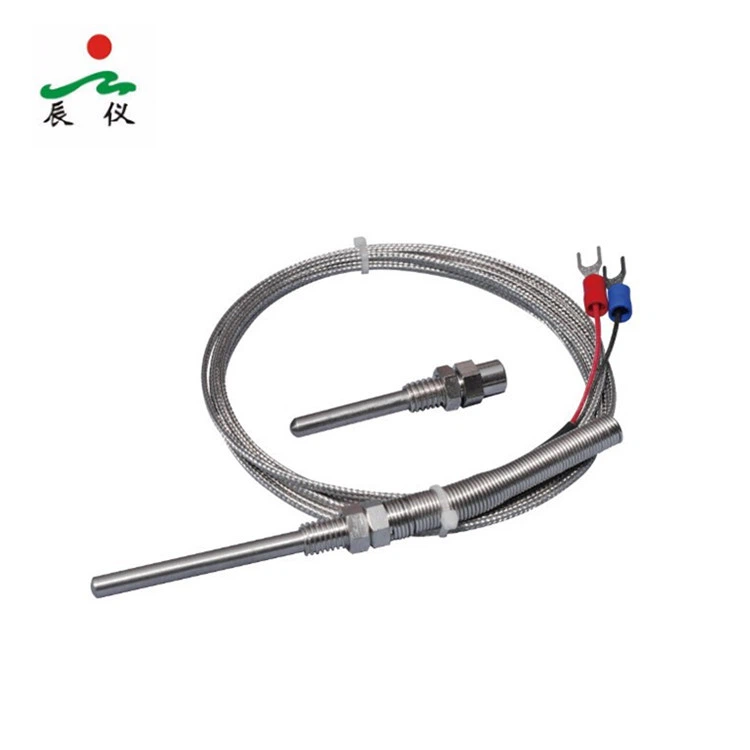
However, it's important to choose the right type of M5 Thermocouple for the specific ceramic application. For example, if you're dealing with very high temperatures, you might want to consider a K Type Thermocouple Probe. K-type thermocouples are known for their wide temperature range and are commonly used in high-temperature applications.
On the other hand, if you need a more precise measurement at lower temperatures, a K J Type Thermocouple Sensor might be a better choice. These sensors can provide more accurate readings in the lower temperature range.
Installation and Calibration
Proper installation and calibration are crucial when using the M5 Thermocouple to measure ceramic temperature. The thermocouple needs to be placed in the right location to ensure that it accurately measures the temperature of the ceramic material. This might involve inserting the thermocouple into a hole drilled in the ceramic or placing it in close proximity to the ceramic surface.
Calibration is also important to ensure that the thermocouple is providing accurate temperature readings. Over time, thermocouples can drift in accuracy due to factors like aging and exposure to high temperatures. Regular calibration can help to correct any drift and ensure that the temperature readings are reliable.
Other Considerations
When using the M5 Thermocouple for ceramic temperature measurement, there are a few other things to keep in mind. For example, the response time of the thermocouple can be important, especially if you're monitoring a rapid temperature change. A faster response time means that the thermocouple can quickly detect and report changes in temperature.
Another consideration is the compatibility of the thermocouple with the control system you're using. The thermocouple needs to be able to interface with the control system to provide accurate temperature data for process control.
Conclusion
So, can the M5 Thermocouple be used for measuring ceramic temperature? The answer is yes, in most cases. With its wide temperature range, durability, and various types available, the M5 Thermocouple is a suitable choice for many ceramic applications. However, it's important to choose the right type of thermocouple, install it correctly, and calibrate it regularly to ensure accurate temperature measurement.
If you're in the market for a reliable thermocouple for your ceramic temperature measurement needs, we're here to help. We offer a wide range of M5 Thermocouples, including Duplex Thermocouple Type K, K J Type Thermocouple Sensor, and K Type Thermocouple Probe. Our team of experts can help you choose the right thermocouple for your specific application and provide you with all the support you need.
If you have any questions or would like to discuss your requirements further, feel free to reach out to us. We're always happy to have a chat and help you find the best solution for your temperature measurement needs.
References
- "Thermocouples: Theory and Practice" by John R. Cimbala, John M. Cimbala, and Thomas G. Schilke.
- "Ceramics: Science and Engineering" by W. David Kingery, Harold K. Bowen, and David R. Uhlmann.
