

Hey there! As a supplier of the WRe526 Thermocouple, I've seen my fair share of issues that customers face. One of the most common problems is electromagnetic interference (EMI) affecting the performance of the WRe526 Thermocouple. In this blog, I'm gonna share some tips on how to deal with this pesky issue.
First off, let's understand what the WRe526 Thermocouple is. The WRe526 Thermocouple is a high - temperature thermocouple used in a variety of industrial applications. It's known for its accuracy and reliability in measuring high temperatures. But, like any electronic device, it's vulnerable to electromagnetic interference.
EMI can come from various sources. Electrical equipment such as motors, generators, and power lines can generate strong electromagnetic fields. Radio frequency sources like cell phones, Wi - Fi routers, and microwave ovens can also cause interference. When the WRe526 Thermocouple is exposed to these electromagnetic fields, it can lead to inaccurate temperature readings, signal distortion, or even complete failure of the thermocouple.
So, how can we deal with this problem?
1. Shielding
One of the most effective ways to protect the WRe526 Thermocouple from EMI is by using shielding. Shielding involves wrapping the thermocouple cable with a conductive material, usually a metal foil or braid. This conductive shield acts as a barrier, preventing the electromagnetic fields from reaching the thermocouple wires.
There are different types of shielding available. For example, a foil shield provides good high - frequency shielding and is relatively inexpensive. A braided shield, on the other hand, offers better mechanical protection and low - frequency shielding. When choosing a shield, consider the type of EMI source you're dealing with and the environment in which the thermocouple will be used.
2. Grounding
Proper grounding is crucial for reducing EMI. The shield of the thermocouple cable should be grounded at one end, preferably at the instrument end. Grounding provides a path for the electromagnetic currents to flow safely to the ground, rather than interfering with the thermocouple signal.
Make sure the grounding connection is solid and free of corrosion. A poor grounding connection can actually make the EMI problem worse. Also, avoid grounding the shield at both ends, as this can create a ground loop, which can introduce additional interference.
3. Filtering
Filtering is another technique to deal with EMI. You can use filters to remove the unwanted electromagnetic frequencies from the thermocouple signal. There are different types of filters available, such as low - pass filters, high - pass filters, and band - pass filters.
A low - pass filter allows low - frequency signals (the thermocouple signal) to pass through while blocking high - frequency EMI. High - pass filters do the opposite, allowing high - frequency signals to pass and blocking low - frequency interference. Band - pass filters are used when you want to allow a specific range of frequencies to pass through.
4. Distance and Placement
The physical distance between the WRe526 Thermocouple and the EMI source can have a significant impact on the level of interference. Try to keep the thermocouple as far away as possible from sources of EMI, such as large electrical motors and power lines.
Also, pay attention to the placement of the thermocouple. Avoid running the thermocouple cable parallel to power cables or other sources of EMI. Instead, cross them at right angles if possible. This can help reduce the amount of electromagnetic coupling between the thermocouple cable and the EMI source.
5. Use of Twisted Pairs
Using twisted pairs of thermocouple wires can also help reduce EMI. Twisting the wires together causes the electromagnetic fields induced in each wire to cancel each other out. This is because the induced currents in the two wires are equal in magnitude but opposite in direction.
When using twisted pairs, make sure the twist rate is consistent throughout the length of the cable. A higher twist rate generally provides better EMI protection.
Comparing with Other Thermocouples
It's worth comparing the WRe526 Thermocouple with other types of thermocouples in terms of EMI susceptibility. For example, the Platinum Rhodium Thermocouple and the S Type Thermocouple With Plug are also popular in high - temperature applications.
The Platinum Rhodium Thermocouple is known for its high accuracy and stability, but it can also be affected by EMI. The S Type Thermocouple With Plug is designed for easy installation, but like any thermocouple, it needs protection from electromagnetic interference.
In general, the WRe526 Thermocouple has similar EMI susceptibility to other high - temperature thermocouples. However, by following the above - mentioned tips, you can effectively reduce the impact of EMI on its performance.
Conclusion
Dealing with electromagnetic interference affecting the WRe526 Thermocouple can be challenging, but it's definitely doable. By using shielding, proper grounding, filtering, careful distance and placement, and twisted pairs, you can protect your thermocouple from EMI and ensure accurate temperature measurements.
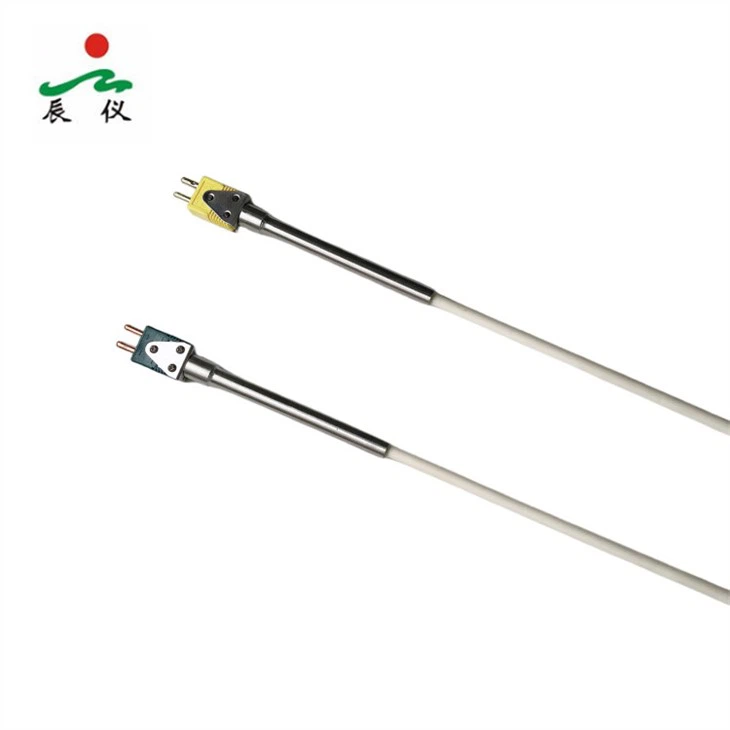

If you're in the market for a reliable WRe526 Thermocouple or have any questions about dealing with EMI, feel free to reach out. We're here to help you get the most out of your thermocouple and keep your industrial processes running smoothly.
References
- Electrical Engineering Handbook, Third Edition
- Industrial Instrumentation and Control Handbook, Second Edition
- Thermocouple Application Guide by Omega Engineering
