

As a supplier of KNE Thermocouple Heads, I often get asked a bunch of questions from customers. One question that pops up quite a bit is, "Is KNE Thermocouple Head affected by static electricity?" Let's dig into this topic and find out what's going on.
First off, let's understand what KNE Thermocouple Heads are. A KNE Thermocouple Head is an important part in the temperature - sensing world. It's used to connect thermocouple wires to other electrical components, like meters or controllers. Thermocouples work based on the Seebeck effect, where a temperature difference between two junctions of different metals creates a voltage. The KNE Thermocouple Head helps in getting that voltage signal from the thermocouple to the measuring device accurately.
Now, static electricity. Static is basically an imbalance of electric charges within or on the surface of a material. It can build up when two materials rub against each other, or when there's a separation of materials. You've probably felt a shock when you touched a doorknob after walking on a carpet - that's static electricity in action.
So, can static electricity mess with a KNE Thermocouple Head? Well, it's possible. Static electricity can generate high - voltage pulses. These pulses can be strong enough to interfere with the small voltage signals that the thermocouple head is trying to transfer. When a static discharge occurs near the thermocouple head, it can cause a sudden spike in the electrical environment around it. This spike might be interpreted as a real temperature - related signal by the connected measuring device, leading to inaccurate readings.
Another issue is that the high - energy static discharges can potentially damage the internal components of the KNE Thermocouple Head. The head has delicate electronic parts that are designed to handle small, stable electrical currents. A large static pulse could fry these components, causing the thermocouple head to malfunction.
However, it's not all doom and gloom. There are ways to protect KNE Thermocouple Heads from static electricity. One common method is to use proper grounding. Grounding provides a path for the static charges to flow safely to the ground, rather than building up and causing problems. By connecting the thermocouple head to a good ground source, we can reduce the risk of static - related issues.
Shielding is also an effective measure. Using shielded cables around the thermocouple head can act as a barrier against external electrical interference, including static electricity. The shield absorbs the static charges and redirects them away from the sensitive components in the head.
In some industrial settings where static electricity is a major concern, anti - static mats and wrist straps are used. Workers handling the KNE Thermocouple Heads can wear wrist straps that are connected to a ground source. This ensures that any static charge on their bodies is safely discharged. Anti - static mats on workbenches can also help in preventing static build - up on the surfaces where the thermocouple heads are being installed or maintained.
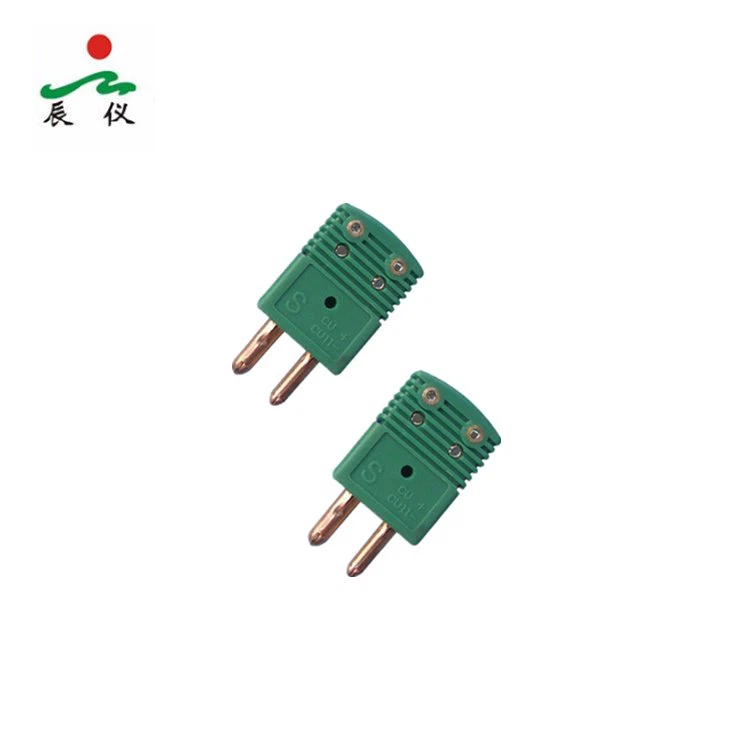
Let's compare the KNE Thermocouple Head with some other related products. For example, the S Type Thermocouple Connector. It's used for a different type of thermocouple, and it also has to deal with electrical signals. Just like the KNE Thermocouple Head, the S Type Thermocouple Connector can be affected by static electricity. The same principles of grounding and shielding apply to protect it from static - related problems.
The Mini K Type Connector is another product in the temperature - sensor accessory family. Due to its smaller size, it might be even more vulnerable to static electricity. The internal components are packed more tightly, and a static discharge could cause more damage in a smaller area. But again, the same protective measures of grounding and shielding can be used to safeguard it.

In my experience as a supplier, customers are often worried about the reliability of their temperature - sensing equipment. If static electricity is a concern in their working environment, they need to take steps to protect their KNE Thermocouple Heads. I've seen cases where companies didn't pay attention to static protection, and they ended up with inaccurate temperature readings, which led to production issues.
On the flip side, when customers follow the right procedures for static protection, they get consistent and accurate temperature measurements. This is crucial in industries like manufacturing, food processing, and pharmaceuticals, where temperature control is a key factor in product quality.
If you're in the market for KNE Thermocouple Heads, or any of the related products like the S Type Thermocouple Connector or the Mini K Type Connector, it's important to consider static protection. We, as a supplier, can offer you not only high - quality products but also advice on how to keep them safe from static electricity. Whether you're a small - scale business or a large industrial operation, having reliable temperature - sensing equipment is essential.
If you have any questions about our KNE Thermocouple Heads or need help with static protection, don't hesitate to reach out. We're here to assist you in making the best choices for your temperature - sensing needs. Contact us for more information and to start a procurement discussion.
References
- Textbooks on electrical engineering and thermocouple technology
- Industry reports on temperature - sensing equipment reliability
