

Hey there, folks! As a supplier of C Type Thermocouples, I get asked a ton of questions about these nifty little devices. One question that pops up quite often is, "What is the radiation effect on a C type thermocouple?" So, I thought I'd take a few minutes to break it down for you.
Let's start by getting a quick handle on what a C type thermocouple is. It's a high - temperature thermocouple that's made of tungsten - rhenium alloys. These thermocouples are super useful in industries where really high temps are the norm, like in some metal - processing plants and semiconductor manufacturing facilities.
Now, onto the radiation effect. Radiation is all around us. In the context of a thermocouple, radiation heat transfer can mess with the accuracy of temperature measurements if we're not careful. You see, a thermocouple measures temperature by relying on the Seebeck effect, which creates a voltage difference based on the temperature gradient between two junctions. But when radiation gets into the picture, it can add to or subtract from the heat that the thermocouple junction is experiencing.
One of the main impacts of radiation on a C type thermocouple is over - or under - estimation of temperature. If the thermocouple is exposed to a high - intensity radiation source, such as a hot furnace wall or a radiant heating element, it can absorb a significant amount of energy from this radiation. This absorbed energy can make the junction seem hotter than the actual gas or fluid temperature it's supposed to be measuring. So, if you're making critical manufacturing decisions based on these temperature readings, you could be in for some major headaches.
For example, in a metal - smelting plant, getting an accurate temperature reading is crucial for ensuring the quality of the end product. If the radiation causes the thermocouple to over - estimate the temperature, the operators might reduce the heat input, thinking the metal is hotter than it actually is. This can result in incomplete melting or poor alloy mixing.
On the flip side, if the thermocouple is radiating heat away to a cooler surrounding environment faster than it can absorb heat from the object of interest, it will under - estimate the temperature. For instance, in a cold chamber where a high - temperature process is taking place, the thermocouple might lose heat through radiation to the cold walls, giving a lower temperature reading than the real one.
Another aspect to consider is the material degradation due to radiation. C type thermocouples are made of tungsten - rhenium, which is generally quite resistant to high temperatures. However, intense radiation can cause changes in the crystal structure of these alloys over time. These structural changes can lead to alterations in the electrical properties of the thermocouple, affecting the Seebeck coefficient. And when the Seebeck coefficient changes, the relationship between the temperature and the output voltage gets thrown off. This means that the thermocouple will not give accurate temperature readings, even if there are no issues with radiation - induced heat absorption or loss.
So, what can we do to deal with these radiation effects? Well, there are a few strategies. One option is to use radiation shields. These are basically barriers placed around the thermocouple to reduce the amount of direct radiation it receives. A radiation shield can be made of a high - temperature - resistant material like ceramic or stainless steel. This shield acts like a buffer, absorbing and reflecting some of the radiation before it reaches the thermocouple junction.
Calibration is also key. Regular calibration can help account for any changes in the thermocouple's performance due to radiation exposure. By comparing the thermocouple's output to a known reference temperature source, we can adjust the measurement data to get a more accurate reading.
Now, as a C Type Thermocouple supplier, I'm here to tell you that we've got a great selection of thermocouples, including the WRe526 Thermocouple. This is a high - performance thermocouple that's designed to withstand tough conditions and offer reliable temperature measurements even in the presence of radiation.
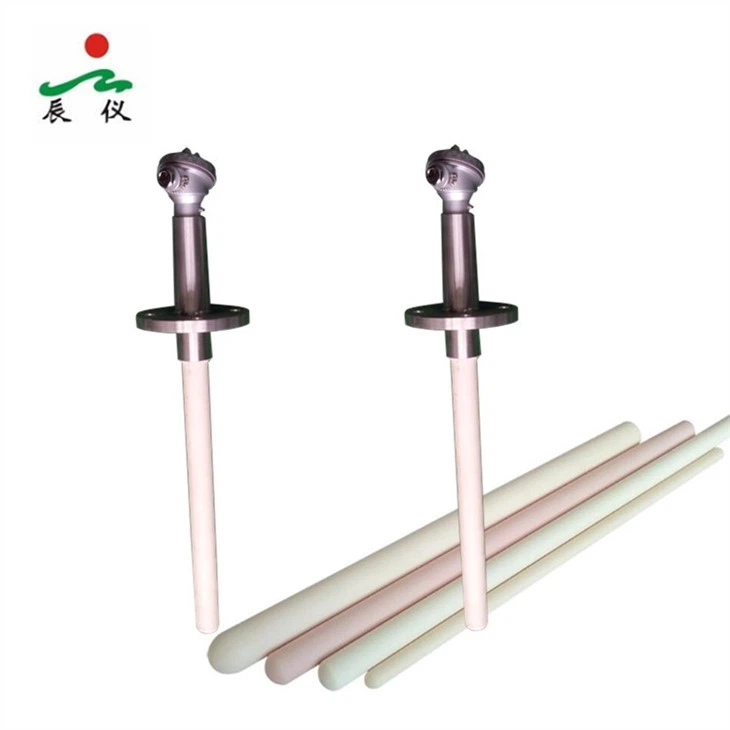

We also carry Type S R B Thermocouple and Platinum Rhodium Thermocouple, which are other great options depending on your specific needs. These thermocouples are known for their accuracy and durability, and they're also engineered to handle radiation to some extent.
If you're in the market for a high - quality thermocouple, whether it's a C type or any of the other types we offer, don't hesitate to reach out. We're always here to help you find the right solution for your temperature - measuring requirements. We can provide you with detailed information about each product, including how well they can handle radiation and other environmental factors.
In conclusion, understanding the radiation effect on a C type thermocouple is crucial for getting accurate temperature measurements and ensuring the proper operation of your industrial processes. By taking steps to mitigate the impact of radiation, like using shields and regular calibration, you can get the most out of your thermocouple. And if you need a top - notch thermocouple, look no further. We're here to make sure you've got the right tools for the job.
References
- Lienhard, J. H., & Lienhard, J. H. (2019). A Heat Transfer Textbook. Phlogiston Press.
- Incropera, F. P., DeWitt, D. P., Bergman, T. L., & Lavine, A. S. (2019). Fundamentals of Heat and Mass Transfer. Wiley.
