

Hey there! As a supplier of L Shape Thermocouples, I often get asked about the response time of these nifty little devices. So, I thought I'd take a deep dive into what response time means, what factors influence it, and why it matters in various applications.
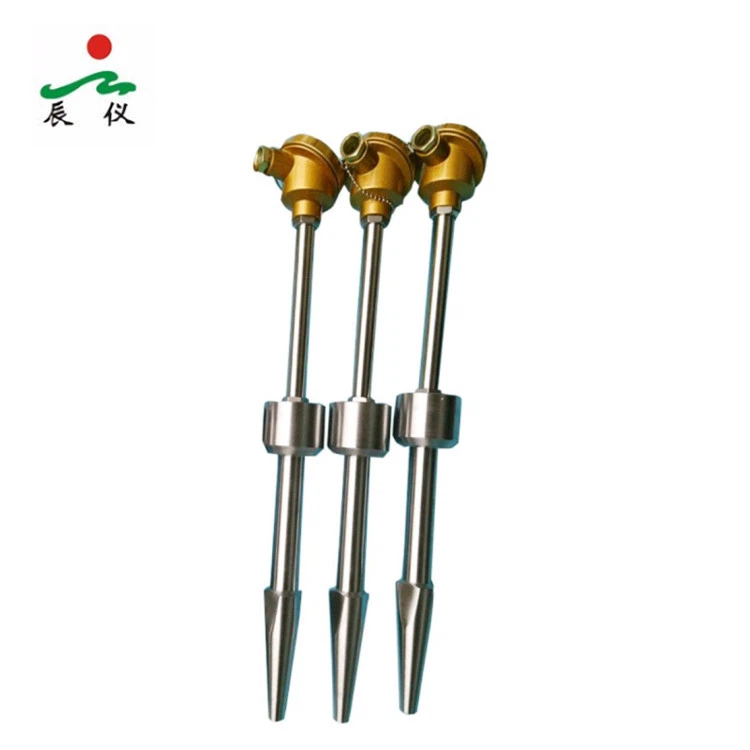

Let's start with the basics. A thermocouple is a sensor used to measure temperature. It works based on the Seebeck effect, which means when two different metals are joined at two points and there's a temperature difference between those points, a voltage is generated. This voltage can then be measured and converted into a temperature reading. An L Shape Thermocouple, as the name suggests, has an L-shaped design, which makes it suitable for a variety of installation scenarios, especially when you need to measure temperature in hard-to-reach places or at an angle.
Now, the response time of a thermocouple is the time it takes for the thermocouple to reach a certain percentage (usually 90% or 63.2%) of the final temperature value when there's a sudden change in the temperature of its surroundings. In simpler terms, it's how quickly the thermocouple can "catch up" to the actual temperature.
There are several factors that can affect the response time of an L Shape Thermocouple. First off, the size and diameter of the thermocouple wire play a big role. Thicker wires generally have a slower response time because they have more mass to heat up or cool down. On the other hand, thinner wires can respond more quickly to temperature changes. But there's a trade-off here - thinner wires are also more fragile and may not be as durable in harsh environments.
The type of sheath material used on the thermocouple also impacts the response time. Some sheath materials are better conductors of heat than others. For example, a stainless - steel sheath is quite common, but it has a relatively low thermal conductivity compared to some other materials like ceramic. A thermocouple with a ceramic sheath may have a faster response time because heat can transfer through the ceramic more quickly.
The environment in which the thermocouple is used is another crucial factor. If the thermocouple is placed in a fluid with high flow velocity, like a fast - moving gas or liquid, it will generally have a faster response time. The moving fluid helps to transfer heat to or from the thermocouple more efficiently. In a stagnant environment, the heat transfer is slower, and thus the response time is longer.
So, why does the response time matter? Well, in many industrial applications, getting an accurate and timely temperature reading is crucial. Take power plants for example. In a Power Plant Thermocouple, a slow response time could mean that the control system doesn't react quickly enough to temperature changes. This can lead to inefficiencies, equipment damage, or even safety hazards. In power generation, precise temperature control is essential for the proper operation of turbines, boilers, and other critical components.
In the cement industry, Cement Thermocouple is used to monitor the temperature in kilns. A fast - responding thermocouple is necessary to ensure that the kiln is operating at the optimal temperature for the cement - making process. If the response time is too slow, the quality of the cement may be affected, and there could be increased energy consumption.
Another example is in scientific research or laboratory settings. When conducting experiments where temperature changes occur rapidly, a thermocouple with a slow response time may not provide accurate data. Scientists need to know the exact temperature at a given moment to draw valid conclusions from their experiments.
Now, let's talk about some applications where our L Shape Thermocouples really shine. One of the great things about the L shape is its versatility in installation. In a laboratory, it can be easily inserted into test tubes or small containers at an angle to measure the temperature of a sample. In industrial ovens, the L shape allows for temperature measurement at different depths and angles within the oven chamber.
We also offer Dual K Type Thermocouple, which can provide redundant temperature measurements. This is especially useful in critical applications where the accuracy of temperature measurement is of utmost importance. Having two thermocouples in one assembly gives you an extra layer of confidence in your temperature readings.
If you're in the market for L Shape Thermocouples or any of our other thermocouple products, I encourage you to get in touch. Whether you need a fast - responding thermocouple for a high - speed process or a durable one for a harsh environment, we've got you covered. Our team of experts can help you choose the right thermocouple for your specific needs.
In conclusion, understanding the response time of an L Shape Thermocouple is essential for making the right choice in your temperature - sensing applications. By considering factors like wire size, sheath material, and the operating environment, you can ensure that you get a thermocouple that provides accurate and timely temperature readings. So, don't hesitate to reach out and start a conversation about how we can help with your temperature - measurement requirements.
References
- "Thermocouples: Theory and Practice" by John W. N. Sullivan
- "Industrial Temperature Measurement" by Peter H. Sydenham
