

As a supplier of KNE Thermocouple Heads, I often encounter inquiries regarding the thermal time constant of our products. Understanding this concept is crucial for customers who rely on accurate temperature measurements in various industrial and scientific applications. In this blog post, I will delve into what the thermal time constant of a KNE Thermocouple Head is, its significance, and how it impacts performance.
What is the Thermal Time Constant?
The thermal time constant is defined as the time required for a thermocouple to respond to 63.2% of a sudden change in temperature. It is a key parameter that quantifies the speed at which a thermocouple can detect and adapt to temperature variations in its environment. A lower thermal time constant indicates a faster response, allowing the thermocouple to quickly register temperature changes, while a higher value implies a slower response.
How is the Thermal Time Constant of KNE Thermocouple Head Determined?
Several factors influence the thermal time constant of a KNE Thermocouple Head. First and foremost is the design and construction of the thermocouple itself. The materials used for the sensing element, sheath, and insulation play a significant role. For instance, a thermocouple with a thin sheath and high - conductivity materials will generally have a lower thermal time constant because heat can transfer more rapidly through these components.
The size of the thermocouple also affects the thermal time constant. Smaller thermocouples have less mass, which means they require less heat energy to change temperature. As a result, they typically have faster response times compared to larger ones. In our KNE Thermocouple Head product line, we offer various sizes and configurations to meet different application requirements. Some are optimized for fast response, while others are designed for durability and stability in harsh environments.
The installation method is another critical factor. A proper installation ensures good thermal contact between the thermocouple and the object whose temperature is being measured. If the thermocouple is not installed correctly, for example, if there is a large air gap between the thermocouple and the target, it can increase the thermal resistance and thus the thermal time constant, leading to slower and less accurate temperature readings.
Significance of Thermal Time Constant in Applications
The thermal time constant has several implications for different applications. In industries where rapid temperature changes occur, such as in metal processing or chemical reactions, a thermocouple with a low thermal time constant is essential. For example, in a steel - making process, the temperature of the molten metal can change very quickly. A thermocouple with a slow response may not accurately track these rapid changes, leading to inaccurate temperature control and potentially affecting the quality of the final product.
In scientific research, especially in experiments where temperature variations are precisely controlled or measured, a well - defined thermal time constant is crucial. Researchers need to know how quickly the thermocouple will respond to changes so that they can accurately interpret their experimental data. A KNE Thermocouple Head with a known and appropriate thermal time constant can provide reliable data for these types of analyses.
Comparison with Other Connectors
It's also important to mention how the thermal time constant of our KNE Thermocouple Head compares with other types of thermocouple connectors in the market. Let's take a look at two popular alternatives: the S Type Thermocouple Connector and the Mini K Type Connector.
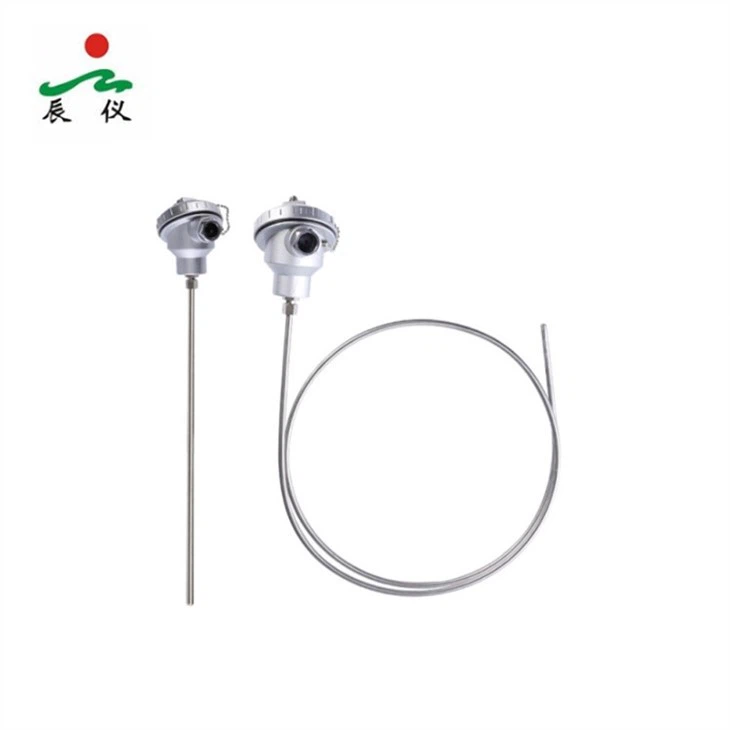

The S Type Thermocouple Connector is often used in high - temperature applications due to its stability and accuracy at extreme temperatures. However, its construction and the materials used may result in a relatively higher thermal time constant compared to some of our KNE Thermocouple Heads, especially those designed for fast response. This means that in applications where rapid temperature changes need to be detected, the KNE Thermocouple Head may be a better choice.
On the other hand, the Mini K Type Connector is known for its compact size and versatility. While it can offer relatively fast response times in some cases, our KNE Thermocouple Head has been engineered to provide excellent performance in a wide range of environments, with a focus on balancing response speed, accuracy, and durability. In applications where both a fast response and long - term reliability are required, our product has a distinct advantage.
Optimizing the Use of KNE Thermocouple Head
To get the most out of a KNE Thermocouple Head, it's important to consider a few practical tips. First, always follow the installation guidelines provided in the product manual. This will ensure proper thermal contact and minimize the thermal resistance, which in turn helps to reduce the thermal time constant and improve the accuracy of temperature measurements.
Regular calibration is also essential. Over time, the performance of a thermocouple can change due to factors such as wear and tear, exposure to high temperatures, or chemical corrosion. By calibrating the thermocouple at regular intervals, you can ensure that it continues to provide accurate and reliable temperature readings.
Contact for Procurement
If you are in need of high - quality thermocouples for your industrial or scientific applications, our KNE Thermocouple Head is an excellent choice. With our extensive experience as a supplier and our commitment to quality, we can provide you with the right product that meets your specific requirements. Whether you need a thermocouple with a fast thermal time constant for rapid temperature changes or a more durable option for harsh environments, we have the solution. Contact us to start a procurement discussion, and let us help you find the perfect thermocouple for your needs.
References
- [1] "Temperature Measurement Handbook", published by a leading industry association, which provides in - depth knowledge on thermocouple principles and performance parameters.
- [2] Technical documentation of KNE Thermocouple Head, which includes detailed specifications and performance data.
