

Can a C Type Thermocouple be used in vacuum environments?
As a supplier of C Type Thermocouples, I often encounter inquiries from customers about the suitability of our products in various environments. One question that comes up frequently is whether a C type thermocouple can be used in vacuum environments. In this blog post, I will explore this topic in detail, drawing on scientific knowledge and practical experiences in the thermocouple industry.
Understanding C Type Thermocouples
C type thermocouples are known for their high - temperature measurement capabilities. They are made of tungsten - rhenium alloys, typically with a tungsten - 5% rhenium (W - 5Re) positive leg and a tungsten - 26% rhenium (W - 26Re) negative leg. These thermocouples can measure temperatures up to around 2320°C (4208°F), making them ideal for applications in high - temperature industrial processes such as metal melting, heat treatment, and aerospace research.
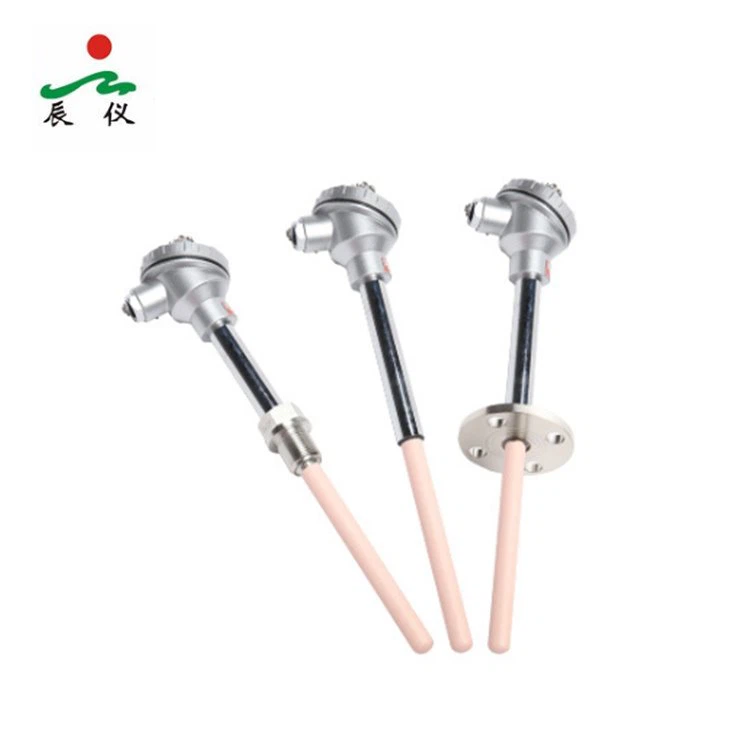
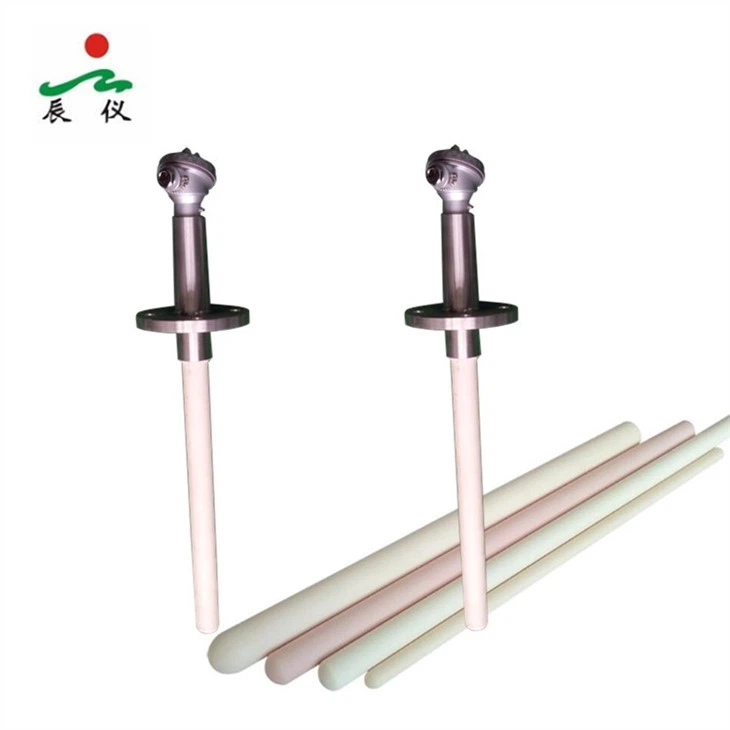
The principle of operation of a thermocouple is based on the Seebeck effect. When two different metals are joined at two junctions and there is a temperature difference between the junctions, an electromotive force (EMF) is generated. This EMF can be measured and correlated to the temperature difference between the two junctions.
Characteristics Relevant to Vacuum Environments
When considering using a C type thermocouple in a vacuum environment, several characteristics of the thermocouple and the vacuum environment need to be taken into account.
- Material Compatibility: In a vacuum, the materials of the thermocouple must be stable. The tungsten - rhenium alloys used in C type thermocouples are generally stable in a vacuum. However, at high temperatures, there is a risk of tungsten evaporation. The evaporation rate of tungsten is affected by temperature; the higher the temperature, the more significant the evaporation. This evaporation can lead to changes in the composition of the thermocouple wires, which in turn can affect the accuracy of temperature measurement over time.
- Oxidation and Contamination: One of the advantages of vacuum environments is the absence of oxygen. Oxidation is a major concern for many thermocouple materials in normal atmospheric environments. For C type thermocouples, the lack of oxygen in a vacuum helps prevent the oxidation of the tungsten - rhenium alloys, which can extend the lifespan of the thermocouple compared to use in an oxygen - containing environment.
- Thermal Conductivity: In a vacuum, heat transfer occurs mainly through radiation. The thermal conductivity of the thermocouple wires and the surrounding environment is very different from that in a normal atmosphere. The thermocouple needs to reach thermal equilibrium with the target object through radiation, which may affect the response time and accuracy of the temperature measurement. The design of the thermocouple sheath and its radiation properties become crucial factors.
Applications of C Type Thermocouples in Vacuum Environments
There are several industries where C type thermocouples are used in vacuum environments:
- Metallurgy: In vacuum melting and refining processes, the temperature needs to be accurately monitored. C type thermocouples can withstand the high temperatures involved in melting metals such as titanium, nickel - based superalloys, and other high - melting - point metals. For example, in a vacuum induction melting furnace, the C type thermocouple can be inserted into the crucible to measure the temperature of the molten metal.
- Aerospace and Space Research: Vacuum chambers are used in aerospace and space research to simulate the space environment. C type thermocouples are used to measure the temperature of components and materials under high - temperature and vacuum conditions. For instance, during the testing of rocket engine components or spacecraft thermal shielding materials, the C type thermocouple can provide accurate temperature data.
Advantages of Using C Type Thermocouples in Vacuum
- High - Temperature Resistance: As mentioned earlier, C type thermocouples can measure very high temperatures, which is essential in many vacuum - based high - temperature processes.
- Long - Term Stability in Vacuum: Due to the absence of oxidation, the C type thermocouples can maintain their performance for a relatively long time in a vacuum environment compared to other thermocouple types that may be more prone to oxidation in normal atmospheres.
Challenges and Mitigations
- Evaporation of Tungsten: As the temperature increases in a vacuum, the evaporation of tungsten from the thermocouple wires can be a problem. To mitigate this, special coatings can be applied to the thermocouple wires to reduce the evaporation rate. Another approach is to use a protective sheath made of a high - temperature - resistant material that can act as a barrier to the evaporated tungsten.
- Response Time: The slow heat transfer through radiation in a vacuum can lead to a longer response time for the thermocouple. To improve the response time, the thermocouple can be designed with a smaller diameter wire and a thinner sheath, which can increase the surface - to - volume ratio and enhance the radiation heat transfer.
Comparison with Other Thermocouple Types in Vacuum
- Platinum Rhodium Thermocouple: Platinum rhodium thermocouples are also used in high - temperature applications. However, they have a lower upper temperature limit compared to C type thermocouples. In a vacuum, the platinum rhodium thermocouples may be more suitable for applications where the temperature is below their upper limit and where the cost is a more significant factor, as C type thermocouples can be more expensive due to the use of tungsten - rhenium alloys.
- S Type Thermocouple With Plug: S type thermocouples are another popular choice. They are made of platinum and platinum - 10% rhodium. Similar to platinum rhodium thermocouples, they have a lower temperature range compared to C type thermocouples. In a vacuum, their performance may be affected by impurities and evaporation at high temperatures, but they are often used in less extreme temperature applications.
- Small and Laboratory Thermocouples: These thermocouples are usually designed for smaller - scale and laboratory - based applications. While they may be more convenient for some setups, they may not have the high - temperature capabilities and robustness of C type thermocouples required in vacuum - based high - temperature processes.
Conclusion
In conclusion, C type thermocouples can be used in vacuum environments. Their high - temperature resistance and relative stability in the absence of oxygen make them suitable for a wide range of vacuum - based industrial and research applications. However, challenges such as tungsten evaporation and response time need to be carefully considered and mitigated.
If you are looking for high - quality C type thermocouples for your vacuum environment applications, we are here to help. Our team of experts can provide you with the right thermocouple solutions tailored to your specific needs. Whether it's for a high - temperature industrial process or a research project, we can ensure that our C type thermocouples meet your requirements. For more information or to start a purchase - related discussion, please reach out to us. We are eager to work with you and support your temperature measurement needs.
References
- "Handbook of Temperature Measurement", John Wiley & Sons
- "Thermocouples: Theory and Practice", CRC Press
