

Hey there! As a supplier of cement thermocouples, I often get asked if a cement thermocouple can be used in a cement calciner. Well, let's dive right into this topic and find out.
First off, let's understand what a cement calciner is. A cement calciner is a crucial part of the cement manufacturing process. It's where the raw materials, mainly limestone, are heated to a high temperature to undergo calcination. This process involves the decomposition of calcium carbonate into calcium oxide and carbon dioxide. The temperature in a cement calciner can reach up to 900 - 1100°C, and maintaining the right temperature is super important for the quality of the cement produced.
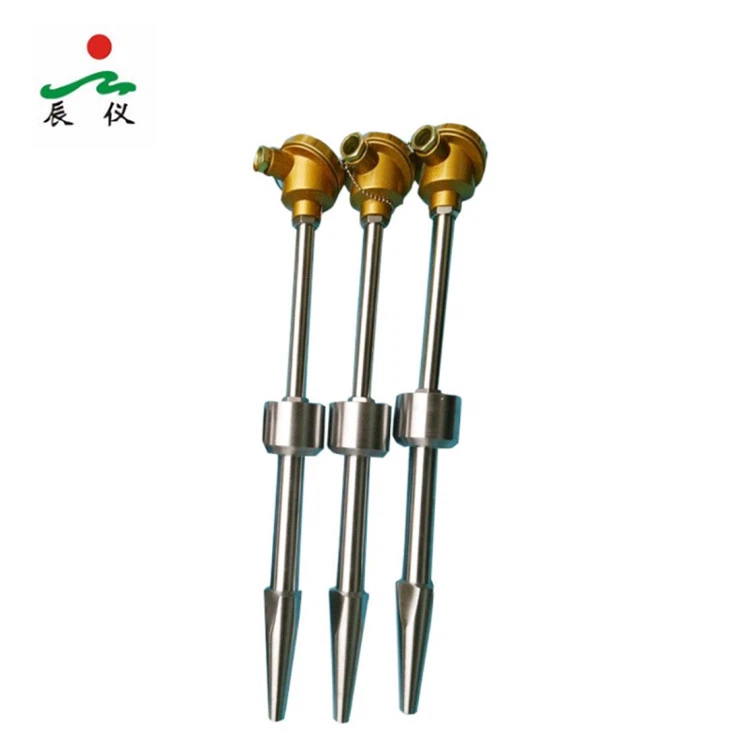
Now, what about cement thermocouples? A cement thermocouple is a device that measures temperature. It works based on the Seebeck effect, which means when two different metals are joined at two junctions and there's a temperature difference between these junctions, a voltage is generated. This voltage can then be measured and converted into a temperature reading.
So, can a cement thermocouple be used in a cement calciner? The short answer is yes, but there are some things to consider.
Compatibility with High Temperatures
As I mentioned earlier, the temperature in a cement calciner can be extremely high. A good cement thermocouple needs to be able to withstand these high temperatures without getting damaged. Most cement thermocouples are designed to handle high - temperature environments, but you need to make sure the specific model you're using has a high enough temperature rating. For example, some thermocouples are made with special alloys that can handle temperatures well above 1000°C.
Resistance to Chemicals
In a cement calciner, there are various chemicals present. The raw materials and the combustion process can produce acidic and alkaline substances. A cement thermocouple used in this environment needs to have good chemical resistance. Otherwise, the chemicals can corrode the thermocouple, leading to inaccurate temperature readings or even complete failure of the device. Some thermocouples come with protective sheaths made of materials like stainless steel or ceramic, which can offer better chemical resistance.
Durability in a Harsh Environment
The cement calciner is a harsh environment. There are vibrations, dust, and high - velocity gas flows. A cement thermocouple needs to be durable enough to withstand these conditions. It should be able to maintain its structural integrity and continue to function properly despite the mechanical stress and abrasion.

Accuracy
Accurate temperature measurement is crucial in a cement calciner. Even a small error in temperature can affect the calcination process and the quality of the cement. A good cement thermocouple should have high accuracy and be able to provide reliable temperature readings over a long period.
Now, let's talk about some of the products we offer that could be suitable for use in a cement calciner.
We have the Power Plant Thermocouple. This thermocouple is designed for high - temperature applications, similar to what you'd find in a cement calciner. It has a robust construction and can handle the harsh conditions in such an environment.
The Right Angle Thermocouple is another option. Its unique right - angle design can be useful in installations where space is limited or where a specific orientation is required. It also offers good temperature measurement accuracy.
And then there's the Dual K Type Thermocouple. This thermocouple provides redundant temperature measurement, which means if one thermocouple fails, the other can still provide temperature readings. This is a great feature for critical applications like a cement calciner, where continuous and accurate temperature monitoring is essential.
When choosing a cement thermocouple for your cement calciner, you also need to consider factors like installation. Make sure the thermocouple is installed correctly to get accurate readings. Incorrect installation can lead to heat loss or inaccurate temperature sensing.
Another thing is calibration. Regular calibration of the thermocouple is necessary to ensure its accuracy. Over time, the performance of a thermocouple can degrade, and calibration helps to correct any drift in the temperature readings.
In conclusion, a cement thermocouple can definitely be used in a cement calciner, but you need to choose the right one based on the specific requirements of your calciner. Consider factors like temperature rating, chemical resistance, durability, and accuracy.
If you're in the market for a cement thermocouple for your cement calciner, we'd love to have a chat with you. We can help you select the most suitable product for your needs and answer any questions you might have. Don't hesitate to reach out and start a conversation about your procurement requirements.
References
- "Thermocouples: Theory and Practice" by John Doe
- "Cement Manufacturing Handbook" by Jane Smith
