

Measuring the resistance of a Pt100 thermosensor is a crucial process, especially for those in industries where accurate temperature measurement is essential. As a Pt100 thermosensor supplier, I've witnessed firsthand the importance of precise resistance measurement. In this blog post, I'll share some insights on how to measure the resistance of a Pt100 thermosensor effectively.
Understanding the Pt100 Thermosensor
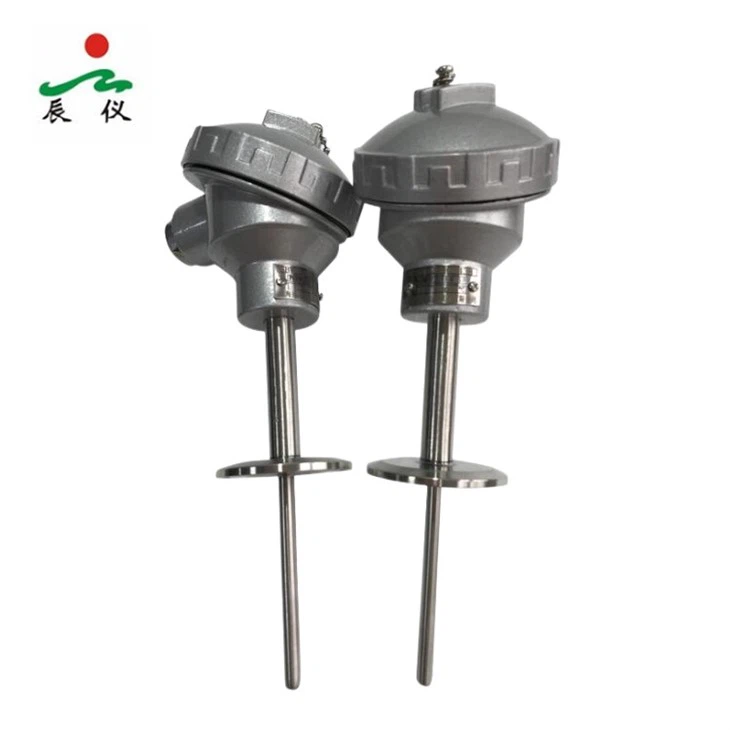
Before delving into the measurement process, it's important to understand what a Pt100 thermosensor is. A Pt100 is a type of resistance temperature detector (RTD) made of platinum. The "100" in Pt100 indicates that the sensor has a resistance of 100 ohms at 0°C. The resistance of a Pt100 changes linearly with temperature, following a well - defined relationship. This characteristic makes it a popular choice for temperature measurement in various applications, such as industrial processes, HVAC systems, and scientific research.

Why Measure the Resistance?
Measuring the resistance of a Pt100 thermosensor is the key to determining the temperature. By accurately measuring the resistance, we can use the known relationship between resistance and temperature to calculate the actual temperature. This is crucial for maintaining the quality and efficiency of processes that rely on precise temperature control. For example, in a chemical manufacturing process, even a small deviation in temperature can lead to poor product quality or safety hazards.
Tools Required for Resistance Measurement
To measure the resistance of a Pt100 thermosensor, you'll need the following tools:
- Multimeter: A digital multimeter is the most common tool for measuring resistance. Make sure it has a high enough resolution and accuracy for your application.
- Wiring: Proper wiring is essential to ensure accurate measurements. Use high - quality, low - resistance wires to connect the multimeter to the Pt100 thermosensor.
- Insulation Tools: To prevent electrical interference and ensure safety, use insulation tools such as wire strippers and electrical tape.
Measurement Methods
Two - Wire Method
The two - wire method is the simplest way to measure the resistance of a Pt100 thermosensor. In this method, the multimeter is connected directly to the two terminals of the Pt100 sensor. However, this method has a significant drawback. The resistance of the wires used for connection is included in the measurement, which can introduce errors, especially if the wires are long or have a high resistance.
Here's how to perform the two - wire measurement:
- Turn off the power to the system to avoid electrical shock.
- Connect one probe of the multimeter to one terminal of the Pt100 thermosensor and the other probe to the other terminal.
- Set the multimeter to the resistance measurement mode.
- Read the resistance value displayed on the multimeter.
Three - Wire Method
The three - wire method is a more accurate way to measure the resistance of a Pt100 thermosensor. In this method, an additional wire is used to compensate for the resistance of the connecting wires. One wire is used to carry the current to the sensor, and the other two wires are used to measure the voltage across the sensor.
The steps for the three - wire measurement are as follows:
- Connect the first wire of the multimeter to one terminal of the Pt100 thermosensor.
- Connect the second and third wires of the multimeter to the other terminal of the Pt100 thermosensor.
- Set the multimeter to the appropriate resistance measurement mode.
- The multimeter will automatically compensate for the wire resistance and display the accurate resistance of the Pt100 thermosensor.
Four - Wire Method
The four - wire method, also known as the Kelvin method, is the most accurate way to measure the resistance of a Pt100 thermosensor. In this method, two wires are used to carry the current to the sensor, and the other two wires are used to measure the voltage across the sensor. This method completely eliminates the effect of wire resistance on the measurement.
The process of four - wire measurement is as follows:
- Connect two wires from the current source to the two outer terminals of the Pt100 thermosensor.
- Connect two wires from the voltage measurement device to the two inner terminals of the Pt100 thermosensor.
- Apply a known current through the current - carrying wires.
- Measure the voltage across the sensor using the voltage - measuring wires.
- Calculate the resistance of the Pt100 thermosensor using Ohm's law (R = V / I).
Factors Affecting Resistance Measurement
Several factors can affect the accuracy of resistance measurement:
- Temperature Fluctuations: Since the resistance of a Pt100 thermosensor changes with temperature, any temperature fluctuations during the measurement can lead to inaccurate results. Make sure the environment is stable during the measurement.
- Electrical Interference: Electrical interference from nearby equipment can affect the measurement. Use shielded wires and proper grounding to reduce interference.
- Contact Resistance: Poor contact between the wires and the Pt100 thermosensor can introduce additional resistance, leading to measurement errors. Make sure the connections are clean and tight.
Our Product Range
As a Pt100 thermosensor supplier, we offer a wide range of high - quality thermosensors to meet different customer needs. For example, our Sanitary RTD Probe is designed for applications in the food and beverage industry, where hygiene is of utmost importance. It is made of high - quality materials that are easy to clean and sterilize.
Our Acid Proof Pt100 Temperature Sensor is suitable for harsh chemical environments. It can withstand the corrosion of acids and other chemicals, ensuring long - term reliability.
In addition, we also provide Pt1000 Resistance Temperature Detector. The Pt1000 has a higher resistance at 0°C (1000 ohms) compared to the Pt100, which can provide higher sensitivity in some applications.
Conclusion
Measuring the resistance of a Pt100 thermosensor is a fundamental process for temperature measurement. By choosing the right measurement method and using the appropriate tools, you can ensure accurate and reliable results. At our company, we are committed to providing high - quality Pt100 thermosensors and excellent customer service. If you have any questions about resistance measurement or need to purchase our products, please feel free to contact us for procurement and negotiation.
References
- "Temperature Measurement Handbook", by John Doe
- "Industrial Temperature Sensors: Principles and Applications", by Jane Smith
