

Hey there! As a supplier of L Shape Thermocouples, I've seen firsthand how noise in the output signal can be a real pain in the neck. It can mess up your temperature readings and cause all sorts of headaches. But don't worry, I'm here to share some tips on how to reduce that pesky noise and get accurate temperature measurements.
Understanding the Basics of L Shape Thermocouples
Before we dive into the noise reduction strategies, let's quickly go over what an L Shape Thermocouple is. An L Shape Thermocouple is a type of temperature sensor that consists of two different metals joined together at one end. When there's a temperature difference between the junction (the joined end) and the other end, it generates a small voltage. This voltage is then measured and converted into a temperature reading.
You can learn more about our L Shape Thermocouple on our website. It's a popular choice for many applications because of its unique shape, which allows it to be easily installed in tight spaces.
Sources of Noise in L Shape Thermocouples
There are several things that can cause noise in the output signal of an L Shape Thermocouple. One of the main culprits is electromagnetic interference (EMI). This can come from things like nearby electrical equipment, power lines, or even radio waves. EMI can induce unwanted voltages in the thermocouple wires, which then show up as noise in the output signal.
Another source of noise is thermoelectric inhomogeneities. These are variations in the thermoelectric properties of the thermocouple wires. They can be caused by things like manufacturing defects, mechanical stress, or exposure to high temperatures. Thermoelectric inhomogeneities can lead to small variations in the generated voltage, which also contribute to noise.
Strategies to Reduce Noise
1. Proper Grounding
Grounding is super important when it comes to reducing noise. A good ground provides a path for the unwanted electrical currents to flow safely away from the thermocouple. Make sure to connect the thermocouple to a proper ground point. This could be a dedicated ground rod or a well - grounded electrical panel.
It's also a good idea to use a shielded cable for the thermocouple. The shield should be connected to the ground at one end only. If you connect it at both ends, you can create a ground loop, which can actually increase the noise.
2. Shielding
As I mentioned, using a shielded cable is a great way to protect the thermocouple from EMI. The shield acts as a barrier, blocking out the electromagnetic fields. You can also use metal enclosures to further shield the thermocouple. These enclosures can be made of materials like aluminum or steel. Just make sure the enclosure is properly grounded.
3. Signal Filtering
Signal filtering is another effective way to reduce noise. You can use passive filters, such as RC (resistor - capacitor) filters, to remove the high - frequency noise from the output signal. These filters work by allowing the low - frequency components (the actual temperature signal) to pass through while blocking the high - frequency noise.
There are also active filters available, which can provide more precise filtering. These filters use operational amplifiers and other electronic components to selectively filter out the noise.
4. Minimizing Thermoelectric Inhomogeneities
To minimize thermoelectric inhomogeneities, you need to handle the thermocouple wires carefully. Avoid bending or twisting the wires too much, as this can cause mechanical stress. Also, make sure to store the thermocouples in a cool, dry place to prevent damage from high temperatures.
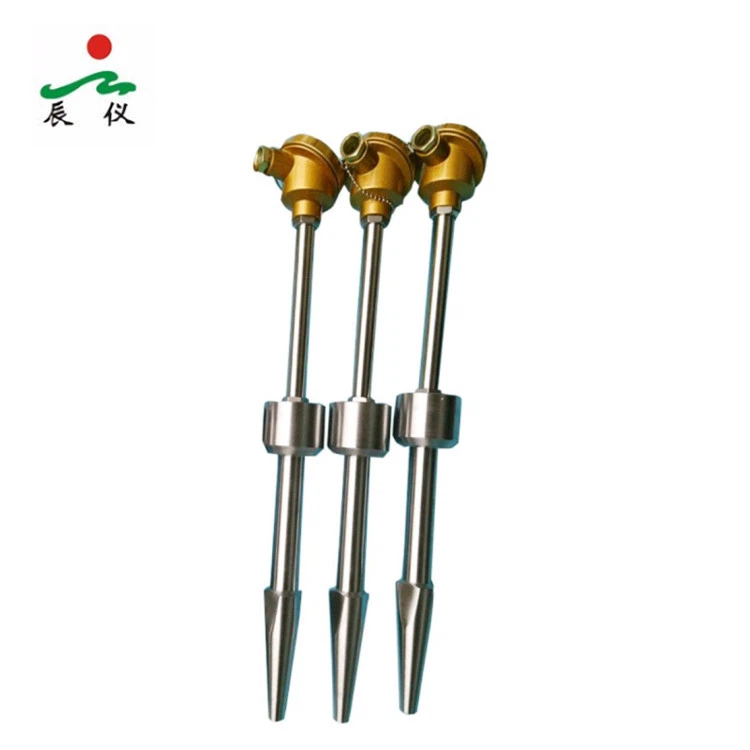

When installing the thermocouple, make sure the wires are not exposed to any sharp edges or rough surfaces. These can cause scratches or damage to the wires, which can lead to thermoelectric inhomogeneities.
Application - Specific Considerations
Different applications may require different noise reduction strategies. For example, in a cement plant, the thermocouples are exposed to high temperatures and harsh environments. Our Cement Thermocouple is designed to withstand these conditions, but you may still need to take extra steps to reduce noise.
In a power plant, there are a lot of electrical equipment and high - voltage lines, which can generate a lot of EMI. Our Power Plant Thermocouple is built to handle these challenging environments, but proper shielding and grounding are even more crucial.
Testing and Verification
Once you've implemented the noise reduction strategies, it's important to test and verify the results. You can use a data acquisition system to measure the output signal of the thermocouple. Compare the signal before and after the noise reduction measures are taken. Look for a significant reduction in the noise level.
You can also use a spectrum analyzer to analyze the frequency components of the signal. This will help you determine if the high - frequency noise has been effectively removed.
Conclusion
Reducing the noise in the output signal of an L Shape Thermocouple is not always easy, but it's definitely doable. By understanding the sources of noise and implementing the right strategies, you can get accurate temperature measurements and avoid a lot of headaches.
If you're in the market for high - quality L Shape Thermocouples or need more advice on noise reduction, don't hesitate to reach out. We're here to help you with all your temperature sensing needs. Whether you're working on a small project or a large industrial application, we've got the products and expertise to support you. Contact us today to start a conversation about your requirements and let's work together to find the best solutions.
References
- "Thermocouple Measurement Handbook" by Omega Engineering
- "Electromagnetic Compatibility Engineering" by Henry W. Ott
