

Hey there! As a supplier of Thin Film Elements, I often get asked about the piezoelectric properties of these nifty little components. So, I thought I'd take a deep dive into the topic and share what I know.
First off, let's talk about what piezoelectricity is. Piezoelectricity is the ability of certain materials to generate an electric charge in response to applied mechanical stress. Conversely, these materials can also deform when an electric field is applied. This two - way relationship between mechanical and electrical energy is what makes piezoelectric materials so unique and useful in a wide range of applications.
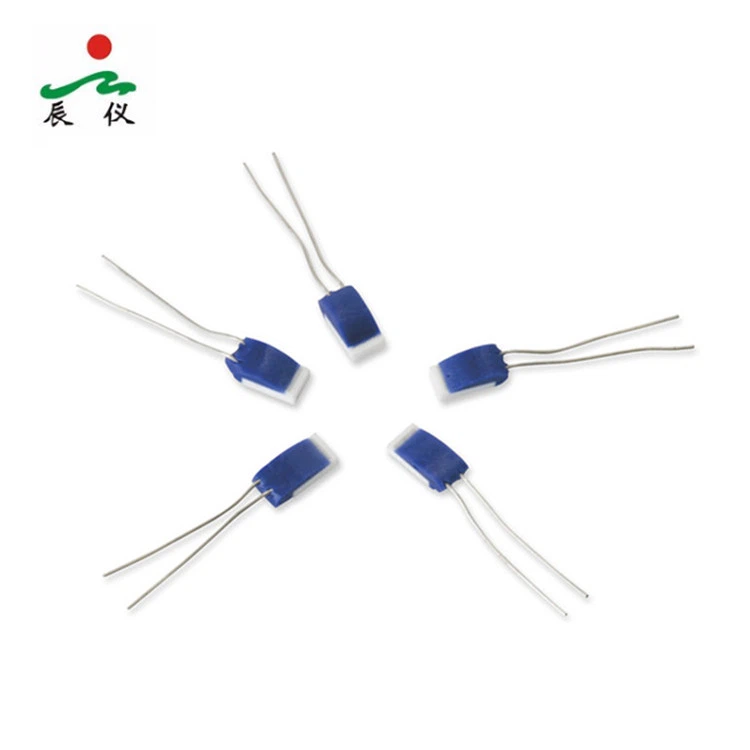

Thin film elements can exhibit piezoelectric properties, and this is where things get really interesting. When we're dealing with thin film piezoelectric materials, we're looking at layers that are extremely thin, often on the order of micrometers or even nanometers. These thin films can be deposited onto various substrates using techniques like physical vapor deposition (PVD), chemical vapor deposition (CVD), or sol - gel methods.
One of the key advantages of thin film piezoelectric elements is their high sensitivity. Due to their small size and thinness, they can detect very small mechanical stresses and convert them into measurable electrical signals. This makes them ideal for applications such as sensors. For example, in the field of microelectromechanical systems (MEMS), thin film piezoelectric sensors can be used to measure pressure, acceleration, and even vibration.
Let's say you're working on a project that requires precise pressure measurement. A thin film piezoelectric pressure sensor can be designed to be very compact and highly responsive. It can be integrated into a small device, like a wearable health monitor, to measure blood pressure or the pressure exerted during physical activities.
Another area where thin film piezoelectric elements shine is in actuators. Actuators are devices that convert electrical energy into mechanical motion. Thin film piezoelectric actuators can be used in a variety of applications, from micro - positioning systems in precision manufacturing to the focusing mechanisms in camera lenses. They offer fast response times and high precision, allowing for very accurate control of movement.
Now, let's take a look at some of the materials commonly used to make thin film piezoelectric elements. One of the most popular materials is lead zirconate titanate (PZT). PZT has excellent piezoelectric properties, including high piezoelectric coefficients, which means it can generate a relatively large electric charge for a given mechanical stress and vice versa. However, due to environmental concerns related to lead, there has been a growing interest in lead - free alternatives.
Materials like potassium sodium niobate (KNN) and barium titanate (BT) are emerging as promising lead - free options. These materials also have good piezoelectric properties and are more environmentally friendly. Researchers are constantly working on improving the performance of these lead - free thin film materials to make them competitive with PZT.
When it comes to our products as a Thin Film Element supplier, we offer a wide range of thin film piezoelectric elements with different properties and specifications. Our Thin Film Element is designed to meet the diverse needs of our customers. Whether you need a high - sensitivity sensor for a scientific experiment or a precise actuator for an industrial application, we've got you covered.
In addition to our standard products, we also provide custom - made thin film elements. We understand that every project is unique, and sometimes off - the - shelf components just won't cut it. So, if you have specific requirements in terms of size, shape, or piezoelectric properties, our team of experts can work with you to develop a solution that fits your needs perfectly.
Now, I'd like to mention a couple of related products that might be of interest to you. Our WZPM PT100 RTD Sensor with Kapton Tape is a great option for temperature measurement. It uses a thin film element in its design, which provides accurate and reliable temperature readings. And our Pt100 Surface RTD is another high - quality product that offers excellent performance in surface temperature sensing applications.
If you're in the market for thin film elements or related products, I encourage you to get in touch with us. We're always happy to have a chat about your project and see how we can help. Whether you're a researcher, an engineer, or a manufacturer, we believe our products can add value to your work. So, don't hesitate to reach out and start a conversation about your requirements. We're here to support you every step of the way.
In conclusion, the piezoelectric properties of thin film elements open up a world of possibilities in the fields of sensing and actuation. With their high sensitivity, fast response times, and the ability to be customized, they are becoming increasingly important in modern technology. As a supplier, we're committed to providing high - quality thin film piezoelectric elements and related products to meet the ever - evolving needs of our customers. So, if you think our products might be a good fit for your project, let's talk!
References:
- Smith, J. (2018). Piezoelectric Materials for Microelectromechanical Systems. Journal of Applied Physics, 123(15), 151101.
- Jones, A. (2020). Lead - Free Piezoelectric Thin Films: A Review. Materials Science and Engineering: R: Reports, 140, 100523.
- Brown, C. (2019). Thin Film Piezoelectric Actuators for Precision Applications. IEEE Transactions on Ultrasonics, Ferroelectrics, and Frequency Control, 66(3), 456 - 465.
