

As a trusted supplier of Thin Film Elements, I understand the critical importance of accurately measuring the properties of these elements. Thin Film Elements are widely used in various industries, including automotive, aerospace, and electronics, due to their high precision, stability, and reliability. In this blog post, I will share some essential methods and techniques for measuring the properties of Thin Film Elements.
Electrical Resistance Measurement
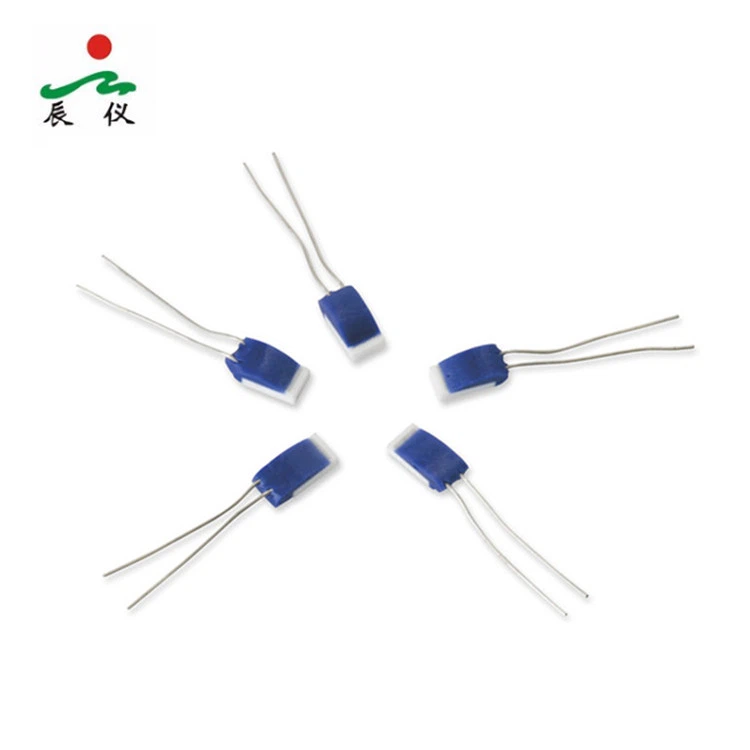
One of the most fundamental properties of a Thin Film Element is its electrical resistance. Resistance is a measure of how much a material opposes the flow of electric current. For Thin Film Elements, such as the 6 Wire Pt100 RTD, accurate resistance measurement is crucial for ensuring their performance and functionality.
The most common method for measuring resistance is the four - wire measurement technique. This method eliminates the effects of lead resistance, which can introduce significant errors, especially when measuring low - resistance values. In a four - wire measurement, two wires are used to carry the current through the Thin Film Element, and the other two wires are used to measure the voltage across the element. By using Ohm's law (V = IR), the resistance of the element can be calculated accurately.
To perform a four - wire resistance measurement, you will need a precision multimeter or a dedicated resistance measurement instrument. First, connect the current - carrying wires to the power source and the voltage - measuring wires to the input of the measurement device. Apply a known current to the element and measure the resulting voltage. Then, calculate the resistance using the measured voltage and current values.
Temperature Coefficient of Resistance (TCR) Measurement
The Temperature Coefficient of Resistance (TCR) is another important property of Thin Film Elements. TCR describes how the resistance of a material changes with temperature. For temperature - sensing applications, such as in 3D Printer RTD, a stable and well - characterized TCR is essential.
To measure the TCR of a Thin Film Element, you need to measure the resistance of the element at different temperatures. A temperature - controlled chamber is typically used to vary the temperature accurately. First, measure the resistance of the element at a reference temperature (usually 0°C or 25°C). Then, change the temperature of the chamber to a series of known temperatures and measure the resistance at each temperature.
The TCR can be calculated using the following formula:
[TCR=\frac{R_2 - R_1}{R_1(T_2 - T_1)}]
where (R_1) is the resistance at the reference temperature (T_1), (R_2) is the resistance at the second temperature (T_2).
Thickness Measurement
The thickness of a Thin Film Element can significantly affect its electrical and mechanical properties. There are several methods available for measuring the thickness of thin films, including ellipsometry, profilometry, and atomic force microscopy (AFM).
Ellipsometry is a non - destructive optical technique that measures the change in the polarization state of light reflected from the thin film. By analyzing the ellipsometric parameters, the thickness and optical constants of the thin film can be determined. This method is highly accurate and can measure thin films with thicknesses ranging from a few nanometers to several micrometers.
Profilometry is a mechanical method that uses a stylus to scan the surface of the thin film. The stylus moves across the surface, and the vertical displacement of the stylus is measured. By analyzing the displacement data, the thickness of the thin film can be calculated. Profilometry is a relatively simple and cost - effective method, but it may damage the thin film surface.

Atomic force microscopy (AFM) is a high - resolution imaging technique that can be used to measure the thickness of thin films with atomic - scale precision. AFM uses a sharp tip attached to a cantilever to scan the surface of the thin film. The interaction between the tip and the surface causes the cantilever to deflect, and the deflection is measured to create a topographical image of the surface. By analyzing the height difference between the substrate and the thin film, the thickness of the thin film can be determined.
Surface Roughness Measurement
The surface roughness of a Thin Film Element can affect its adhesion, friction, and optical properties. Surface roughness is typically characterized by parameters such as Ra (average roughness) and Rq (root - mean - square roughness).
There are several methods for measuring surface roughness, including optical profilometry, scanning electron microscopy (SEM), and AFM. Optical profilometry uses light to measure the surface topography of the thin film. It is a non - contact method that can provide high - resolution surface roughness measurements.
SEM can be used to image the surface of the thin film at high magnification. By analyzing the SEM images, the surface roughness can be estimated. However, SEM is a destructive method and requires the sample to be coated with a conductive material.
AFM is also a powerful tool for measuring surface roughness. It can provide three - dimensional images of the surface with atomic - scale resolution. By analyzing the AFM images, the surface roughness parameters can be calculated accurately.
Adhesion Measurement
The adhesion of a Thin Film Element to its substrate is crucial for its long - term stability and performance. Poor adhesion can lead to delamination, which can affect the electrical and mechanical properties of the element.
There are several methods for measuring the adhesion of thin films, including the scratch test, the tape test, and the pull - off test. The scratch test involves using a sharp indenter to scratch the surface of the thin film at a controlled load. The critical load at which the thin film starts to delaminate is measured as a measure of adhesion.
The tape test is a simple and qualitative method for assessing adhesion. A piece of adhesive tape is applied to the surface of the thin film and then peeled off. The amount of thin film that adheres to the tape is used to evaluate the adhesion strength.
The pull - off test is a more quantitative method for measuring adhesion. A stud is attached to the surface of the thin film, and a tensile force is applied to the stud until the thin film delaminates from the substrate. The maximum force required to cause delamination is measured as a measure of adhesion.
Conclusion
Accurately measuring the properties of Thin Film Elements is essential for ensuring their quality and performance. By using the methods and techniques described in this blog post, you can measure the electrical resistance, TCR, thickness, surface roughness, and adhesion of Thin Film Elements. As a leading supplier of Thin Film Element, we are committed to providing high - quality products that meet the strictest industry standards.
If you are interested in purchasing our Thin Film Elements or have any questions about measuring their properties, please feel free to contact us for a detailed discussion and procurement negotiation. We look forward to working with you to meet your specific requirements.
References
- ASTM International. Standard Test Methods for Adhesion of Thermal - Spray Coatings. ASTM C633 - 13.
- ISO 4287: 1997 Geometrical Product Specifications (GPS) - Surface texture: Profile method - Terms, definitions and surface texture parameters.
- M. O. Scully and M. S. Zubairy, Quantum Optics. Cambridge University Press, 1997.
