

Hey there! As a supplier of cement thermocouples, I've been getting a lot of questions lately about the sensitivity of these nifty devices. So, I thought I'd take a deep dive into what the sensitivity of a cement thermocouple really means, why it matters, and how it can impact your operations.
First off, let's break down what a thermocouple is. In a nutshell, a thermocouple is a sensor that measures temperature. It consists of two different metals joined together at one end. When there's a temperature difference between the junction (the joined end) and the other ends of the metals, it creates a voltage. This voltage is proportional to the temperature difference, and by measuring it, we can figure out the temperature.
Now, when we talk about the sensitivity of a cement thermocouple, we're referring to how much the output voltage changes for a given change in temperature. A more sensitive thermocouple will show a larger change in voltage for a small change in temperature. This is super important because it allows for more accurate temperature measurements.
Let's say you're running a cement plant. The temperature in different parts of the plant can vary significantly, and precise temperature control is crucial for the quality of the cement production. A highly sensitive cement thermocouple can detect even the slightest temperature changes, giving you real - time data to make adjustments and ensure everything runs smoothly.

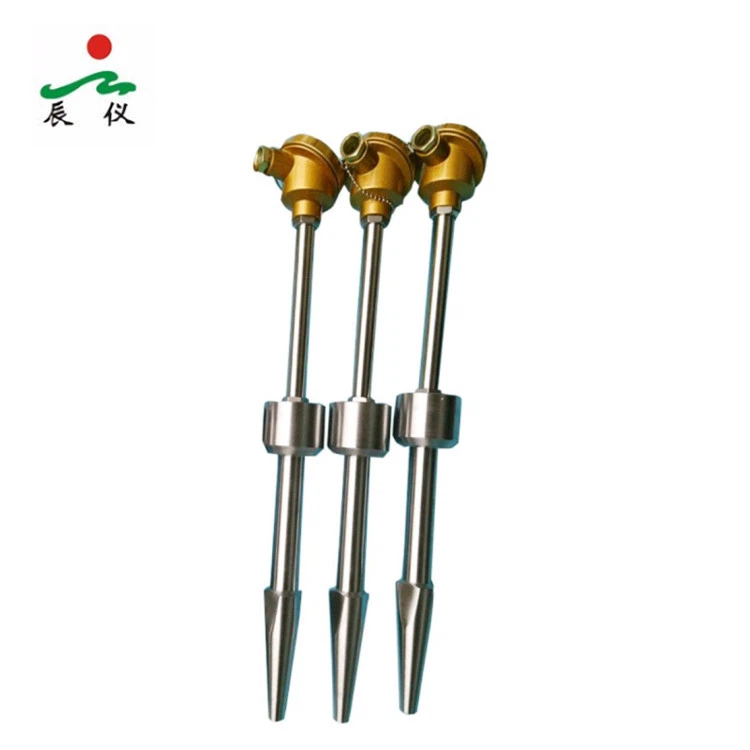
But how do we measure this sensitivity? Well, it's usually expressed in millivolts per degree Celsius (mV/°C). For example, if a thermocouple has a sensitivity of 40 mV/°C, it means that for every one - degree increase in temperature, the output voltage will increase by 40 millivolts.
There are a few factors that can affect the sensitivity of a cement thermocouple. The type of metals used in the thermocouple is a big one. Different metal combinations have different Seebeck coefficients, which determine the sensitivity. For instance, some common thermocouple types like Type K (chromel - alumel) and Type J (iron - constantan) have different sensitivities due to the properties of the metals involved.
The physical construction of the thermocouple also plays a role. A well - designed thermocouple with a proper junction and insulation can enhance its sensitivity. The size and shape of the thermocouple can also impact how quickly it responds to temperature changes and how accurately it measures them.
Another aspect to consider is the environment in which the thermocouple is used. In a cement plant, there are high temperatures, dust, and sometimes corrosive substances. These conditions can degrade the thermocouple over time and affect its sensitivity. That's why it's important to choose a thermocouple that's specifically designed to withstand these harsh environments.
At our company, we offer a range of cement thermocouples with different sensitivities to meet your specific needs. Whether you're looking for a Right Angle Thermocouple for tight spaces, an L Shape Thermocouple for unique installations, or a Power Plant Thermocouple for large - scale operations, we've got you covered.
When it comes to choosing the right thermocouple for your cement plant, it's not just about the sensitivity. You also need to consider factors like durability, response time, and cost. A more sensitive thermocouple might be more expensive, but if it can improve the quality of your cement production and reduce downtime, it could be well worth the investment.
We understand that every cement plant is different, and that's why we offer custom - made thermocouples. Our team of experts can work with you to understand your specific requirements and design a thermocouple that offers the perfect balance of sensitivity, durability, and cost - effectiveness.
If you're in the market for a cement thermocouple and want to learn more about how our products can benefit your operations, don't hesitate to reach out. We're here to help you make the right choice and ensure you get the most accurate temperature measurements for your cement production.
In conclusion, the sensitivity of a cement thermocouple is a critical factor in its performance. It determines how accurately you can measure temperature, which in turn affects the quality and efficiency of your cement production. By choosing the right thermocouple with the appropriate sensitivity, you can optimize your operations and stay ahead in the competitive cement industry.
If you're interested in discussing your thermocouple needs, please contact us. We're eager to have a chat and help you find the best solution for your business.
References
- "Thermocouples: Theory and Practice" by John W. Nimmo Jr.
- ASTM standards related to thermocouples for industrial applications.
