

Hey there! I'm a supplier of Head Type RTDs, and today I want to chat about how vibration affects these nifty temperature sensors. As someone who deals with these products on a daily basis, I've seen firsthand the impact that vibration can have, and I'm excited to share my insights with you.
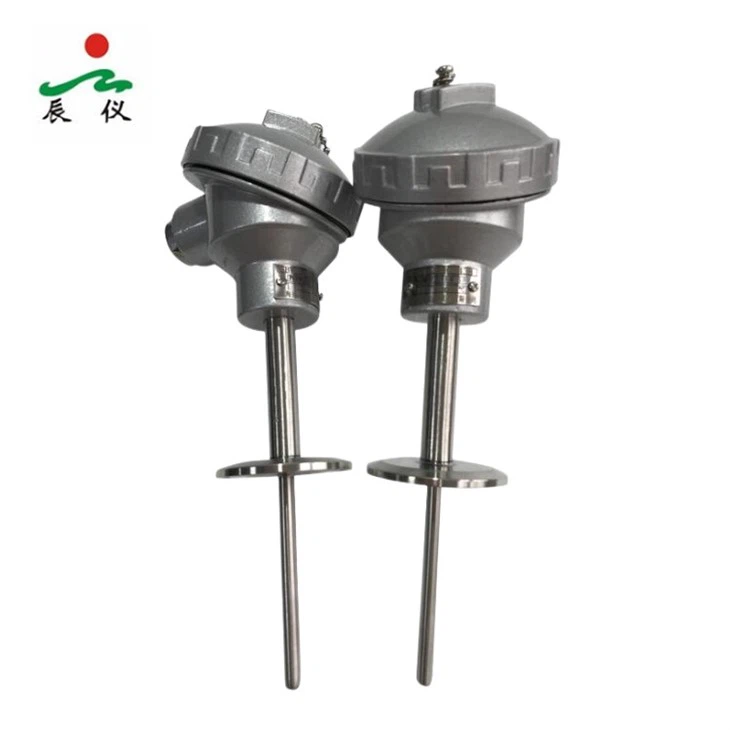
First off, let's quickly go over what a Head Type RTD is. It's a type of resistance temperature detector that measures temperature by using the change in electrical resistance of a metal, usually platinum. The head part of it contains the electronics and connections, and it's attached to a probe that goes into the medium whose temperature we want to measure. We offer a range of these, like the Pt1000 Resistance Temperature Detector, Sanitary RTD Probe, and Acid Proof Pt100 Temperature Sensor.
Now, onto the main topic - vibration. Vibration can come from various sources. In industrial settings, it could be from machinery, pumps, or even the flow of fluids. In transportation, vehicles' engines and movement can cause vibration. And in some cases, natural phenomena like earthquakes or strong winds can also subject the RTDs to vibration.
One of the most immediate effects of vibration on Head Type RTDs is mechanical stress. The constant shaking can put pressure on the components inside the head and the probe. For example, the wires connecting the sensing element to the electronics in the head can get loose. This loose connection can lead to intermittent electrical contact, which means the readings from the RTD might fluctuate or be inaccurate. You could be getting temperature readings that jump up and down, making it really hard to trust the data.
The sensing element itself, usually a thin platinum wire or film, can also be affected. Vibration can cause micro - fractures in the platinum. These fractures change the electrical resistance of the sensing element in an unpredictable way. Since the RTD measures temperature based on the change in resistance, any alteration in the resistance due to these fractures will result in incorrect temperature readings. Over time, these micro - fractures can grow, and eventually, the sensing element might fail completely.
Another aspect is the impact on the enclosure of the Head Type RTD. Vibration can cause the seals and gaskets in the head to loosen. This is a big problem because it allows moisture, dust, and other contaminants to enter the enclosure. Moisture, in particular, can corrode the internal components, leading to short - circuits or further degradation of the electrical connections. And dust can accumulate on the electronics, causing overheating and reducing the lifespan of the RTD.
In addition to the mechanical and electrical issues, vibration can also affect the calibration of the Head Type RTD. Calibration is crucial for accurate temperature measurement. When an RTD is calibrated, it's set to provide precise readings within a certain temperature range. But vibration can shift the characteristics of the sensing element and the electronics, throwing off the calibration. So, even if the RTD was perfectly calibrated at the factory, after being exposed to vibration, it might no longer give accurate readings.
Now, you might be wondering how we can deal with these vibration - related problems. Well, one solution is to choose RTDs that are designed to withstand vibration. At our company, we take this into account when manufacturing our Head Type RTDs. We use high - quality materials and robust construction techniques to make the sensors more resistant to vibration. For example, we secure the wires and components inside the head using special adhesives and clamps to prevent them from coming loose.
We also offer options for enclosures that are better sealed and more vibration - resistant. These enclosures are made of tough materials and have improved sealing mechanisms to keep out moisture and contaminants. And of course, we recommend regular maintenance and calibration checks for the RTDs, especially in environments where vibration is a constant factor.
If you're in an industry where vibration is a major concern, like the automotive, aerospace, or heavy machinery sectors, it's even more important to pay attention to these factors. In these industries, accurate temperature measurement is often critical for the proper operation and safety of equipment.
So, whether you're already using Head Type RTDs or thinking about getting some, understanding how vibration affects them is key. It can save you a lot of headaches in the long run, like avoiding inaccurate temperature readings that could lead to equipment failures or production issues.
If you're interested in learning more about our Head Type RTDs and how they can perform well in vibrating environments, or if you're looking to make a purchase, don't hesitate to reach out. We're here to help you find the best solution for your temperature - sensing needs.
References

- Textbooks on temperature measurement and sensor technology
- Industry reports on the impact of environmental factors on sensors
